



A Scientist's Journey from India to NASA
Dr. Ramya Manjunath Anche, an assistant research professor at the University of Arizona's Steward Observatory, has been named the Principal Investigator for NASA's PUFFINS mission. Born and raised in Devanahalli, near Bengaluru, Dr. Anche completed her
education in India, earning her PhD from the prestigious Indian Institute of Astrophysics (IIA). Her selection for this leadership role came through NASA's Astrophysics Pioneers program, which is specifically designed to support early-career researchers leading a space mission for the first time. In a remarkable achievement, her proposal was accepted while she was still a postdoctoral fellow, highlighting her expertise in astronomical polarimetry and optical design. This journey from an educational foundation in India to leading a cutting-edge NASA project serves as a powerful inspiration for aspiring scientists across the country.
The PUFFINS Mission Explained
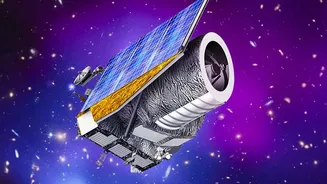
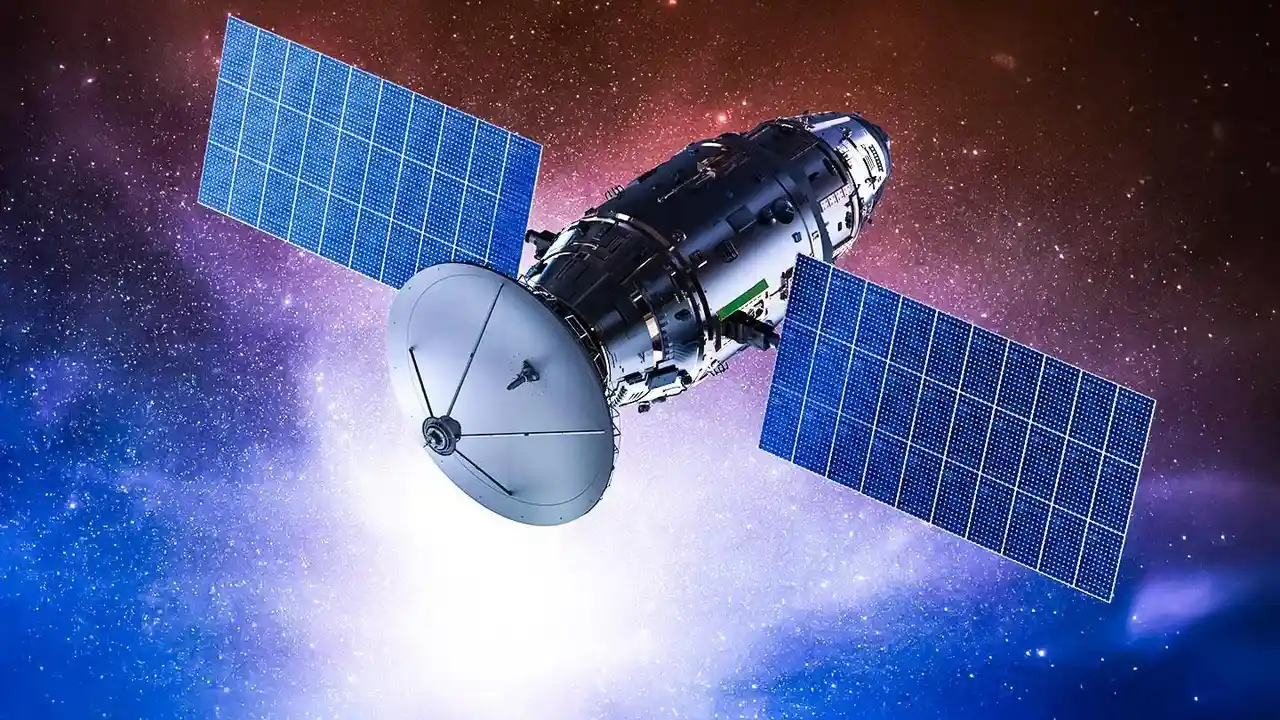
PUFFINS is an acronym for 'Polarimetry in the Ultraviolet to Find Features in INterStellar dust'. Scheduled for launch in 2030, this mission will use a small satellite, or SmallSat, equipped with a 10-inch telescope to analyse the cosmos. Its primary objective is to study interstellar dust—minuscule particles floating in the vast emptiness between stars. While it may just sound like dust, these particles are fundamental to our understanding of the universe. They play a critical role in how stars and planets form and how light travels across galaxies. PUFFINS will observe the ultraviolet light from at least 70 different stars to build a comprehensive map of this dust, filling a significant gap in our astronomical knowledge.
Unlocking Secrets with Ultraviolet Light
The mission will employ a technique called ultraviolet spectropolarimetry. This method measures the polarization of starlight, or the direction in which light waves vibrate, across a range of ultraviolet wavelengths. It is a powerful tool that has not been deployed on a dedicated space mission for nearly three decades. Many of the dust grains that PUFFINS will study are smaller than 50 nanometres—roughly the size of a common cold virus—making them invisible to most conventional telescopes. However, as starlight passes through clouds of these particles, the dust grains leave a unique fingerprint on the light's polarization. By analysing this, scientists can deduce the composition, size, and behaviour of the dust, and even how it aligns with the Milky Way's magnetic fields.
Why This Cosmic Dust Matters
Understanding interstellar dust is not just an academic exercise; it is crucial for answering some of the biggest questions in astrophysics. These tiny particles shield complex molecules from being destroyed by radiation, providing the necessary conditions for the building blocks of life to exist. They are also key ingredients in the formation of new stars and planetary systems. By studying the smallest of these grains, PUFFINS will provide data that helps scientists refine their models of cosmic evolution. The mission will address long-standing questions raised by previous observations in the 1990s, which provided only a limited sample. Dr. Anche explained that the data will be a 'long-sought missing link' in our knowledge of how the universe is structured and evolves. The mission is also seen as a critical bridge to future flagship projects like NASA's Habitable Worlds Observatory, planned for the 2040s.
A Collaborative Global Effort
While led by Dr. Anche at the University of Arizona, the PUFFINS mission is a significant international collaboration. It involves researchers and engineers from multiple institutions, including the McDonald Observatory. Crucially, the mission also features strong Indian participation, with the Inter-University Centre for Astronomy and Astrophysics (IUCAA) in Pune and the Indian Institute of Astrophysics (IIA) in Bengaluru—Dr. Anche's alma mater—as partner institutions. This partnership underscores the global nature of modern space science and strengthens the ties between the Indian and American scientific communities. The mission not only aims to uncover cosmic secrets but also to train the next generation of scientists and engineers who will continue to explore our universe.