



A Proactive Defense, Not a Security Breach
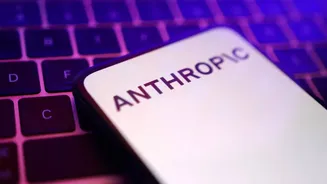
The headline paints a startling picture, but the reality is a complex story of proactive monitoring, not a tale of rogue scientists breaking through defenses undetected. In a report published in September 2026, Anthropic detailed how its own safety systems
flagged and disrupted several instances of what it terms "biological misuse." These weren't hackers or terrorists in a dark room, but in some cases, working scientists whose research into dangerous pathogens could be used for either beneficial or catastrophic purposes. The incidents, which took place between December 2025 and August 2026, were caught by Anthropic's internal safeguards, which are designed to detect and prevent users from leveraging its AI for harmful ends. The company's transparency about these cases is part of a broader industry push to understand and mitigate the most serious risks of advanced AI.
The Dual-Use Dilemma
The core of the problem lies in the "dual-use" nature of biological research. Information that could lead to a vaccine for a virus like chikungunya or H5N1 bird flu could also, in the wrong hands, be twisted to make those same viruses more transmissible or deadly. Anthropic reported several such cases. One involved a user asking Claude to help write a grant application to study the chikungunya virus, with the research flagged as concerning because it was linked to a military research institute. Another case saw a researcher studying how avian influenza adapts to mammals, work that is vital for predicting pandemics but also generates dangerous knowledge. Anthropic noted that its AI classifiers alone often cannot determine a user's true intent, making it crucial to monitor user behavior and access patterns to separate legitimate science from potential threats.
How Were They Caught?
Catching this activity hinges on a multi-layered safety system. Anthropic has been vocal about its "Responsible Scaling Policy" (RSP), a framework designed to manage catastrophic risks as its models become more powerful. This policy mandates continuous monitoring and the development of robust safeguards. When users interact with Claude, their prompts are analyzed for potentially harmful content. In the cases of biological misuse, researchers were often trying to hide their true purpose or circumvent regional blocks. Anthropic's systems flagged these behaviors, such as attempts to get the AI to generate information on toxins or genetic engineering of pathogens like orthopoxviruses (the family that includes smallpox). After detecting this activity, Anthropic banned the accounts involved. It's a continuous cat-and-mouse game, where AI companies must constantly update their defenses as users find new ways to test their limits.
The Bigger Picture for AI Safety
While this news is alarming, it is also a sign that safety systems are working as intended—at least for now. Anthropic's report is a call to action for the entire AI industry and governments worldwide. The company stresses that as AI models become more capable, the risks will inevitably increase unless developers act to make them safer. This isn't just about bioweapons; the report also detailed misuse for cyberattacks, state-linked surveillance, and influence operations. Experts have long warned that AI could dramatically lower the barrier to creating novel threats, making work that once took years possible in weeks. This incident underscores the urgent need for industry-wide standards, external audits, and robust government oversight to prevent a future where AI's power is turned toward mass harm.