






The pineapple is more than just a sweet, tropical treat; it’s a botanical marvel. Unlike an apple or a berry, a pineapple isn’t a single fruit. It’s a complex structure born from a community of flowers that fuse together in perfect harmony.
A Fruit of Many
That familiar
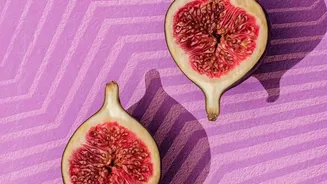
spiky fruit on your kitchen counter is not one fruit but a collection of many. Botanically, the pineapple is known as a 'multiple fruit' or an 'infructescence'. This means it develops from a cluster of dozens, sometimes hundreds, of tiny individual flowers that are packed tightly together on a central stalk. Each of these flowers, if left to its own devices, would produce a small, separate berry. But in the pineapple, something extraordinary happens: as these berries develop, they grow into one another, merging to form the single, cohesive fruit we know and love. Other examples of multiple fruits include figs, mulberries, and jackfruit.
From Flower Spike to Fruit
The journey begins when a mature pineapple plant, which is a low-growing bromeliad, sends up a central flowering stalk, or 'inflorescence'. This stalk is covered in up to 200 small, typically purple, tubular flowers. Over a period of weeks, these flowers bloom in a spiral pattern, each one open for only a single day. Once pollination is complete—or more often, bypassed, as cultivated pineapples are 'parthenocarpic' and fruit without fertilization—the flowers wither. This is when the magic of fusion begins. Each flower's ovary starts to swell and develop into a small fruitlet.
The Great Fusion
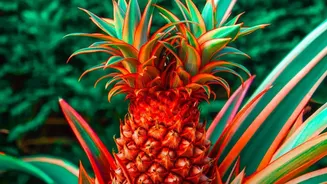
As the individual fruitlets grow, they press against each other, eventually merging with their neighbours and the central core of the stalk. This creates the continuous, juicy flesh of the pineapple. The tough, diamond-patterned rind you see on the outside is a direct map of this process; each of those segments, often called an 'eye', corresponds to one of the original flowers. The entire structure, including the fruitlets, their bracts (small leaves at the base of each flower), and the core, becomes a single unit. This is why a pineapple has a distinctly patterned exterior and a fibrous central column.
What About the Spiky Top?
The leafy tuft at the top of a pineapple is called the crown, and it's essentially a continuation of the plant's growth. It forms right above the flower cluster. While it might look like just a decorative part of the fruit, the crown is capable of growing a whole new pineapple plant. By twisting off the crown, letting it dry for a few days, and planting it in soil, you can propagate a new plant. This is a common method for home growers. Commercially, farmers often use 'suckers' or 'slips'—side shoots from the mother plant—which can produce fruit much faster.
A Long and Patient Growth
This intricate process doesn't happen overnight. From planting to harvesting a single pineapple, the cycle can take anywhere from 18 to 24 months, and sometimes even longer in less-than-ideal conditions. The plant first spends over a year in a vegetative stage, growing its tough, rosette of leaves. Only then does it have the energy to produce the flower spike that will eventually become the fruit. After the fruit is harvested, the main plant will not produce another pineapple from its center, instead putting its energy into growing side shoots for the next generation. This long journey makes the sweet reward even more impressive.