
An Agenda for a Crowded Sky
The second International Conference on Spacecraft Mission Operations (SMOPS-2026), held in Bengaluru, brought together global experts to chart a path for managing the increasingly congested orbits around Earth. The theme, “Innovative Operations for Smart
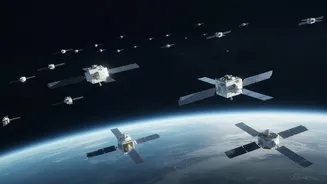
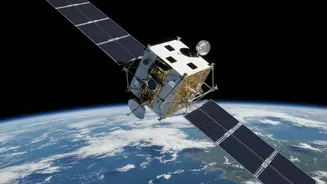
and Sustainable Space Mission Management,” underscored the urgency. With mega-constellations from commercial players joining state-run satellites, low-Earth orbit (LEO) is turning into the world's largest garbage dump, filled with over 6,000 tons of material. The agenda at SMOPS-2026 focused on leveraging technology like AI, improving mission design, and fostering international cooperation to prevent a catastrophic cascade of collisions. While the goals are noble, the conference left the global space community grappling with several foundational, practical questions that technology alone cannot solve.
The Data Question: Who Is The Sky's Air Traffic Controller?
Effective space traffic management (STM) relies on knowing where everything is at all times, a field known as Space Situational Awareness (SSA). Currently, the United States military operates the most comprehensive tracking network, but not all of its data is publicly shared. Other nations and private companies are developing their own SSA capabilities, but there is no single, universally trusted database. This raises a critical question discussed at SMOPS-2026: Who should be responsible for collecting, verifying, and disseminating this data? A related challenge is that satellite operators are often hesitant to share proprietary information about their assets' locations and capabilities. Without a centralized and mandatory data-sharing protocol, any STM system is like a traffic cop who can only see half the cars on the road. The decisions operators make are only as good as the confidence they have in the data.
The Liability Dilemma: Who Pays When Satellites Crash?
Imagine two multi-million dollar satellites colliding. The crash creates thousands of new pieces of debris, each a threat to other operational satellites. Who is at fault? And who pays for the damages? According to the 1967 Outer Space Treaty, nations are responsible for the objects they launch, including those owned by private companies. The 1972 Liability Convention further establishes that a launching state is liable for damage caused by its space objects. However, proving fault in a collision hundreds of kilometers above Earth, traveling at 18,000 miles per hour, is incredibly complex. Was it a technical malfunction, a flawed maneuver, or a failure to act on a collision warning? As commercial activities accelerate, the existing legal frameworks, designed for a handful of state actors, face a reckoning. There are no clear, internationally agreed-upon 'rules of the road' for who must move and when, making liability a giant, unanswered question mark for insurers and investors.
The Debris Problem: Who Takes Out The Trash?
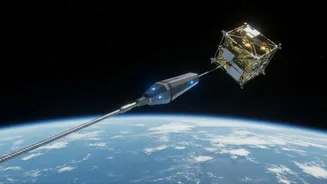
There are over 21,000 pieces of debris larger than 10 centimeters currently tracked in orbit, with millions of smaller, untrackable but still dangerous pieces. While there are guidelines for new satellites to de-orbit themselves at the end of their life, these rules don't apply to the vast amount of legacy junk already up there. The problem is that space debris is technically still the property of the original owner. This creates a huge legal hurdle: you can't just grab another country's defunct satellite without their permission, even if it poses a threat. Missions to demonstrate active debris removal (ADR) are underway, like the European Space Agency's ClearSpace-1 project, but they are expensive and technologically complex. A core practical question remains: Who should fund this cosmic cleanup? Should it be the responsibility of the nations that created the most debris, or should it be a globally funded effort? Without a clear business case or legal mandate, the orbital commons will only get dirtier.
The Enforcement Challenge: Rules Without A Referee?
Ultimately, any system of traffic management requires enforcement. On Earth, we have aviation authorities and maritime laws. In space, there is no equivalent. International guidelines from bodies like the Inter-Agency Space Debris Coordination Committee (IADC) exist, but they are non-binding. If a satellite operator from one country refuses to move their spacecraft to avoid a potential collision with another, there is no international body with the authority to compel them to do so or to issue a penalty. This lack of a central authority with enforcement power is perhaps the biggest political challenge for STM. While some companies like SpaceX are implementing automated collision avoidance for their own constellations, this creates a patchwork of different standards rather than a unified, predictable system for all.