




The Trouble with Ground Control
Traditionally, operating a satellite is a hands-on job, just from millions of miles away. Every orbital adjustment, data download, and system check requires a command from a ground station. This model has worked, but it's slow, expensive, and increasingly
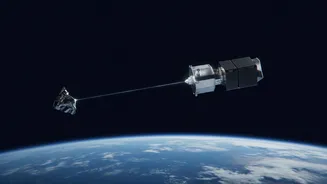
impractical. The sheer number of satellites is exploding; with over 16,000 active objects in orbit today and tens of thousands more planned, human operators simply can't keep up. Communication delays, or latency, also pose a significant physical constraint. It takes time for a signal to travel from a satellite to Earth and back, making real-time reactions to unexpected events—like a potential collision with space debris—nearly impossible. Furthermore, many satellites are retired not because their core instruments fail, but because they run out of the fuel needed for maneuvers, turning billion-dollar assets into space junk.
What Makes a Satellite 'Smart'?
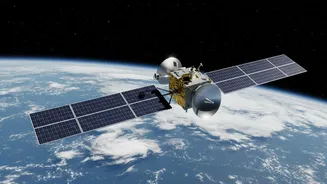
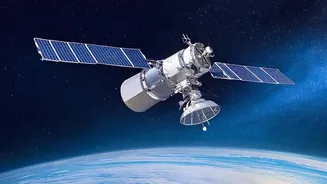
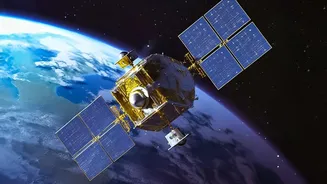
A “smart” satellite is one that can sense its environment, process data, and make decisions on its own, without waiting for instructions. This autonomy is powered by artificial intelligence (AI) and machine learning (ML) algorithms running on advanced onboard processors. Instead of beaming terabytes of raw data back to Earth for analysis, an AI-powered satellite can analyze images or signals directly in orbit. It can identify objects of interest, like a ship at sea or the signs of a wildfire, and transmit only the crucial details, saving immense bandwidth. This onboard intelligence also allows satellites to manage their own health, predict component failures, and even perform autonomous collision avoidance maneuvers, a feature already used by companies like SpaceX to manage their vast Starlink constellation.
Autonomy in Action: The Practical Tests
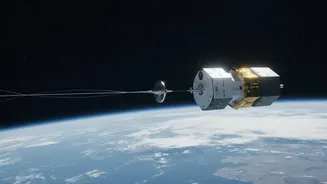
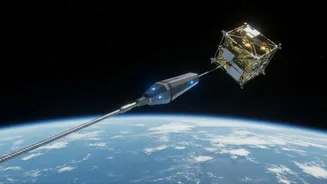
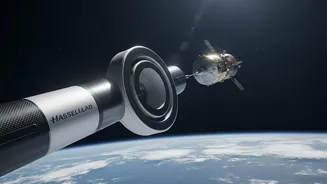
The push for smarter satellites has moved well beyond theory. In August 2026, the US Air Force Research Laboratory (AFRL) announced it had successfully used a neural network to autonomously control a satellite's attitude in orbit, a major milestone. This practical test demonstrated that an AI could take over core functions from traditional software, reacting to sensor data in real time to keep the spacecraft stable. Beyond basic control, the most significant practical tests are happening in the field of on-orbit servicing and logistics. Several missions slated for 2026 and early 2027 are designed to prove that autonomous spacecraft can dock with, refuel, and even repair other satellites. For instance, Astroscale's APS-R mission aims to conduct the first US hydrazine refueling in geosynchronous orbit, a task requiring incredible precision and autonomous control. These missions serve as a test bed for the business case of extending the life of hugely expensive satellites.
A Future of Orbital Teamwork
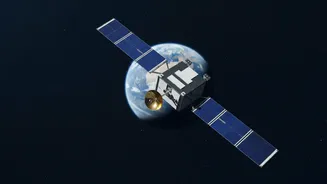
The ultimate vision is not just for individual smart satellites, but for interconnected swarms that work together. NASA's Distributed Spacecraft Autonomy (DSA) project is already testing software that allows a group of small satellites to act as a single, coordinated system with a “shared brain.” In these swarms, spacecraft can divide tasks, share observations, and adapt their collective strategy without human intervention. This capability could revolutionize everything from Earth observation to deep-space exploration. Imagine a swarm of satellites autonomously repositioning to get better coverage of a developing storm or a group of probes navigating an asteroid field. This collaborative autonomy also makes space operations more resilient; if one satellite in the swarm fails, the others can automatically adjust to cover the gap.
The Challenges of Trust and Security
Giving satellites the power to think for themselves doesn't come without risks. The primary challenge is building trust in these autonomous systems. Engineers must verify that the AI will perform reliably and predictably in the harsh, unforgiving environment of space, where radiation can cause glitches in processors. Security is another major concern. An autonomous satellite is a powerful asset, and if it were compromised by a malicious actor, it could be used for disruptive purposes. As a result, the space industry is adopting autonomy in careful, incremental stages, often keeping a human-in-the-loop to supervise and approve high-stakes decisions. Developing clear governance and legal frameworks for autonomous actions in space is becoming just as critical as developing the technology itself.