




Darjeeling Himalayan Railway, West Bengal
Affectionately known as the 'Toy Train', this is more than a journey; it's a ride back in time. A UNESCO World Heritage site, the Darjeeling Himalayan Railway has been chugging along its narrow-gauge tracks since 1881. The train slowly winds its way from
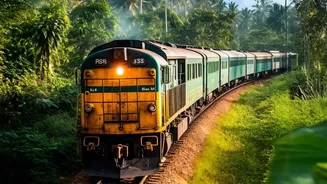
the plains up into the misty hills, passing through bustling market towns where shops are just an arm's length away. The route's most famous feature is the Batasia Loop, where the train circles a beautiful garden, offering a 360-degree view of Darjeeling and, on clear days, the magnificent Kanchenjunga peak. Pulled by either a classic steam engine or a more modern diesel one, the ride is slow, allowing you to soak in the views of endless tea plantations and dense forests. It’s a nostalgic experience that has been immortalised in numerous films.
Kalka-Shimla Railway, Himachal Pradesh
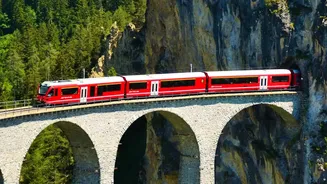
Another UNESCO World Heritage site, the Kalka-Shimla Railway is an engineering marvel built in 1903 to connect Shimla, the former summer capital of British India, with the plains. Over a journey of about five to six hours, the train climbs over 1,400 metres, navigating a staggering 919 curves, 864 bridges, and 102 tunnels. The slow pace is the point, offering passengers ample time to gaze at the pine-covered hills, deep valleys, and charming rural villages. One of the most talked-about sections is the Barog tunnel, the longest on the route, which has a tragic story linked to its construction. This journey isn't about getting to Shimla quickly; it’s about appreciating the monumental effort it took to build this line and the timeless beauty of the Himalayas.
Nilgiri Mountain Railway, Tamil Nadu
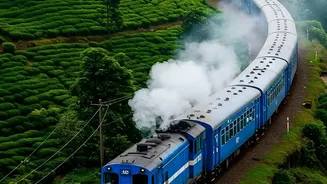
Running from Mettupalayam to the hill station of Ooty, this century-old 'Toy Train' is famous for operating on the steepest railway track in Asia. To conquer the sharp gradients, it uses a unique rack and pinion system, a testament to the ingenuity of its British-era engineers. The journey takes about five hours, passing through 16 tunnels, over 250 bridges, and around 208 curves, each revealing a new vista of the lush Nilgiri Hills, also known as the Blue Mountains. As the train ascends, the landscape transforms into a sea of green, with sprawling tea estates, dense forests, and misty mountains dominating the view. Recognised as a UNESCO World Heritage site, this journey offers a fairytale-like experience into the heart of one of South India's most beloved landscapes.
Konkan Railway (Mumbai to Goa)
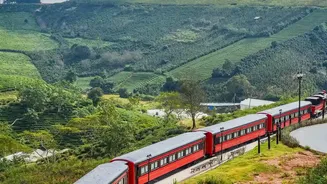
A more modern marvel, the Konkan Railway was a post-independence project completed in the 1990s, carving a route through the formidable terrain of the Western Ghats. The journey between Mumbai and Goa is particularly spectacular, especially during the monsoon when the landscape is a vibrant, almost electric green. The route runs parallel to the Arabian Sea, crossing countless rivers and plunging through tunnels carved into the mountainside. Unlike the colonial hill railways, this journey is about celebrating India's own engineering prowess and the raw beauty of its western coastline. Trains like the Mandovi Express or Konkan Kanya Express offer daytime views of the idyllic scenery, from coconut groves and wetlands to villages that seem untouched by time.
Vasco da Gama to Londa, Goa & Karnataka
While the Mumbai-Goa route offers coastal beauty, the journey inland from Goa into Karnataka unveils a different kind of magic. The route from Vasco da Gama to Londa Junction is part of a line that cuts through the dense forests of the Western Ghats. The undisputed highlight of this trip is the magnificent Dudhsagar Falls, one of India's tallest waterfalls. During and after the monsoon, the falls are a thunderous cascade of white water, and the train track passes right in front of them, offering an unbelievably close and dramatic view. The image of a train crossing the bridge with the massive waterfall in the background is iconic. This journey is a favourite for nature lovers and photographers seeking to capture the Ghats in their wildest and most scenic form.