







The Monsoon Composting Challenge
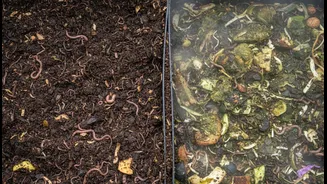
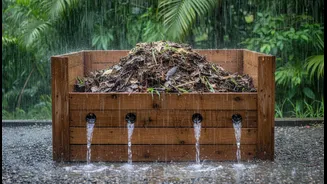
The ideal compost pile is about as moist as a wrung-out sponge. During the monsoon, excessive rain can saturate the pile, creating a waterlogged environment. This suffocates the essential aerobic microbes needed for decomposition, leading to anaerobic
conditions. The result is often a slimy, foul-smelling heap that rots instead of composting, attracts pests, and loses valuable nutrients through a process called leaching. High moisture also encourages fungal and mould growth, which can be harmful. The goal is to shield your compost from the deluge while ensuring it doesn't dry out completely, which would also halt the decomposition process.
Location, Drainage, and Cover
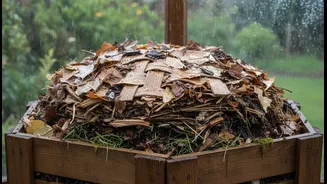
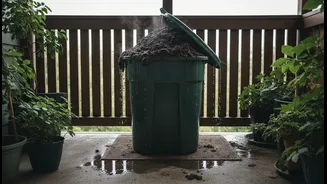
Your first line of defence is physical protection. If possible, place your compost bin in a sheltered area, such as under a roof overhang, to reduce direct rainfall. Ensure your bin or pile isn't located in a low-lying spot where water naturally collects. Elevating the bin on bricks or a wooden pallet can significantly improve drainage. Crucially, your bin must have drainage holes to allow excess water to escape. Covering the pile is essential. Use a fitted lid, a weighted tarp, or even a sheet of corrugated metal to shield it from the downpour. However, the cover should be breathable or not sealed completely, as some airflow is vital to prevent moisture buildup and support aerobic activity. On clear or sunny days, you can remove the cover to let the pile breathe.
Stockpile and Master Your Browns
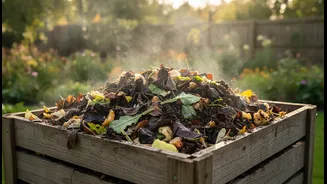
The secret weapon for monsoon composting is a healthy supply of carbon-rich 'brown' materials. These materials act like a sponge, soaking up excess moisture from the nitrogen-rich 'green' materials (like kitchen scraps). Before the rains begin, it's wise to stockpile dry materials like fallen leaves, straw, sawdust, shredded newspaper, and cardboard. During the monsoon, you'll need to adjust your carbon-to-nitrogen ratio, adding more browns than you would in the dry season. This simple step is the most effective way to balance moisture and maintain the pile's structure, ensuring air pockets remain for the microbes to do their work.
The Power of Absorbent Additives
Beyond a basic layer of browns, certain additives are particularly effective during wet conditions. Shredded cardboard is excellent because its porous structure both absorbs liquid and helps maintain air pockets within the pile. Coco peat is another fantastic alternative, especially if you run out of dry leaves. It provides necessary carbon, controls odours, and helps keep the composting process running smoothly without attracting pests. When building your pile, think in layers. A base of coarse materials like twigs or straw will create an excellent foundation for drainage. Follow this with alternating layers of greens and absorbent browns, topping the pile with a final layer of sawdust or coco peat to absorb surface moisture.
Turning and Troubleshooting a Soggy Pile
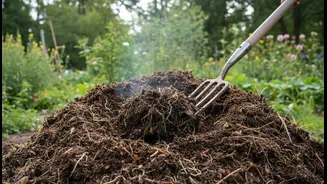
Regularly turning your compost is important for aeration, but be cautious during heavy rains. Mixing the pile every few days helps introduce oxygen and prevents water from stagnating. However, if the pile is already saturated, aggressive turning can sometimes cause the wet materials to compact further. If your pile has become waterlogged, you must act quickly. The first step is to add a significant amount of dry, brown material like shredded cardboard or straw and mix it in to soak up the water. If the situation is severe, you may need to spread the compost in a thin layer in a dry, sheltered spot for a few days to let it dry out before returning it to the bin. Signs that your compost is too wet include a foul, ammonia-like odour, a slimy texture, or water dripping when you squeeze a handful.