

India’s Answer to GPS
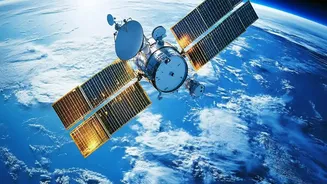
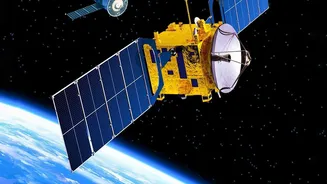
Navigation with Indian Constellation (NavIC) is India’s independent regional navigation satellite system, a strategic asset developed by the Indian Space Research Organisation (ISRO). Conceived as a homegrown alternative to foreign systems like the US-owned
GPS, its need was starkly highlighted during the 1999 Kargil conflict when access to foreign satellite data was not guaranteed. NavIC is designed to provide accurate positioning and timing services across India and a region extending 1,500 kilometres beyond its borders. This capability is crucial not only for the armed forces, who require secure and unrestricted navigation for missiles, troops, and aircraft, but also for a host of civilian applications, from vehicle tracking and disaster management to powering maps on your phone. It is a cornerstone of India’s push for strategic autonomy, our own eyes in the sky.
A Constellation in Crisis
The problem is, a navigation system is only as good as the number of healthy satellites it has in orbit. For standalone positioning, NavIC requires a minimum of four functional satellites. As of mid-2026, it has only three. The system has fallen below its operational threshold, meaning it can no longer provide independent navigation services. This 'satellite shortfall' is the result of a long-brewing issue: atomic clock failures. The heart of any navigation satellite is its atomic clock, which provides the ultra-precise time signals needed to calculate location. Many of the imported clocks on NavIC’s first-generation satellites (known as the IRNSS series) began failing prematurely. Compounding this, other satellites simply reached the end of their 10-year operational lives. The most recent of these was IRNSS-1F, whose final clock stopped in March 2026, dealing a major blow to the system's capacity.
The Rocky Path to Recovery
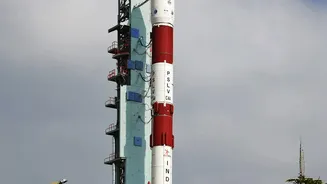
ISRO has been aware of this vulnerability and has been working to launch a new generation of replacement satellites, dubbed the NVS series. These come with upgraded technology, including indigenously developed atomic clocks, a longer 12-year lifespan, and a new L1 frequency band to make them more compatible with civilian devices. The first of this new breed, NVS-01, was successfully launched in May 2023 and is currently operational. However, the recovery effort hit a major snag. The next satellite in the series, NVS-02, suffered a launch failure in January 2025. Although it reached a preliminary orbit, a valve failure prevented its engine from firing to reach its final, operational position. This setback, combined with the continued attrition of the older satellites, left the NavIC constellation in its current depleted state and amplified the urgency of the missions to follow.
Why NVS-03 Is So Important
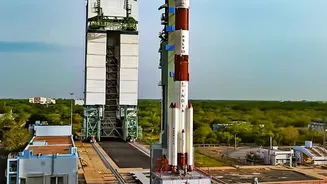
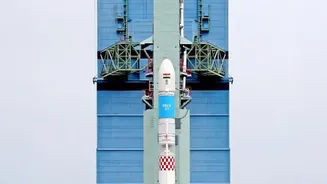
This is why the upcoming NVS-03 launch carries such unusual importance. It is no longer a routine mission to augment a functioning system; it is a critical mission of restoration. According to government updates from mid-2026, the NVS-03 satellite is ready for launch, with ISRO reportedly targeting a window in October 2026. A successful launch would be a game-changer, bringing the number of operational satellites back up to the magic number of four. This would reactivate NavIC's standalone positioning services, restoring a vital national capability for both strategic and civilian users. For the armed forces, it means regaining a secure, sovereign navigation tool essential for modern military operations without dependence on foreign networks. For the country, it represents a crucial step in ensuring the multi-crore investment in creating an independent navigation system does not falter.