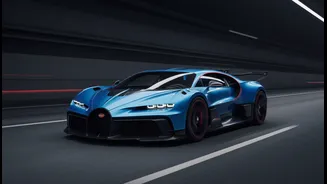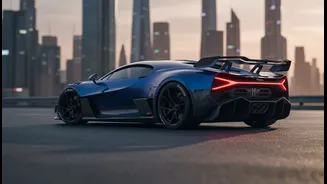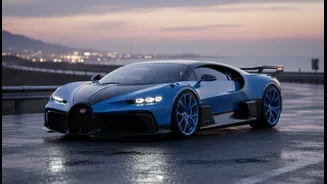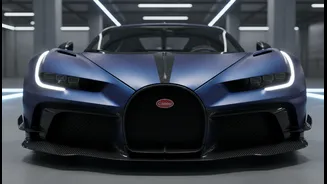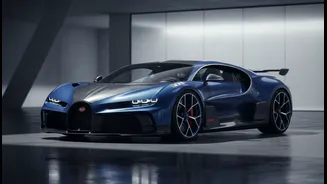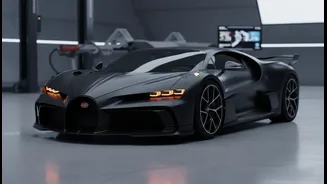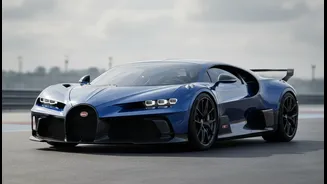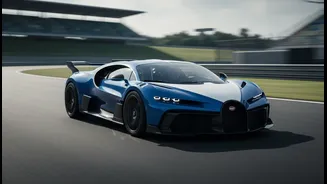






The Heart of the Beast
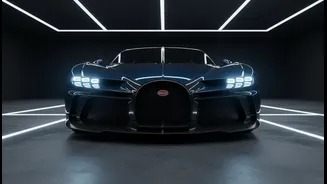
At the core of the Bolide is Bugatti's legendary 8.0-litre, quad-turbocharged W16 engine. While this powerhouse is familiar from the Chiron, for the Bolide it has been unleashed. Engineers modified the turbochargers and de-throttled the intake and exhaust
systems for faster response. The result is a staggering 1,600 PS (a metric equivalent to horsepower) and 1,600 Nm of torque, all running on commercially available 98 RON fuel. This isn't a detuned race engine; it's the ultimate expression of the W16, designed for raw, unadulterated performance. It represents the final, thunderous chapter for this iconic engine, as Bugatti has confirmed the Bolide is the last car that will be made with it. This powerplant is not just an engine; it's a statement of internal combustion's final, glorious peak.
An Obsession with Lightness
Generating immense power is one thing; making it effective is another. This is where the Bolide's weight—or lack thereof—comes into play. Bugatti set a target dry weight of just 1,450 kg. To achieve this, engineers undertook an obsessive mission to shed every possible gram. The car is built around a new, lightweight carbon fibre monocoque. Beyond that, almost every component was scrutinized. Screws and fasteners are made from titanium. Complex parts, like suspension push-rods, are 3D-printed from aerospace-grade titanium, resulting in components that weigh just 100 grams but can withstand immense force. The carbon-carbon brakes, similar to those in Formula 1, are not only powerful but also incredibly light. This fanatical dedication to lightness is what elevates the Bolide from a powerful car to a precision instrument.
The Magic Power-to-Weight Ratio
When you combine 1,600 PS with a 1,450 kg dry weight, you arrive at the Bolide's defining statistic: a power-to-weight ratio of 0.9 kg per PS. In simple terms, each unit of horsepower has less than one kilogram of car to move. This figure is in the same territory as elite LMP1 race cars and approaches the performance of Formula 1 cars. It translates into acceleration that can feel brutal, with a claimed 0-100 km/h time of just 2.2 seconds. But the ratio's true magic is revealed in corners and under braking. The car’s low inertia allows it to change direction with an agility that defies its massive engine. This is further enhanced by extreme aerodynamics that generate nearly three tonnes of downforce, effectively sucking the car onto the tarmac at speed.
Too Wild for the Street
The headline's mention of "roads" poses an interesting question, because the Bolide's performance is so unreasonable it is, in fact, not legal for public roads. It was designed from the ground up as a track-only machine, free from the compromises of road-car regulations concerning things like bumpers, emissions, and ride height. Bugatti itself limits its use to approved track day events. However, in a fascinating turn of events, British engineering firm Lanzante, famous for making McLaren F1 GTR race cars road-legal, unveiled the first road-converted Bolide in July 2026. This one-off project required significant modifications to the suspension and the addition of road-appropriate lights and tires. While Bugatti created the Bolide as a pure track weapon, Lanzante proved that with enough engineering ingenuity, even the most unreasonable machine can, in theory, be tamed for the street.