







A Storied Past: From Pluto and Beyond
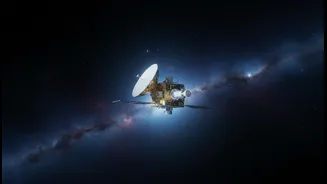
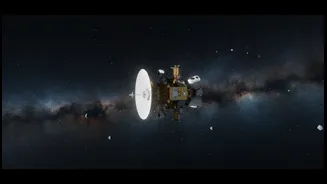
The probe in question is New Horizons, a name synonymous with one of the greatest achievements in modern space exploration. Launched in 2006, it was the fastest spacecraft ever to leave Earth, on a nine-year journey to the solar system's fringes. In July
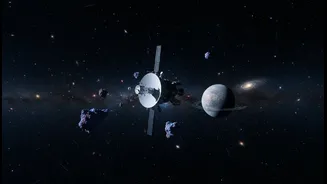
2015, it executed a flawless flyby of Pluto, transforming the dwarf planet from a fuzzy pixel into a complex world with towering ice mountains, vast nitrogen glaciers, and a surprisingly layered atmosphere. The images and data sent back were breathtaking, revealing a geologically active world and hinting at a possible subsurface ocean. But New Horizons wasn't done. On New Year's Day 2019, it flew past Arrokoth, a primordial object in the Kuiper Belt, a billion miles beyond Pluto. This made Arrokoth the most distant and primitive object ever explored up close by a spacecraft, offering a pristine glimpse into the building blocks of our solar system.
The Great Transition to a New Mission
Having completed its primary flyby missions, New Horizons has transitioned into a new role. There are no more close-up planetary portraits on its schedule. Instead, it has become a deep-space observatory. In late June 2026, after a 321-day hibernation period to conserve resources, the spacecraft woke up in good health, nearly 9.5 billion kilometres from Earth. The signal confirming it was awake took almost nine hours to reach mission control. This new phase moves the probe from being a visitor to other worlds to being a sentinel, tasked with studying the environment of the outer solar system itself. Its instruments, once focused on geology and atmospheres, are now pointed outwards to measure the particles and fields that define the boundary between our sun's influence and the vast expanse of interstellar space.
Peering into the Unknown
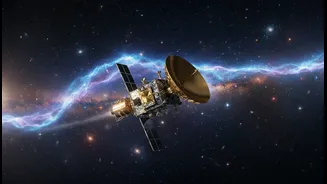
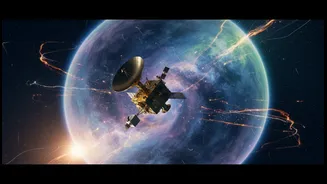
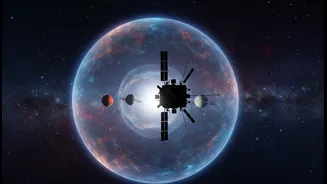
So, what are 'interstellar-edge measurements'? New Horizons is now studying the heliosphere—the giant, protective bubble of charged particles and magnetic fields blown outward by our sun. The mission's new goal is to measure this environment from a unique vantage point in the Kuiper Belt. Over the coming weeks, its instruments will begin a study of hydrogen gas distribution in the outer heliosphere. This data is crucial because it helps scientists understand the structure of the solar system's boundary and how it interacts with the interstellar medium. Only two other spacecraft, the venerable Voyagers, have crossed this boundary, but they were launched in 1977 with different instruments. New Horizons has more modern tools that can provide new kinds of data on the 'termination shock', where the solar wind dramatically slows down, and the 'heliopause', where it finally gives way to the galaxy beyond.
The Long, Quiet Road Ahead
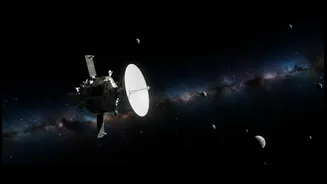
The journey from here is a long and patient one. New Horizons is speeding away from us at about 480 million kilometres per year. While it may not reach the termination shock until sometime in the 2030s, the data it gathers along the way is invaluable. The spacecraft continues to observe other Kuiper Belt objects from a distance, measuring the dust environment, and monitoring the solar wind. This long-term monitoring provides a unique record of conditions in the far reaches of the solar system. Mission operators have updated its software to handle the increasing communication delays and declining power from its radioisotope thermoelectric generator, ensuring it can operate as autonomously as possible. The work being done now is preparing for the day New Horizons joins the Voyagers as only the third human-made object to enter the space between the stars, carrying the story of its own incredible journey with it.