


An Unlikely Pair
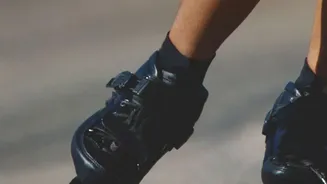
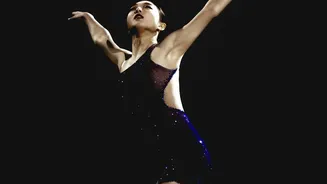
Skating, whether on ice, pavement, or a ramp, is an exercise in managing chaos. It’s about reacting to imperfections in the surface, shifting your weight in fractions of a second, and staying upright against the forces of momentum and gravity. The environment
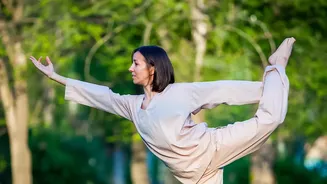
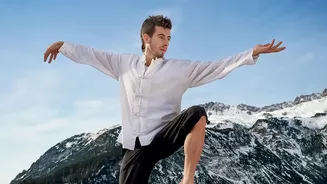
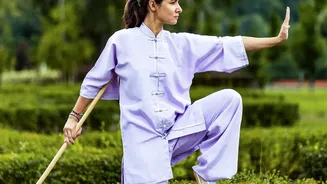
is dynamic and unpredictable. Tai Chi, conversely, is a discipline of control and deliberation. Often described as 'meditation in motion', its movements are fluid, slow, and meticulously practiced. Practitioners focus on the precise transfer of weight and perfect posture. The goal isn't to react to external chaos, but to cultivate internal harmony and stability. The apparent opposition between these two activities is what makes their fundamental similarity so compelling: both are deeply rooted in the art of balance.
The Science of Staying Upright
At the heart of both practices lies proprioception—your body's awareness of its position in space. For a skater, this is the subconscious sense that allows them to make micro-adjustments to their ankles, knees, and hips to remain balanced on a thin blade or a set of wheels. It's an intuitive, high-speed feedback loop. Tai Chi trains this same system, but through a different method. By moving slowly and deliberately, practitioners have the time to consciously feel their center of gravity and how it shifts with every movement. This heightened awareness of balance, or 'proprioceptive acuity', builds a deep-seated understanding of stability that becomes second nature. Tai Chi essentially provides a masterclass in the very 'body awareness' that skaters rely on instinctually.
Slow Practice for Fast Performance
The core of the comparison hinges on a powerful training concept: practicing slowly to perform quickly. When learning a complex motor skill, performing it at high speed doesn't allow the brain enough time to process and correct movements. By slowing down, as in Tai Chi, you create the mental space to memorize the correct 'feel' of a movement, ingraining it into your muscle memory. This allows for better form and technique. This is directly applicable to skating. A skater who understands their balance on a deep, physical level can make faster and more efficient adjustments. When they hit an unexpected crack in the pavement or lose an edge on the ice, their body doesn't panic; it knows how to recover because it has been trained to understand the fine points of stability. The slow, intentional weight shifts of Tai Chi build a foundation for the rapid, reactive weight shifts required in skating.
A Shared State of Mind
Beyond the physical mechanics, there is a mental connection. Elite athletes in any discipline often describe a state of 'flow,' where conscious thought falls away, and the body performs based on highly trained instincts. Skaters carving a line or landing a trick are in this state. Similarly, Tai Chi aims to quiet the 'mental chatter' and connect the mind and body in continuous, flowing movement, achieving a state of mindful awareness. Both activities, in their own way, demand a level of focus where the practitioner is fully present in the moment. For the skater, this focus is on the external environment. For the Tai Chi practitioner, the focus is internal. Yet, the outcome is the same: a seamless integration of mind and body that allows for graceful, efficient movement.