


The Key Players
At the center of this change are two of AI's most influential figures. Demis Hassabis is the visionary co-founder of DeepMind, the London-based lab Google acquired in 2014. A Nobel Prize winner for his work on the protein-folding AI AlphaFold, Hassabis is a leading
voice on the long-term potential and safety of artificial general intelligence (AGI). Koray Kavukcuoglu, his successor for day-to-day operations, is a seasoned technical leader who has been with DeepMind for over a decade. As the former Chief Technology Officer, Kavukcuoglu has been instrumental in the development of key models and will now serve as Senior Vice President of Google DeepMind, reporting directly to Alphabet CEO Sundar Pichai.
From Two Capitals to One Vision
For years, Google's AI efforts were split between two powerful, and sometimes competing, hubs: DeepMind in London and Google Brain in California. This created internal friction and slowed down the process of turning groundbreaking research into consumer-facing products. In 2023, Google merged the two into a single unit, Google DeepMind, under Hassabis's leadership. The recent transition represents the final stage of that consolidation. With Kavukcuoglu, who recently relocated from London to California, taking operational charge, the center of gravity for Google's AI development has decisively shifted to its Silicon Valley headquarters. This move unwinds the dual-hub structure, aiming to create a more unified and agile organization.
The Urgent Need for Speed
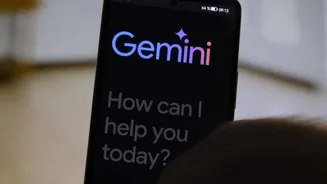
The reorganization is not happening in a vacuum. Google faces immense pressure from rivals like OpenAI and Anthropic, who have been perceived as iterating and shipping new AI models and features more quickly. Delays in releasing flagship versions of its Gemini models have raised concerns among investors and industry observers. By placing Kavukcuoglu in charge of the entire pipeline—from frontier research to the Gemini app and developer tools—Google is making a clear bet on execution. The goal is to shorten the cycle time from breakthrough research to product deployment, ensuring Google can compete more effectively in the fast-paced AI race.
A New Focus: Product and the Big Picture
This transition cleverly splits Google's AI focus into two critical lanes. Kavukcuoglu is now tasked with the immense operational challenge of building and shipping Gemini models on schedule. His role is explicitly about product delivery and execution. This frees up Hassabis to focus on what he calls the “big picture”. In his new dual role as Chairman of Google DeepMind and Chief Scientist of Alphabet, Hassabis will concentrate on long-term AGI research, its societal implications, and its potential for scientific breakthroughs, such as his work with the drug discovery company Isomorphic Labs. He has stated his belief that AGI is “close at hand” and that this move gives him the space to focus on ensuring its development benefits humanity.
An End of an Era, A Test of Culture
The transition also coincides with the departure of several veteran AI leaders from Google, most notably Jeff Dean, who is leaving to form a new AI startup. This talent shift underscores the intense competition for top researchers and the appeal of more nimble startups. For Google, the change marks the end of DeepMind's era as a semi-independent research lab and its full integration into the parent company's corporate structure. The key question now is whether this new, more centralized and product-focused approach can accelerate Google's progress without stifling the research culture that produced so many of its foundational breakthroughs in the first place.