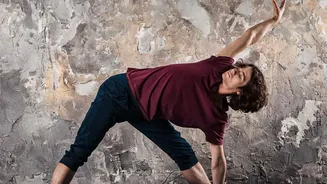





The Power of a Gentle Twist
Controlled twists are a cornerstone of a balanced yoga practice for good reason. When performed gently, they can help maintain the natural range of motion in the spine. Think of your day: we spend so much time sitting, hunching over desks, or performing
repetitive forward movements. Twists move the spine in a different direction, which can help reduce stiffness. Many yoga teachers believe that twisting helps stimulate digestion by gently compressing and massaging the abdominal organs. The key is to move slowly and with your breath, never forcing the rotation. The goal is a sense of release, not strain. On an inhale, lengthen your spine; on an exhale, gently deepen the twist.
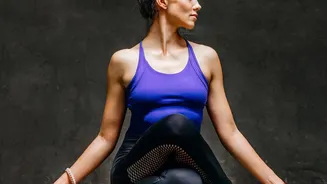
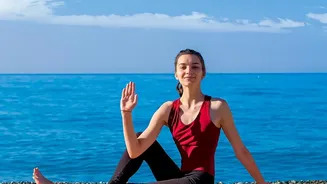
Movement 1: Simple Seated Twist
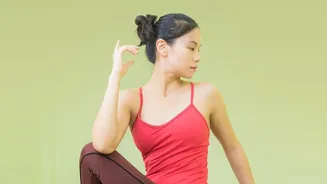
This is a perfect movement to do in a chair at work or on the floor at home. Sit tall with a long spine and your feet flat on the floor. Inhale to lengthen through the crown of your head. As you exhale, gently twist your torso to the right, placing your left hand on the outside of your right knee and your right hand on the back of your chair or on the floor behind you for support. Your hips should remain stable and facing forward. The twist should come from your mid-back, not just your neck. Hold for a few deep breaths, feeling a gentle stretch. Inhale to return to the center and exhale to repeat on the left side. This simple action can relieve tension in the back and shoulders.
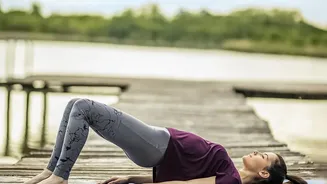
Movement 2: Reclined Spinal Twist
A reclined or supine twist is one of the most relaxing poses, often used at the end of a yoga class to wind down. Lie on your back and draw both knees into your chest, giving your lower back a gentle hug. Extend your arms out to the sides in a 'T' shape. As you exhale, slowly lower both knees to your right side, keeping your shoulders on the floor. You can turn your head to the left if that feels comfortable for your neck. To make the pose more supportive, you can place a pillow or block under or between your knees. Stay here for several breaths, allowing gravity to do the work. This pose calms the nervous system and releases tension in the spine.
The Art of Active Relaxation
Relaxation in yoga isn't just about collapsing on the couch. It's about consciously releasing tension and calming the nervous system. Poses that promote relaxation are often gentle, supported, and held for longer periods, allowing your mind and body to enter a state of 'rest and digest'. These poses are not about achieving a deep stretch but about finding stillness and letting go. Integrating them into your routine, especially before bed or during a stressful day, can make a significant difference in your overall well-being and sleep quality.
Movement 3: Child's Pose (Balasana)
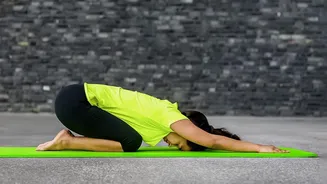
Child's Pose is a foundational resting pose for a reason: it's incredibly soothing for the nervous system. To start, kneel on the floor, touch your big toes together, and sit back on your heels. You can keep your knees together or separate them hip-width apart or wider. Exhale and fold your torso forward, resting it between or on top of your thighs. Rest your forehead on the mat. Your arms can be extended in front of you or resting alongside your body with the palms facing up. If your head doesn't comfortably reach the floor, rest it on a block or folded blanket. Breathe deeply into your back, feeling it expand with each inhale.
Movement 4: Legs-Up-The-Wall (Viparita Karani)
This simple inversion is profoundly relaxing and has numerous reported benefits. It's known to relieve tired legs and feet and may help reduce swelling after a long day of sitting or standing. To get into the pose, sit on the floor with one side of your body against a wall. Gently swing your legs up the wall as you lie down on your back. Your hips can be right against the wall or a few inches away. Let your arms rest by your sides, palms up. There is nothing to 'do' in this pose except breathe and relax. Many practitioners find it calms the mind and helps alleviate stress and tension. Hold for anywhere from 5 to 10 minutes.