



Delhi’s Overwhelming Strain
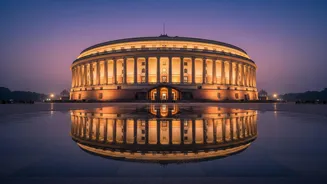
India’s capital is a megacity wrestling with monumental challenges. As one of the world's most populous urban centres, Delhi grapples with severe air and water pollution, chronic traffic congestion, and the immense infrastructural demands of its ever-growing
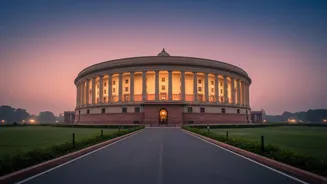
population. Beyond these daily struggles lies a less visible but more profound threat: seismic risk. Located in Seismic Zone IV, the region has a high vulnerability to powerful earthquakes. This risk is amplified by dense, often unregulated construction in many areas. The concentration of India's entire political and administrative machinery in a single, high-risk location raises a critical question about governmental continuity. Should a major catastrophe strike, how would the nation continue to function?
Japan's Quest for Resilience
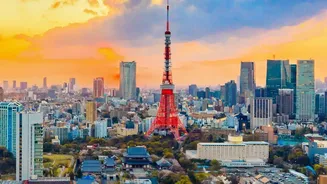
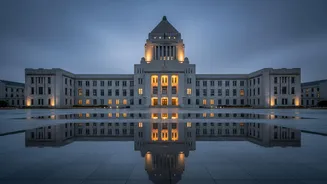
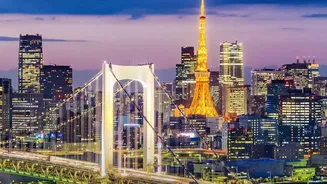
Japan has been asking itself the same question. In July 2026, the Japanese parliament passed a law to pave the way for a 'backup capital'. The motivation is clear: Tokyo sits in one of the most seismically active regions on Earth, and the government estimates a 70% chance of a magnitude 7 earthquake striking the metropolitan area within the next 30 years. Such an event could paralyse the government and trigger a global economic crisis. The plan is not to build a new city from scratch but to designate an existing city, like Osaka, Fukuoka, or Nagoya, to take over essential government and economic functions if Tokyo is incapacitated. This ensures a plan for continuity of government, a concept that establishes procedures for essential operations to continue during a catastrophe.
A Tale of Two Capitals
On the surface, the logic for a backup seems to apply to both Delhi and Tokyo. Both are dominant national centres facing immense disaster risk, and both countries have highly concentrated political and economic power in their capitals. However, the contexts differ significantly. Japan's plan is born from a specific, well-defined threat and is backed by the resources of a highly developed nation. The recent law provides a legal framework and has already sparked competition among cities vying for the role, with promises of investment and infrastructure upgrades. In India, the conversation is more fragmented. The idea of a second capital has been floated before, notably in 2018 when a Karnataka minister proposed Bengaluru as a second hub to better integrate South India and ease the burden on Delhi. The arguments then were as much about national integration and correcting regional imbalances as they were about disaster planning. Proponents argued that a second administrative centre in the south could make governance more efficient for a country of India's scale.
The Hurdles to a 'Backup Delhi'
Directly replicating Japan’s model in India would be a Herculean task. The sheer scale of India's population and developmental needs presents a different order of challenge. The financial cost of establishing and maintaining a parallel administrative infrastructure would be astronomical. Furthermore, the political will required to select a city and devolve functions would be immense, likely triggering intense competition and debate among states. Critics of the Japanese plan itself point to the high costs and potential for political infighting, with some viewing it as a move to favour Osaka, the political base of a key coalition partner. Similar political challenges would undoubtedly surface in India. There are also experts who argue that modern technology, such as AI and advanced digital infrastructure, may reduce the need for physical co-location of government functions, potentially making such massive relocation projects obsolete.
Rethinking the Solution
Perhaps the true lesson from Japan isn't about literally building a second capital, but about embracing the underlying principle: decentralisation. Rather than a single 'backup', a more feasible approach for India might involve a strategic distribution of federal functions across several cities. This could mean establishing permanent homes for specific ministries in different states, creating regional hubs for judicial bodies like the Supreme Court, and further empowering state capitals. This 'distributed governance' model could build resilience, spur regional development, and make the administration more accessible without the colossal expense of creating a single new power centre. It shifts the focus from a Plan B to creating a more robust and flexible Plan A.