


The Darjeeling Himalayan Railway, West Bengal
Arguably the most famous of India's mountain railways, the Darjeeling Himalayan Railway has been charming passengers since 1881. A UNESCO World Heritage Site, this narrow-gauge marvel runs from New Jalpaiguri to Darjeeling, covering 88 kilometres of stunning
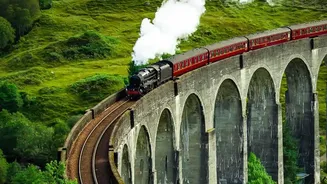
terrain. The train negotiates steep gradients using ingenious loops and zig-zags, including the famous Batasia Loop, which offers a panoramic view of Darjeeling with the majestic Kanchenjunga in the background. Chugging alongside the Hill Cart Road, the train passes through bustling market towns, dense forests, and verdant tea gardens, making for an unforgettable experience. Its most beloved section is the 'Joy Ride', a steam-hauled tourist train that runs from Darjeeling to Ghum, India’s highest railway station.
The Kalka-Shimla Railway, Himachal Pradesh
Built to connect the summer capital of British India, Shimla, with the plains, the Kalka-Shimla Railway is an engineering feat that was inaugurated in 1903. Also a UNESCO World Heritage Site, this railway covers a 96-kilometre route that climbs over 1,400 metres in altitude. The journey is a spectacle of stunning vistas, winding through the Shivalik foothills and passing over 864 bridges and through 102 tunnels. The longest of these, the Barog Tunnel, is steeped in local legend. The train moves at a leisurely pace, allowing passengers to soak in the views of pine forests, terraced fields, and charming colonial-era stations. The journey to the 'Queen of Hills' is as enchanting as the destination itself.
The Nilgiri Mountain Railway, Tamil Nadu
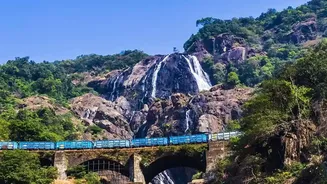
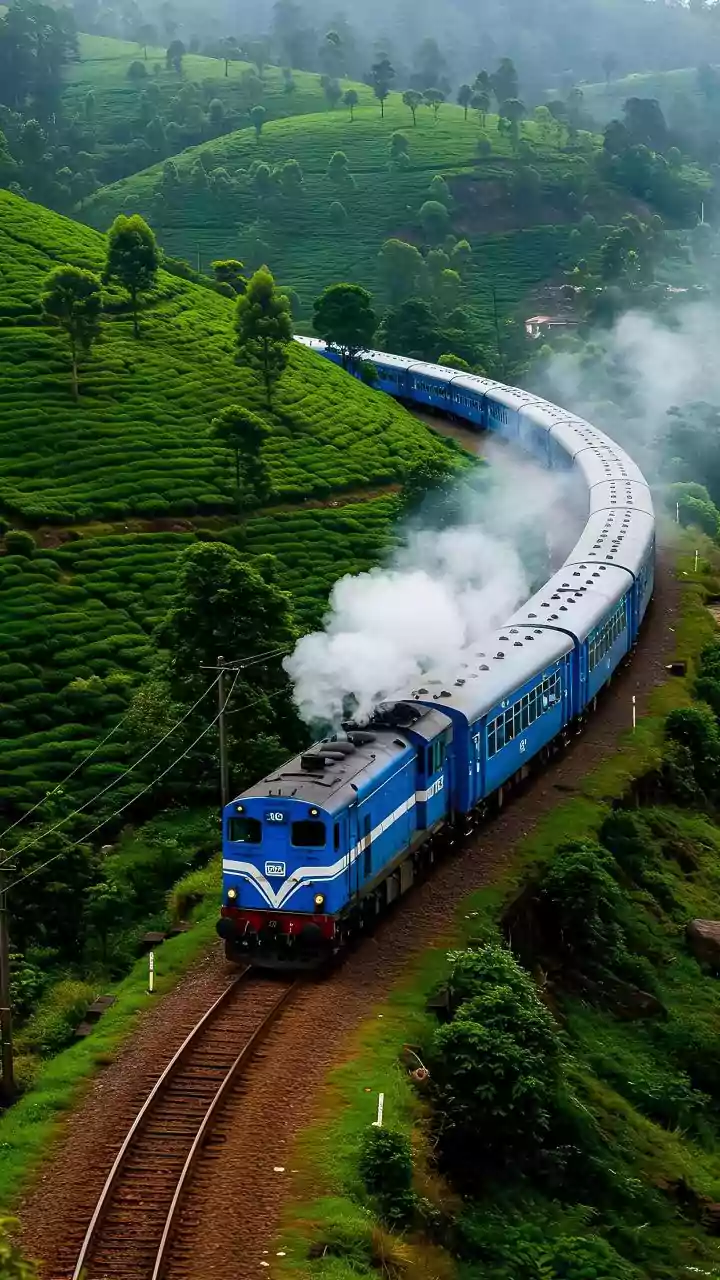
The star of many South Indian films, the Nilgiri Mountain Railway takes you on a picturesque journey to the popular hill station of Ooty (Udhagamandalam). Covering a 46-kilometre track from Mettupalayam, this is another of India's UNESCO-listed mountain railways. What makes this railway unique is its use of a rack and pinion system—the only one of its kind in India—to navigate the steepest track in Asia. The train ascends from the hot plains through 208 curves, 16 tunnels, and across 250 bridges, with the section between Mettupalayam and Coonoor being particularly scenic. Pulled by a classic steam locomotive on parts of its route, the journey offers breathtaking views of rocky terrain, lush forests, and sprawling tea plantations.
The Matheran Hill Railway, Maharashtra
Winding its way through the lush Western Ghats, the Matheran Hill Railway offers a peaceful 21-kilometre journey from Neral to the eco-sensitive hill station of Matheran. Opened in 1907, this railway is a lifeline to Asia's only automobile-free hill station, ensuring its tranquility remains undisturbed. The narrow-gauge track makes sharp turns, including the famous 'One Kiss Tunnel', so named for its brief length. The train travels slowly, allowing passengers to enjoy the dense forests and panoramic views of the surrounding valleys. Though it can be suspended during heavy monsoons for safety, this journey is a charming escape from the bustle of nearby Mumbai, offering a true immersion in nature.
The Kangra Valley Railway, Himachal Pradesh
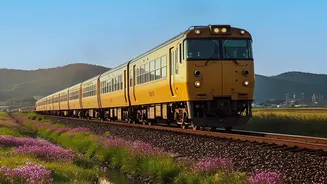
Though less famous than its Shimla counterpart, the Kangra Valley Railway is the longest narrow-gauge line in India and offers an equally spectacular experience. The 164-kilometre route connects Pathankot in Punjab to Joginder Nagar in Himachal Pradesh, traversing the beautiful Kangra Valley. Unlike other mountain railways, it uses only two tunnels, instead relying on a winding path that follows the valley contours. The journey provides magnificent, uninterrupted views of the snow-capped Dhauladhar mountain range. Crossing nearly 1,000 bridges over rivers and streams, the train serves as a crucial link for local communities and a hidden gem for travellers seeking an authentic and scenic rail adventure.