




Earth's Moving Puzzle Pieces
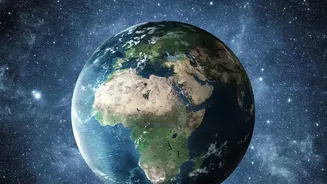
The story begins with plate tectonics. The Earth’s outer shell, its crust, isn't a single solid piece. It’s broken into massive slabs called tectonic plates, which float on the planet's semi-molten mantle. These plates are constantly moving, crashing
into each other, pulling apart, or sliding past one another. While this movement is imperceptible to us, averaging just a few centimetres per year, it fundamentally shapes the world’s geography over geological time. Oceans are born when plates pull apart, and they can shrink when plates collide. The Atlantic Ocean, for instance, is currently expanding. This is happening because a massive underwater mountain range, the Mid-Atlantic Ridge, is pushing the tectonic plates of the Americas away from those of Europe and Africa at a rate of about four centimetres annually.
The Pacific's Disappearing Act
The Pacific Ocean finds itself in the opposite situation. Unlike the Atlantic, the Pacific is almost completely encircled by areas where tectonic plates are colliding. This process is called subduction. In these zones, the dense oceanic crust of the Pacific Plate is being forced to dive, or subduct, beneath the lighter continental plates that border it. As the Pacific Plate sinks back into the Earth's mantle, it is effectively recycled, and the ocean basin slowly but surely contracts. This process is happening on multiple sides of the ocean at once, causing it to shrink by roughly 2.5 centimetres each year. While the Pacific does have its own seafloor spreading centre, the East Pacific Rise, which creates new crust, the rate of destruction at its edges is far greater than the rate of creation. This imbalance ensures a net loss in size over time.
Welcome to the Ring of Fire
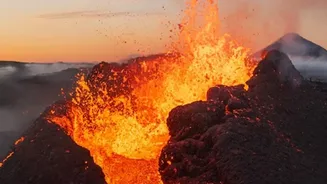
The edges of the Pacific Plate, where all this subduction is happening, are famous for another reason: they form the Ring of Fire. This 40,000-kilometre, horseshoe-shaped belt is the most geologically active region on the planet. The immense friction and pressure from the descending plate melts rock, which then rises to the surface to create the volcanoes that dot the ring, from the Andes to Japan to the Cascades in North America. This same process is responsible for about 90% of the world's earthquakes. So, the very forces that make the Ring of Fire a hotbed of seismic and volcanic activity are the same ones pulling the Pacific Ocean's floor away, shrinking it piece by piece.
A Tale of Two Timescales
This brings us to the second part of the riddle: rising sea levels. While the Pacific shrinks on a geological timescale measured in millions of years, sea levels are rising on a human timescale of decades and centuries. The two phenomena are driven by completely separate forces and operate on vastly different schedules. Global sea level has risen by 21-24 centimetres since 1880, and the rate is accelerating. This increase is caused primarily by the thermal expansion of warming seawater and the melting of glaciers and ice sheets—both direct consequences of global climate change. This rise is a relatively rapid event, with measurable impacts on coastal communities today, especially on low-lying Pacific islands.