





From Grand Plan to Intricate Parts
The Indian Space Research Organisation (ISRO) has officially begun designing the critical subsystems for the nation's first indigenous space station. This marks a pivotal shift from the high-level architectural planning to the detailed engineering of the station's
core components. In simpler terms, if the initial phase was the master blueprint of a house, this new phase is about designing the plumbing, the electrical wiring, the ventilation, and the foundation. According to government statements, the Baseline Design Review for the station's first module has been completed, with 31 baseline design documents released to pave the way for this next stage. This is the moment the station starts becoming a tangible reality, piece by intricate piece.
Anatomy of India's Home in Orbit
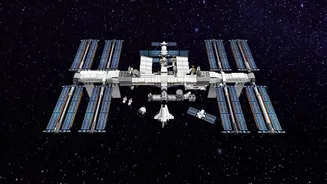
The Bharatiya Antariksh Station is envisioned as a modular orbital laboratory, expected to weigh around 52 tonnes once fully assembled. It will orbit the Earth at an altitude of approximately 400-450 kilometres. The station is designed to be built in phases, ultimately consisting of five distinct modules connected together. These will include a base module, a core docking module, science and lab modules, and a common working area. Once operational, it will be able to host a crew of three to four astronauts for long-duration stays of three to six months, allowing for sustained scientific research in a microgravity environment.
The Stepping Stone of Gaganyaan
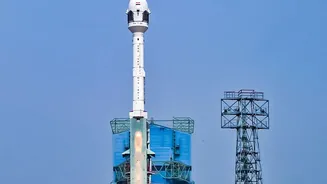
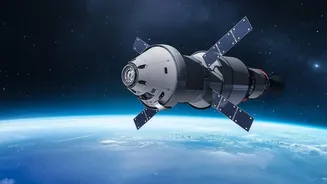
The path to the Bharatiya Antariksh Station is being paved by the Gaganyaan programme, India's inaugural human spaceflight mission. The technologies being developed and perfected for Gaganyaan—from the human-rated launch vehicle (HLVM3) and orbital module to the life support systems and re-entry technology—are fundamental building blocks for the space station. For instance, developing reliable docking technology, which allows one spacecraft to connect with another in orbit, is critical for both Gaganyaan and for assembling the multiple modules of the BAS. Similarly, expertise gained in life support systems will be scaled up for the long-duration needs of a space station.
The Road to 2035
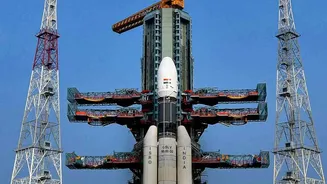
ISRO has laid out an ambitious but methodical timeline for this monumental project. The first module, designated BAS-01, is targeted for launch in 2028 aboard an LVM3 rocket. This will be followed by a series of launches to add the other four modules, with the entire station expected to be fully operational by 2035. This phased approach allows ISRO to test, validate, and build upon its capabilities with each launch. The entire project is part of a larger 25-year roadmap for India's space exploration, which ultimately aims to send an Indian astronaut to the Moon by 2040.
Why This Milestone Matters
Moving to the subsystem design phase is more than just a technical step; it's a declaration of India's growing self-reliance and ambition in space. Establishing a space station will place India in an elite group of nations with the capability to maintain a sustained human presence in orbit. This opens up unparalleled opportunities for scientific research in fields like medicine, materials science, and Earth observation that can only be conducted in a microgravity environment. Beyond the scientific gains, the project is a massive catalyst for technological innovation, fostering high-tech manufacturing and inspiring a new generation of scientists and engineers across the country.