




The Science of Unstable Glaciers
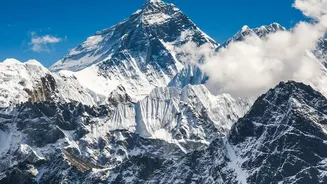
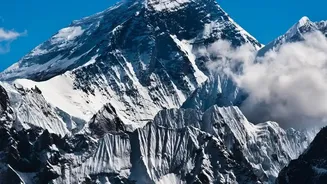
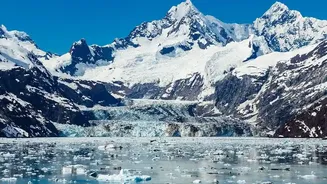
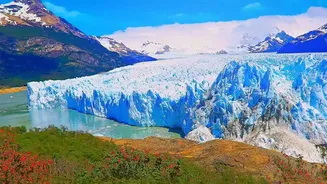
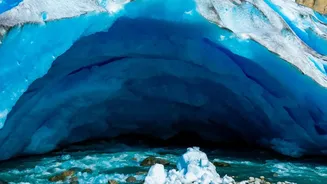
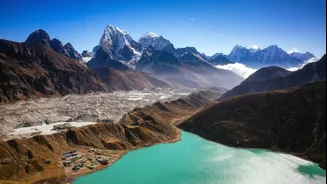
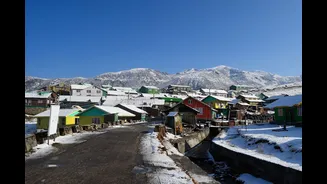
The Himalayas are warming at a rate faster than the global average, causing its thousands of glaciers to melt and retreat. This meltwater pools into vast glacial lakes, often held back only by unstable natural dams of rock and debris called moraines.
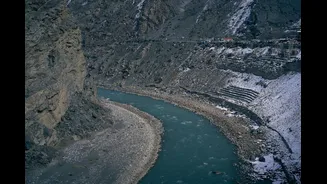
These lakes can grow rapidly and become ticking time bombs. The primary threat is a Glacial Lake Outburst Flood (GLOF), a sudden and catastrophic event where the moraine dam fails, releasing an immense torrent of water, ice, and debris downstream with little to no warning. A recent disaster on August 26, 2026, was triggered by a massive collapse of rock and glacier ice, which plunged into a river valley and created a devastating flood wave along the Bhote Koshi-Trishuli river system. This event highlights how glacier instability can trigger cascading disasters.
A Cascade of Hazards: Floods and Landslides
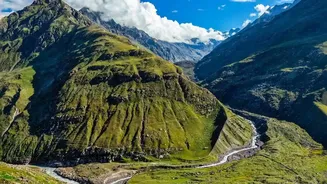
The danger isn't just from GLOFs. The same warming that melts glaciers also thaws permafrost—the frozen ground that acts like cement, holding steep mountain slopes together. As this cryospheric glue weakens, the risk of massive landslides increases dramatically. These landslides can occur on their own or be triggered by heavy monsoon rains, which are also becoming more erratic due to climate change. A single event can set off a chain reaction: a landslide can crash into a glacial lake, causing it to burst, or it can temporarily dam a river, leading to a massive flood when the blockage gives way. The result is a fast-moving slurry of water, mud, and boulders that can obliterate entire villages, roads, and critical infrastructure miles downstream.
The Human and Economic Toll
For the people of Nepal, these risks are not abstract scientific concepts but an immediate threat to life and livelihood. The August 2026 floods claimed over 1,400 lives across Nepal and Tibet, with thousands more missing. Entire communities were buried, and vital infrastructure, including homes, bridges, and hydropower plants, was destroyed. Hydropower is particularly vulnerable, as it generates over 95% of Nepal's electricity. The recent floods damaged or disrupted about 10% of the country's installed generation capacity, with reconstruction costs estimated to be nearly a tenth of Nepal's GDP. This places immense strain on a nation that has contributed negligibly to the global carbon emissions driving this crisis.
The Race for Solutions
Addressing this escalating threat requires a two-pronged approach. Globally, it necessitates aggressive action to curb the carbon emissions that are warming the planet. Locally, Nepal is focused on adaptation and mitigation. Efforts are underway to identify the most dangerous glacial lakes, with projects aimed at carefully lowering their water levels to reduce the risk of a breach. Authorities are also working to establish and improve early warning systems, combining satellite monitoring with community-based alerts to provide precious time for evacuation. However, the sheer scale of the Himalayas makes comprehensive monitoring a monumental challenge. Experts also call for stricter regulation of construction in flood-prone river corridors and investment in climate-resilient infrastructure.