





It Starts With a Violent Shove
The Earth's surface is not one solid piece. It’s broken into massive tectonic plates that are constantly moving. Japan sits at the meeting point of four major plates, a region of intense seismic activity known as the 'Ring of Fire'. Most tsunamis are born
in subduction zones, where one plate is forced under another. For centuries, friction can cause these plates to become stuck. Stress builds up, and when the plates finally slip, it releases a colossal amount of energy as an earthquake. But not all quakes make tsunamis. The key is how the seabed moves. Sideways slippage might just rattle the water, but a sudden vertical movement—one plate thrusting upwards or dropping down—acts like a giant paddle, shoving the entire column of water above it.
From Deep Water Ripple to Coastal Giant
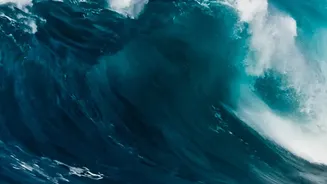
Imagine lifting the floor of a swimming pool. The water above it would be lifted too, creating a bulge on the surface that gravity immediately tries to flatten. This is exactly what happens in the ocean, but on an unimaginable scale. A vertical seafloor displacement of just a few metres can lift billions of tonnes of water. This energy then radiates outwards as a series of waves. In the deep ocean, these tsunami waves might be less than a metre high and travel unnoticed at the speed of a jet airliner. But as they approach land, the dynamic changes dramatically. The shallower coastal seabed creates friction, slowing the bottom of the wave. The energy has to go somewhere, so the wave's height grows exponentially as the water piles up, transforming a small deep-ocean ripple into a monstrous wall of water.
Why Warnings Are a Race Against Time
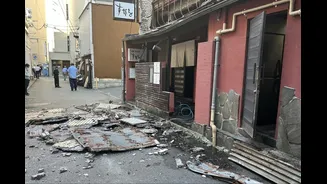
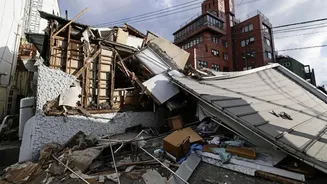
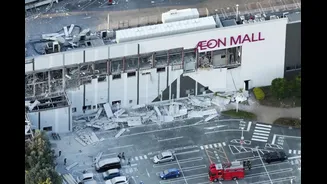
On July 28, 2026, a magnitude 7.1 earthquake struck off the coast of Kyushu, Japan. The Japan Meteorological Agency (JMA) issued a tsunami alert within minutes. This rapid response is possible thanks to one of the world's most advanced warning systems, comprising over a thousand seismographs. The system instantly detects the initial, less-harmful 'P-waves' from a quake and calculates the epicentre and magnitude. If the quake meets the criteria for tsunami generation—typically a shallow, powerful undersea quake with vertical movement—warnings are broadcast across television, radio, and mobile networks, often within three minutes. This system buys crucial time for coastal communities to evacuate to higher ground, a process that has saved countless lives.
A Lesson for All Coastlines
While Japan's frequent quakes make it a focal point for tsunami science, the underlying principles are universal. More than 80% of the world's tsunamis occur in the Pacific Ocean, but any region with major subduction zones is at risk. The devastating 2004 Indian Ocean tsunami was a tragic reminder of this. Triggered by a massive earthquake off the coast of Sumatra, it sent waves across the entire basin, affecting countries thousands of kilometres away. This event highlighted the global need for robust warning systems and public education. Understanding that a major undersea earthquake is not just a tremor but a potential tsunami trigger is the first and most critical step in coastal safety, whether you live in Mumbai, Chennai, or anywhere with a connection to the sea.