



A New Kind of Feast
The food festival scene in India has exploded into a vibrant, must-do cultural event. Sprawling grounds in cities like Delhi, Mumbai, and Bengaluru now host massive gatherings like Horn OK Please and Zomaland, which are less like traditional melas and more
like culinary theme parks. These events bring together dozens, sometimes hundreds, of food brands under one roof, from beloved local street food vendors to innovative, up-and-coming culinary creators. The sheer scale is staggering, with some festivals boasting over 5,000 dishes on offer, spanning everything from regional Indian classics to global cuisines like Korean, Mexican, and Italian. The goal is no longer to just have a meal, but to have an experience—a sentiment that perfectly sets the stage for a more communal way of eating.
The Economics of Tasting
Let's be practical: attending a major food festival isn't always cheap. With entry fees and the temptation of countless stalls, an individual can quickly run up a significant bill trying to sample everything that looks appealing. This is where the group dynamic becomes a financial advantage. Splitting the cost of multiple dishes allows everyone in the group to taste a wider variety of foods without the financial burden of buying several full-sized portions for themselves. A group of four might grab loaded fries from one stall, a pizza slice from another, momos from a third, and dessert jars from a fourth, all for a fraction of what it would cost each person to buy those items individually. It’s a smart strategy that turns the festival into an affordable tasting menu, maximising both the culinary experience and the budget.
Designed for Division
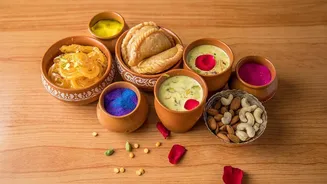
Food vendors at these festivals are acutely aware of this shift and have adapted their menus accordingly. Portions are often designed to be shareable. Think loaded fries, platters of kebabs, sharable portions of biryani, and pizzas sold by the slice. This isn't just a happy accident; it's a strategic move. Vendors know that a group is more likely to try their offering if it’s easy to divide. Even desserts, like cupcakes or doughnut boxes, are inherently suited for sharing. This contrasts with a traditional restaurant meal where ordering and sharing multiple main courses can be cumbersome. At a food festival, the entire environment is geared towards quick, varied, and communal consumption.
A Bite of Everything
The biggest draw of a food festival is variety. Nobody goes to one just to eat a single dish they already know and love. The thrill lies in discovery—trying that Tibetan laphing, sampling a new kind of fusion momo, or tasting a dessert from a viral baker. Sharing is the key that unlocks this variety. An individual diner might be full after one or two items, but a group can collectively conquer a dozen different stalls. This allows everyone to get a small taste of everything, compare notes, and debate which stall was the ultimate winner. The tradition of sharing food is deeply embedded in Indian culture, from family thalis to festive daawats, and these modern festivals are simply a new stage for this communal joy.
The Social Ingredient
Beyond the practical and economic benefits, sharing food is fundamentally a social act. Huddling together to decide which stall to hit next, passing around a plate of spicy chaat, and capturing the moment for social media are all part of the festival experience. Food becomes the centerpiece of the conversation and the shared activity that bonds the group. In a world where digital interactions often dominate, the simple, tangible act of sharing a meal provides a powerful point of connection. These festivals create a vibrant, temporary community where strangers and friends alike can bond over a universal love for good food. The dishes are not just sustenance; they are conversation starters, memory makers, and the very glue of the social gathering.