



Redefining Success in Rocket Science
In traditional aerospace, an engine failure is a catastrophic event. But in the world of SpaceX's Starship program, it’s a valuable data point. A hypothetical 14th flight that reaches its key objectives despite a malfunctioning engine isn't just a win;
it's a validation of a daring development philosophy. Unlike government-led programs that spend decades on design and simulation to avoid any possibility of failure, SpaceX builds, flies, and often breaks its prototypes in the open. This approach, known as iterative design, treats each flight not as a final performance but as an experiment where the main goal is to learn. If the rocket completes its primary mission—like reaching a specific altitude, testing a flap, or surviving reentry—then it's a success, even if parts of it spectacularly disassemble along the way. The payload for these tests isn't a satellite; it's the data collected from thousands of onboard sensors, which is streamed back to engineers in real-time.
A History of 'Successful Failures'
The Starship program is built on a legacy of learning from what goes wrong. The very first integrated flight test in April 2023 ended in a fiery explosion four minutes after launch, yet was hailed for simply clearing the launchpad. Subsequent flights pushed the boundaries further. Integrated Flight Test 2 (IFT-2) achieved successful stage separation before it was lost. IFT-3 made it to space and completed a fuel transfer test before being destroyed on reentry. The fourth flight was a monumental leap, with both the Super Heavy booster and the Starship upper stage achieving controlled splashdowns for the first time. Each 'failure' solved critical problems, from engine reliability and stage separation to atmospheric reentry control. An engine shutting down on a later flight is seen in this context—another known variable to be solved, not a disaster. As long as the vehicle can compensate and continue its mission, it demonstrates resilience, a key feature for an eventual human-rated spacecraft.
The Complexity of 33 Raptor Engines
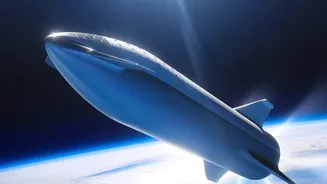
The sheer power of the Starship system makes anomalies almost inevitable. The Super Heavy booster is powered by 33 sea-level Raptor engines, while the Starship upper stage has six of its own. Orchestrating this many high-performance engines simultaneously is an immense engineering challenge. Early flights saw multiple engines fail during ascent. However, SpaceX has designed the system with enough redundancy to handle several engine-out scenarios. The onboard computers can adjust the thrust of the remaining engines to stay on course. Therefore, a single engine failure that doesn't derail the mission is a powerful demonstration of the vehicle's robustness. It proves the design is fault-tolerant, a critical requirement for a reusable launch system intended to fly frequently and safely. Each incident provides crucial data on engine performance under extreme stress, helping engineers refine the hardware and software to make the entire system more reliable for future flights.
From Test Flights to an Interplanetary Future
The rapid, iterative testing of Starship is not just about building a bigger rocket; it's about fundamentally changing the economics of space access. By embracing and learning from failures, SpaceX accelerates its development timeline at a pace unheard of in the aerospace industry. The data gathered from a mission with an engine anomaly is immediately fed back into the production line at Starbase, Texas. The lessons learned might inform software updates, minor hardware tweaks, or changes in operational procedures for the very next flight, which could be just months away. This continuous improvement cycle is what drives the program toward its ambitious goals: deploying the next generation of Starlink satellites, returning humans to the Moon for NASA's Artemis program, and ultimately, building a self-sustaining city on Mars.