





The Old Pacemaker Theory
For a long time, the prevailing theory for Earth’s glacial cycles was elegantly simple. Known as Milankovitch cycles, the idea was that subtle, long-term shifts in Earth’s orbit, tilt, and wobble alter the amount of solar energy reaching the planet. These
predictable changes were seen as the master pacemaker, pushing the climate in and out of ice ages over tens of thousands of years. For much of Earth's recent history, these cycles seemed to align well with the geological record, with ice ages appearing to follow a 41,000-year rhythm. But about a million years ago, something changed. The dominant cycle of glaciation mysteriously shifted to a 100,000-year pattern, a phenomenon that didn't neatly match the orbital mechanics and became known as the '100,000-year problem'. Despite this puzzle, the core idea remained: celestial mechanics set the tempo for Earth’s great freezes and thaws.
A New Clock in the Rocks
Recent scientific advances are challenging this tidy narrative. The key breakthrough comes from a technique called cosmogenic nuclide dating, specifically using an isotope known as beryllium-10. When cosmic rays from space bombard rocks left exposed by retreating glaciers, they create beryllium-10 at a known rate. By measuring the concentration of this isotope in glacial moraines—the piles of rock and debris left behind by melting ice—scientists can determine precisely when the ice disappeared and the rocks were uncovered. This method acts as a geological stopwatch, providing a much more direct and accurate timeline of glacial retreat than older methods. This has allowed researchers to build detailed, regional chronologies of how glaciers behaved, leading to some surprising discoveries.
Faster Changes and Mismatched Timelines
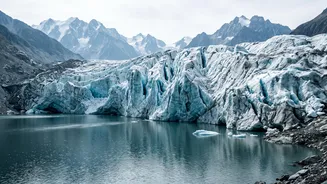
These new dating methods have revealed a climate system capable of much more abrupt shifts than previously thought. Studies of moraines from New Zealand to Chile’s Cordillera Darwin mountains show that glaciers can retreat with surprising speed, sometimes melting back dozens of meters per year at the end of an ice age. This suggests the climate doesn't always shift slowly, but can 'jump' between stable modes. Furthermore, some findings contradict the established sequence of events. For instance, recent work in Scotland suggests that the last major glacial advance there happened before the Younger Dryas, a well-known cold snap, while the period itself was marked by warming-driven retreat. This complicates the picture of a globally synchronized cooling event and points to more complex regional dynamics.
Did the Next Ice Age Already Begin?
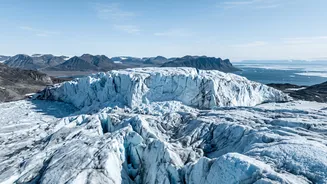
Perhaps the most startling finding comes from the last remnant of the giant Laurentide Ice Sheet, which once covered North America. Research on the Barnes Ice Cap in the Canadian Arctic shows that after millennia of melting, it actually began to grow again about 2,000 years ago. According to the researchers, this regrowth could mark the technical start of the next glacial period, a process that was unfolding naturally. However, this fledgling ice age was cut short. By the 1960s, human-driven global warming had raised temperatures enough to reverse the growth and send the ice cap back into retreat. This finding challenges models that predicted the next glaciation was still thousands of years away and highlights the profound impact of modern emissions on the planet's long-term climate cycles.
Why This New Understanding Matters
Challenging old models isn't just an academic exercise. A more accurate understanding of how and why ice ages begin and end is crucial for refining our climate models today. Knowing that glaciers can retreat rapidly and that climate can shift abruptly based on past events provides a vital warning for our future. Similarly, understanding the intricate dance between orbital cycles, ocean carbon storage, and ice sheet dynamics helps scientists forecast how the Earth system will respond to the unprecedented levels of CO2 now in the atmosphere. These new findings don't invalidate the influence of orbital cycles, but they show that other factors—like ocean circulation and the internal dynamics of ice sheets—play a much more significant and sometimes decisive role in the timing of glacial change.