







The Conductor: Air Traffic Control
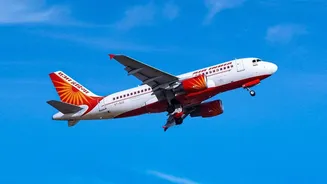
The most common reason for a seemingly indirect path to the runway is Air Traffic Control (ATC). Think of the sky around a busy airport as a complex, invisible highway system. ATC acts as the traffic conductor, and they provide navigational guidance to pilots
in the form of specific headings, a process known as 'vectoring'. This ensures every aircraft maintains a safe distance from others. If you're on a flight to a major hub like Delhi or Mumbai, your plane will be sequenced into a line of other arriving aircraft. ATC might instruct your pilot to fly a longer path or a holding pattern—circling at a specific altitude—to create the perfect gap for a smooth and safe arrival sequence. So that 'detour' is actually your plane being expertly slotted into place.
Weather: The Invisible Hand
Weather is a powerful, unseen force in aviation. Pilots always prefer to land and take off into the wind, as a headwind reduces the plane's ground speed and the amount of runway needed. If the wind direction at the airport shifts, ATC may change the active runway, forcing your plane to adjust its approach to line up with the new direction. Strong crosswinds can also affect the approach. You might notice the plane flying at a slight angle to the runway, a technique called 'crabbing', to counteract the wind before straightening out just before touchdown. Sudden wind changes, or 'wind shear', can also make a standard approach unstable, prompting a change in path.
The 'Stabilized Approach'
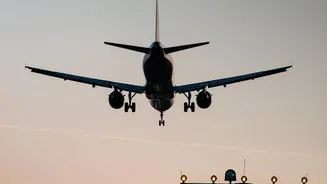
Aviation is built on precision and safety checklists. Before landing, pilots must achieve what is known as a 'stabilized approach'. This means the aircraft must be at the correct speed, on the correct flight path, at the right rate of descent, and in the proper landing configuration (flaps and landing gear down) by a certain altitude, typically 1,000 feet above the ground. If any of these parameters are not met—for example, if the plane is too high, too fast, or not perfectly aligned—the approach is considered 'unstable'. Rather than try to salvage a poor approach, pilots will opt for the safest course of action.
The Go-Around: Safety First, Always
When an approach is unstable or an issue arises, pilots will execute a 'go-around'. This involves abandoning the landing, applying full power, and climbing away from the runway to circle around for another attempt. While it might feel dramatic to passengers, a go-around is not an emergency. It's a routine safety procedure initiated by either the pilot or ATC. Reasons for a go-around are varied: an unstable approach, an animal or another aircraft on the runway, a sudden change in wind, or instructions from ATC to create more space. Far from being a sign of pilot error, the decision to go around is a hallmark of good judgment and prioritizing safety above all else.