

A New Eye In The Sky
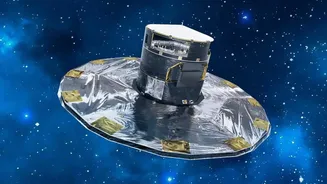
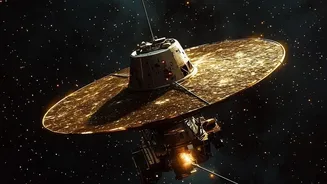
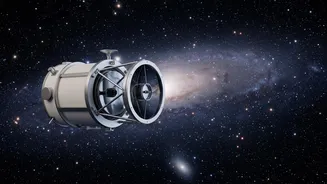
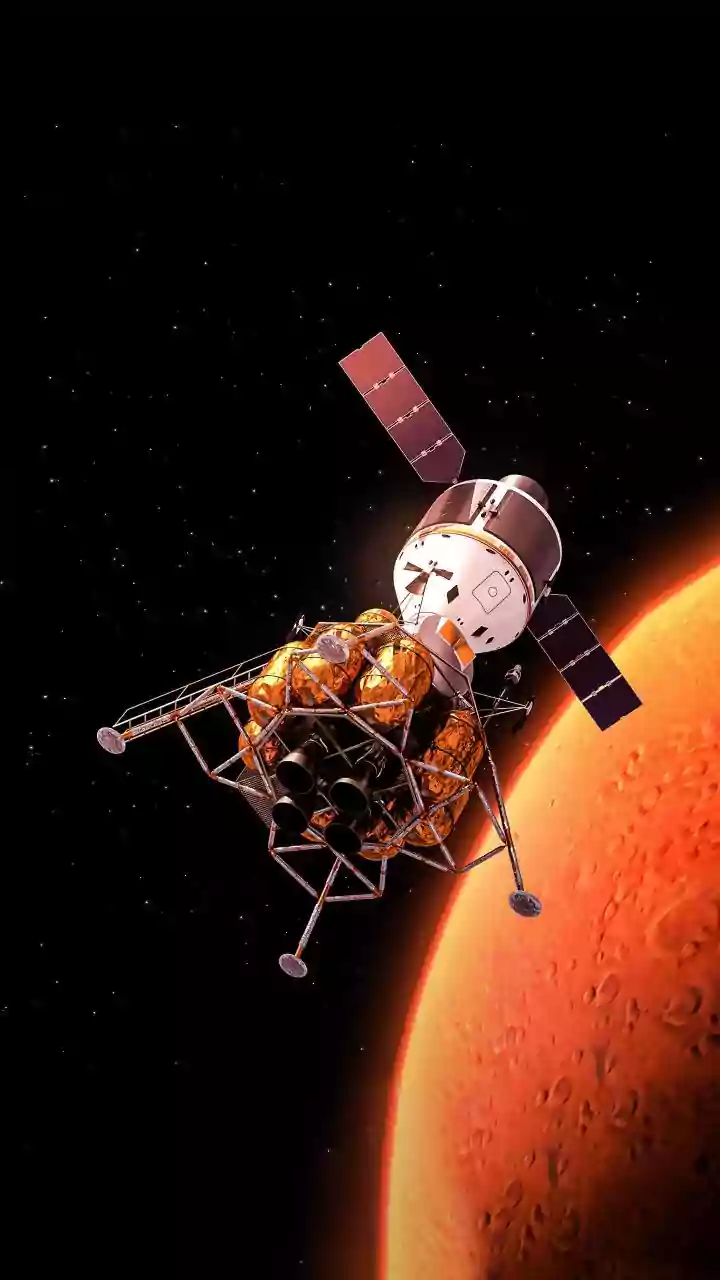
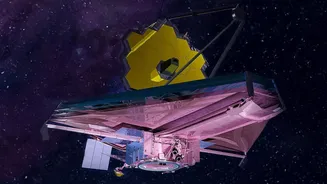
On August 30, 2026, a SpaceX Falcon Heavy rocket soared into the Florida sky, carrying a precious payload: the Nancy Grace Roman Space Telescope. Now speeding towards its destination a million miles from Earth, the telescope is beginning its commissioning
phase, a period of careful testing and calibration before its science mission officially begins. Named after NASA's first chief of astronomy, Dr. Nancy Grace Roman, who was known as the 'mother of the Hubble,' this observatory is poised to build on the legacies of both the Hubble and James Webb space telescopes. However, Roman has a unique trick up its sleeve. While its primary mirror is the same size as Hubble's at 2.4 meters, its mission is fundamentally different. It's not designed to be a magnifying glass, but a map-maker.
From Keyhole to Panorama
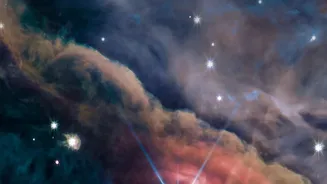
For decades, telescopes like Hubble have given us breathtakingly deep, but narrow, views of the universe—often described as looking at the cosmos through a soda straw. The Roman telescope shatters that limitation. Its primary camera, the Wide-Field Instrument (WFI), boasts a field of view that is at least 100 times larger than Hubble's. In a single snapshot, Roman can capture a patch of sky with the same sharp resolution as Hubble, but covering an area that would take the older telescope hundreds of individual photos to assemble. This turns it into a panoramic survey machine. Instead of taking portraits of individual galaxies, Roman will create vast, high-definition cosmic tapestries. This ability to capture 'giant images' will allow astronomers to gather unprecedented amounts of data, generating more information in a single day than Hubble has in its entire multi-decade mission.
The Hunt for Cosmic Mysteries
What do you do with a camera that can see everything at once? You tackle the biggest questions in the universe. Roman’s primary goal is to confront the mystery of dark energy, the enigmatic force causing the universe's expansion to accelerate. By surveying billions of galaxies across huge stretches of space and time, the telescope will create a 3D map of the cosmos. By studying how galaxies and massive clusters are distributed and how their light has been stretched over cosmic history, scientists hope to measure the effects of dark energy with stunning precision. This massive survey will also map the distribution of dark matter, the invisible scaffolding upon which galaxies are built, giving us a more complete picture of the universe's structure and evolution.
A Census of Unseen Worlds
Beyond cosmology, Roman is set to revolutionize the search for exoplanets. While missions like Kepler stared at small patches of sky, Roman will conduct a massive galactic survey, monitoring hundreds of millions of stars toward the dense center of the Milky Way. It will primarily use a technique called gravitational microlensing. This method detects the tiny, temporary brightening of a distant star that occurs when an unseen planet passes in front of it, its gravity briefly acting as a lens. This technique is sensitive enough to find planets with masses as small as Mars, and even 'rogue' planets that wander through space without a host star. The goal is to perform a statistical census, giving us the first truly comprehensive understanding of how common different types of planets are in our galaxy.
Paving the Way for Direct Imaging
Tucked alongside its main instrument, Roman carries a groundbreaking piece of technology called a Coronagraph Instrument. This is not for wide surveys, but is a focused technology demonstration designed to block the overwhelming glare of a star, allowing the faint light reflected by an orbiting planet to be seen directly. While other methods find planets indirectly, Roman's coronagraph is a crucial testbed for technologies that will allow future missions to directly image and analyze the atmospheres of Earth-like planets around other stars. It is an essential stepping stone toward the ultimate goal of finding life elsewhere in the universe. Although the first scientific images from Roman are not expected until early 2027, the mission is already preparing to change our view of everything.