






A Collision Course
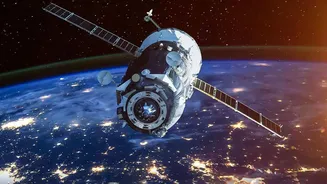
On August 5, 2026, a four-tonne piece of space hardware, traveling at nearly 8,700 kilometres per hour, collided with the Moon. The object was the upper stage of a SpaceX Falcon 9 rocket. It had been drifting through space for over 18 months since its
launch in January 2025, when it successfully deployed two commercial lunar landers. Unlike the rocket's reusable lower stage, this upper portion was abandoned in a high-Earth orbit after its fuel was spent. Over time, the gravitational pull of the Earth and Moon, combined with the subtle push of solar radiation, nudged its chaotic orbit until it was set on an unavoidable collision course with our natural satellite.
The Lunar Detective Story
Finding the crash site was a remarkable feat of celestial detective work involving global cooperation. The impact was first predicted by independent astronomers using publicly available data. NASA's Center for Near Earth Object Studies (CNEOS) then refined these calculations to narrow down the impact zone near the Moon's Einstein Crater. Since the impact occurred on the Moon's sunlit side, the flash was not visible from Earth. The first spacecraft to get a look was South Korea's Danuri lunar orbiter, which imaged a dark splotch and confirmed the predictions were accurate to within a kilometre. This crucial data was then passed to NASA’s team.
An Orbiter's Eye View
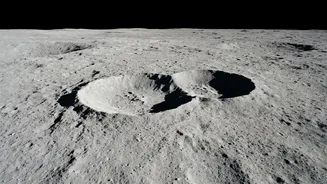
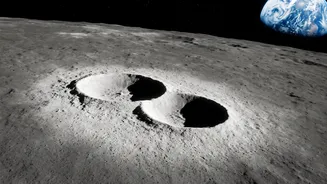
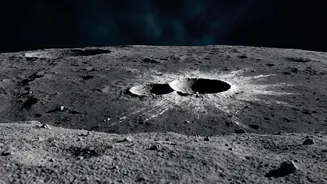
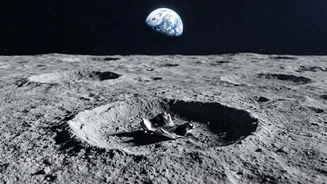
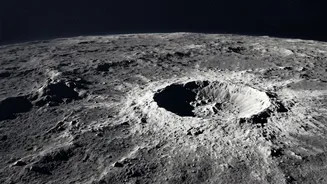
Armed with precise coordinates, NASA's Lunar Reconnaissance Orbiter (LRO) went in for a closer look. Between August 11 and 12, the LRO team performed a series of tricky manoeuvres. Flying at about 1.6 kilometres per second some 96 kilometres above the surface, they had to tilt the entire spacecraft to point its cameras at the right spot at the exact right time. Being off by just a few seconds would mean missing the target entirely. The effort paid off, producing a series of clear before-and-after images that definitively revealed the new crater. The images show a fresh scar about 18 metres (60 feet) wide and less than 3 metres deep.
A Sign of Things to Come
While this isn't the first time a human-made object has hit the Moon, it is only the third known unintentional rocket body impact. The event serves as a stark reminder of the growing challenge of space debris. As the region between Earth and the Moon becomes busier with missions from national agencies and private companies alike, the risk of such collisions increases. Experts warn that even though space is vast, these uncontrolled objects pose a tangible risk. An impact can hurl high-speed debris across vast distances, creating a hazard for future lunar habitats, sensitive scientific equipment, and astronauts working on the surface.