





A Launch for the History Books
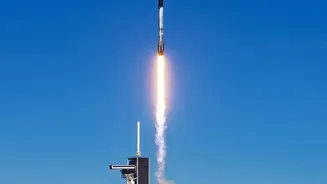
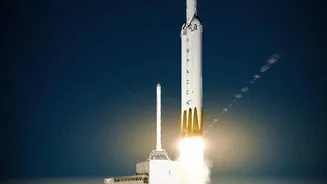
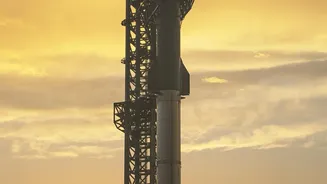
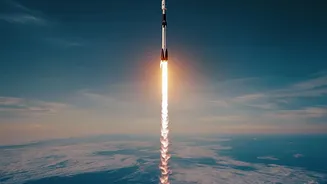
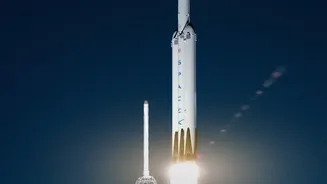
In what was its fourteenth test flight, the world's largest and most powerful rocket lifted off from SpaceX's Starbase facility in Texas. Despite some mid-flight drama, including the early shutdown of one of the upper stage's six engines, mission control
made the call to proceed. Just 25 minutes after launch, a final 19-second engine burn pushed the spacecraft into a stable orbit, reaching a peak altitude of approximately 275 kilometers (about 171 miles) above Earth while traveling at nearly 28,000 km/h. This moment marked Starship's successful transition from a vehicle performing suborbital hops to a true orbital-class spacecraft, a goal SpaceX has been working toward for years.
Why Reaching Orbit Is a Game-Changer
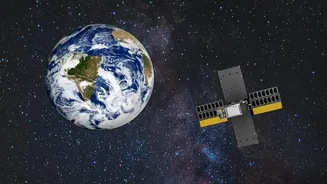
Achieving orbit isn't just about flying high and fast; it's the fundamental requirement for nearly all major space operations. For Starship, this milestone is the gateway to fulfilling its purpose. The flight wasn't just a test; it was also the first operational mission for the vehicle. During its time in orbit, Starship successfully deployed a batch of 26 next-generation Starlink V3 satellites, marking the first time the rocket has been used for a revenue-generating purpose. This proves the system's potential as a heavy-lift launch vehicle, capable of deploying massive payloads that could expand global internet connectivity and support future scientific missions. More importantly, it validates the core concept of a fully reusable transport system, which is SpaceX's key to drastically reducing the cost of access to space.
An Early but Successful Return
The original flight plan called for a nearly 10-hour mission with six orbits around the planet. However, out of what SpaceX called "an abundance of caution" following the engine issue during ascent, the team opted to bring Starship home early. After about three hours in space, the spacecraft performed a deorbit burn. It then executed a controlled reentry through the atmosphere, using its large flaps to manage its descent before targeting a splashdown in the Pacific Ocean, north of Hawaii. While the mission was cut short, achieving a controlled return from orbit after completing its primary objectives—reaching orbit and deploying satellites—is being hailed as a major success by the company and space industry observers.
Paving the Way for the Moon and Mars
This successful orbital flight has profound implications for the future of human space exploration. NASA is relying on a modified version of Starship to act as the Human Landing System (HLS) for its Artemis program, which aims to return astronauts to the lunar surface. The Artemis IV mission, targeted for 2028, plans to use Starship to ferry astronauts from lunar orbit down to the Moon's south pole. This flight provides crucial data and builds confidence in the vehicle that will be foundational to establishing a permanent human presence on the Moon. Beyond the Moon, this achievement makes Elon Musk's long-held vision of building a self-sustaining city on Mars feel more tangible. The entire Starship system was designed from the ground up to make humanity a multi-planetary species, and reaching orbit is the most critical step on that ambitious journey.
What Comes Next for Starship
While Flight 14 was a resounding success, there is still work to be done. The next major hurdles include perfecting the recovery and reuse of both the Super Heavy booster and the Starship upper stage. SpaceX's ultimate goal is to catch both vehicles with the launch tower's mechanical arms, known as "chopsticks," to enable rapid turnaround for future flights. Engineers will also focus on demonstrating in-space propellant transfer between two Starship vehicles, a critical capability needed to fuel the lunar lander for its trips to the Moon's surface. With this orbital milestone achieved, SpaceX is transitioning from the initial test phase into a new era of operational flights, refining the system to carry not just satellites, but eventually, astronauts to destinations farther than ever before.