







The Scale of the Data Explosion
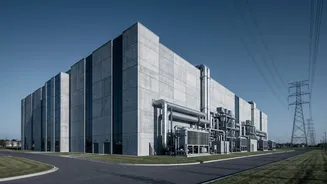
India is in the midst of a digital infrastructure gold rush. The nation's data centre capacity is undergoing explosive growth, projected to more than triple from around 1.6 gigawatts (GW) in mid-2026 to over 6 GW by 2029, making it Asia's fastest-growing
market. This expansion is driven by a perfect storm of factors: the government's 'Digital India' initiative, data localisation policies requiring data to be stored within the country, the widespread adoption of cloud computing, and the rise of power-hungry technologies like 5G and Artificial Intelligence (AI). Investment is pouring in, with commitments of over USD 38 billion in the first half of 2026 alone. This boom is not just building infrastructure; it's laying the foundation for India's future as a global tech player.
The Unseen Energy Bill
Every swipe, click, and stream has an energy cost. Data centres are voracious consumers of electricity, primarily for powering servers and running massive cooling systems to prevent overheating. In 2024, India's data centres consumed an estimated 13 terawatt-hours (TWh) of electricity. While this is less than 1% of the country's total demand, projections are startling. By 2030, data centres are expected to consume as much as 3% of India's total electricity. The rise of AI dramatically amplifies this, with a single AI server rack drawing up to 120 kilowatts (kW) or more, compared to just 5-10 kW for a traditional rack. This places immense strain on a national grid that is already working to keep up with demand, particularly in data centre hubs like Mumbai and Chennai.
Economic Boom vs. Environmental Burden
The trade-off is stark. On one hand, the data centre boom is a massive economic driver, attracting billions in investment, creating jobs, and enabling the digital services that underpin a modern economy. India has rapidly joined the ranks of APAC's leading data centre markets alongside Japan and China. On the other hand, this growth comes with a significant environmental price tag. With a large portion of India's power grid still reliant on coal, a rapid increase in energy demand from data centres complicates the country's climate commitments and its goal of achieving net-zero emissions by 2070. The challenge is not just about generating more power, but about generating it cleanly, without derailing national sustainability targets. The question is no longer whether to grow, but how to grow responsibly.
The Search for Green Solutions
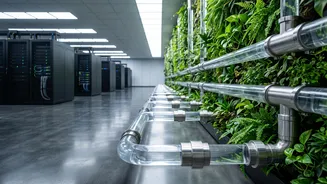
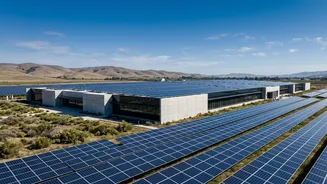
Recognizing the challenge, the industry and government are beginning to pivot toward sustainability. The concept of 'green data centres' is gaining traction, focusing on two key areas: energy efficiency and renewable power. Companies are adopting advanced technologies like liquid cooling, which can be significantly more efficient than traditional air cooling. At the same time, there is a major push to power these facilities with renewable energy. Major operators are signing power purchase agreements (PPAs) for solar and wind energy, with some pledging to run on 100% renewable power by 2030. Government policies are also starting to incentivize this shift, offering benefits for facilities that meet green standards. Recent investments, such as a proposed 750 MW green data centre park in Maharashtra, signal a growing commitment to aligning digital growth with green energy.