






A Pre-Dawn Success from Sriharikota
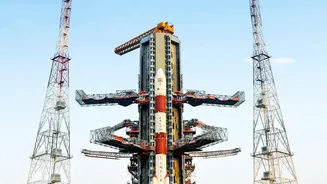
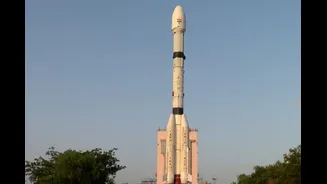
In a flawless pre-dawn launch on September 4, 2026, ISRO's Geosynchronous Satellite Launch Vehicle (GSLV-F17) lifted off from the Satish Dhawan Space Centre in Sriharikota. The 51.7-metre-tall rocket, weighing over 420 tonnes, thundered into the sky at 2:55
AM IST. Approximately 19 minutes after liftoff, the rocket successfully injected its precious cargo, the 2,367 kg EOS-05 satellite, into a precise sub-Geosynchronous Transfer Orbit (sub-GTO). The successful launch marked the 19th flight for the GSLV and was a significant moment for ISRO, demonstrating the reliability of its launch systems.
Meet EOS-05: India’s New Eye in the Sky
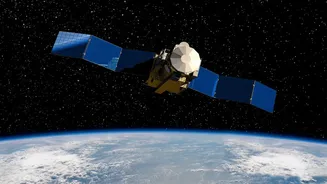
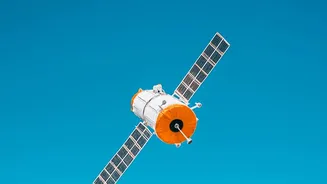
The star of the mission is the EOS-05, a state-of-the-art Earth observation satellite. What makes it particularly special is that it is India's first imaging satellite designed to operate from a geosynchronous orbit, about 36,000 kilometres above the Earth's surface. Unlike satellites in lower orbits that pass over a location periodically, a satellite in a geosynchronous orbit moves at the same speed as the Earth's rotation. This allows it to remain fixed over a large geographical area, providing near-continuous monitoring of the Indian subcontinent and surrounding regions. Dubbed an 'eye in the sky,' EOS-05 is designed to provide near real-time imagery, a transformative capability for the nation.
The GSLV: India’s Heavy-Lift Workhorse
The GSLV is a three-stage rocket crucial for placing heavier satellites into high-energy orbits. Its first stage uses solid fuel with liquid-fueled strap-on boosters, the second stage is liquid-fueled, and the third, most critical component is the indigenous cryogenic upper stage. This cryogenic stage, which uses liquid hydrogen and liquid oxygen as propellants at extremely low temperatures, provides the powerful final push needed to deliver the satellite to its intended orbit. Mastering this technology has been a major focus for ISRO, as it provides true self-reliance in launching heavy satellites. This mission was a major vote of confidence for the GSLV, which once earned the nickname 'Naughty Boy' due to early developmental failures but has now proven its mettle by launching its heaviest payload yet.
How EOS-05 Will Benefit India
The data and imagery from EOS-05 will have a wide range of applications, directly benefiting the country. Its ability to provide frequent, large-scale imaging will be invaluable for disaster management, allowing for rapid monitoring of floods, cyclones, and forest fires. In agriculture, it can help monitor crop health, assess soil conditions, and improve yield predictions. For environmental monitoring, it will track changes in land use, deforestation, and the health of water bodies. Furthermore, the satellite's continuous watch provides a strategic advantage, enhancing surveillance capabilities for national security and border monitoring. It places India in a select group of nations with the capability for geostationary imaging.
A Milestone in India’s Space Journey
The success of the GSLV-F17/EOS-05 mission is more than just another launch. It re-establishes ISRO's launch cadence after a quiet period and demonstrates the operational maturity of the GSLV rocket and its indigenous cryogenic engine. By successfully placing its heaviest-ever satellite into orbit, the GSLV has proven it is a reliable and powerful asset for India's space ambitions. From here, the EOS-05 satellite will use its own onboard propulsion system to perform a series of manoeuvres over the coming days to move from its initial transfer orbit to its final geostationary position. Once fully operational, it will begin its mission of watching over India, a testament to the nation's growing prowess in space technology.