


Our Galaxy's Ghostly Halo
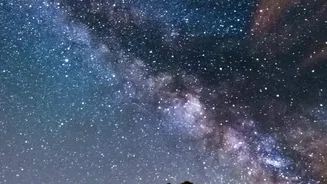
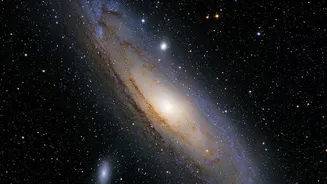
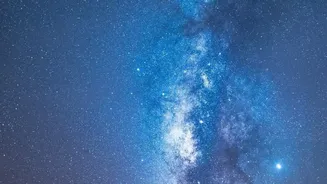
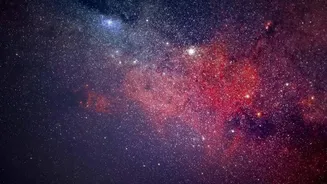
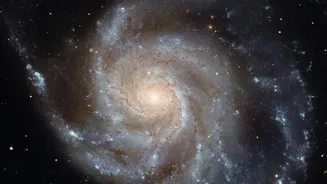
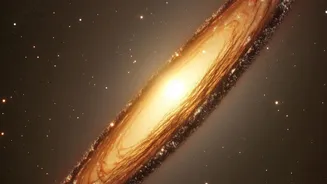
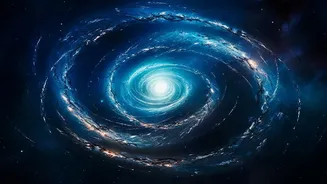
When we picture the Milky Way, we typically imagine its bright, flat disc of stars and spiral arms—the galactic downtown where our solar system resides. But surrounding this bustling disc is a vast, mostly invisible structure called the stellar halo.
This halo is a sparse, roughly spherical cloud of ancient stars, gas, and dark matter that extends hundreds of thousands of light-years in every direction. Think of it as the galaxy's enormous, ghostly atmosphere. For decades, astronomers believed this halo was relatively uniform. However, we now know it's a dynamic place, full of stellar streams and debris left over from smaller galaxies that the Milky Way has consumed over cosmic history. It's in this halo that scientists are finding clues to our galaxy's turbulent formation.
A Cosmic Collision of Epic Proportions
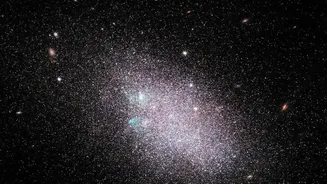
Around 10 billion years ago, long before the Earth or Sun existed, the young Milky Way was struck head-on by a smaller, or dwarf, galaxy. Researchers have nicknamed this interloper the 'Gaia Sausage' or 'Gaia-Sausage-Enceladus'. This wasn't a quick fender-bender; it was a cosmic event that unfolded over hundreds of millions of years. As the Gaia Sausage galaxy plowed through, the Milky Way's immense gravity tore it to shreds, absorbing its stars and gas into its own halo. This process of galactic cannibalism is a key part of how large spiral galaxies like ours are thought to grow and evolve. But this particular collision was so direct and powerful that it did more than just add stars to our halo—it appears to have reshaped our entire galaxy.
Rewinding Time with Supercomputers
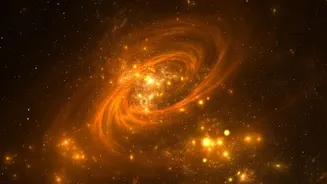
Since these galactic collisions happen over billions of years, we can't watch them unfold in real time. This is where supercomputer simulations come in. Researchers at Durham University used powerful computer models to recreate the evolution of Milky Way-like galaxies. By inputting the laws of physics—including gravity, gas dynamics, and dark matter interactions—they can create virtual universes and watch how galaxies form and interact. They ran simulations of galaxies experiencing different types of mergers to see which scenarios produced a galaxy that looks like the Milky Way does today. These simulations allow astronomers to test theories and connect the past events with present-day observations.
The Tilted Truth of the Milky Way
The Durham team was initially trying to solve a different puzzle: why the stars in the Milky Way's halo rotate so slowly compared to the stars in its disc. While disc stars zip around the galactic center at about 220 kilometers per second, halo stars poke along at a much more leisurely 25 kilometers per second. The simulations provided a startling answer. They showed that a massive, head-on collision, like the one with the Gaia Sausage, could exert enough gravitational force to gradually tilt the entire disc of the Milky Way. Over hundreds of millions of years, the galaxy may have been flipped by more than 90 degrees, essentially turning it on its side relative to its original orientation within its dark matter halo. This dramatic reorientation would explain the strange, slow rotation observed in the halo's stars today.
What This Discovery Changes
This finding fundamentally changes our understanding of the Milky Way's history, painting a picture of a dynamic and chaotic past. It suggests our galaxy has not been an isolated island, but was violently shaped by its cosmic neighbors. The collision with the Gaia Sausage was not just a minor event; it was a defining moment in our galaxy's evolution that set its modern orientation. Furthermore, evidence from other studies suggests these types of collisions can trigger massive bursts of star formation. One such burst, following a different collision with the Sagittarius dwarf galaxy, may have even created the conditions necessary for our own Sun to form. This new research adds another layer to that story, showing how these ancient mergers have had a profound and lasting impact on the structure of the galaxy we call home.