




Understanding Turbulence: The Bumps in the Road
Turbulence is essentially irregular air movement that causes bumpy, sometimes jarring, motion in an aircraft. Think of it as the aerial equivalent of driving over a rough patch of road. It’s caused by various atmospheric phenomena, such as weather fronts,
jet streams, or air moving over mountains. While it can be unsettling for passengers, modern commercial aircraft are engineered to withstand forces far greater than what is encountered in even severe turbulence. Pilots are well-trained to handle it; their primary response is often to slow the aircraft to a specific 'turbulence penetration speed' and essentially ride it out. Their goal is to find a smoother altitude for passenger comfort, but the event itself is considered a normal part of flying, not an immediate threat to the aircraft's integrity.
What is an Emergency Descent?
An emergency descent is a deliberate, controlled manoeuvre initiated by the flight crew in response to a specific, urgent situation onboard. It is not a fall or a crash; it is a rapid but managed procedure to get the aircraft to a lower, safer altitude as quickly as possible without exceeding the plane's structural limits. Pilots practice this manoeuvre repeatedly in simulators. The most common reason for an emergency descent is a loss of cabin pressurisation. Other triggers can include an uncontrollable fire, smoke in the cabin, or a critical medical emergency requiring immediate landing. The primary objective is almost always to descend to an altitude of around 10,000 feet, where the outside air is dense enough to breathe without supplemental oxygen.
The Passenger Experience: Key Differences
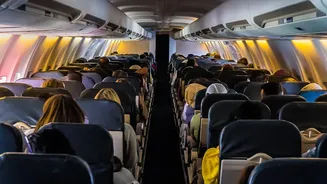
The feeling inside the cabin is one of the clearest differentiators. Turbulence is characterized by random shaking, jostling, and unpredictable bumps. In contrast, an emergency descent feels like a very fast, steep, but generally smooth ride down. Passengers might feel a momentary sense of lightness, similar to cresting a hill in a car, followed by the sensation of a continuous descent. The most dramatic sign of an emergency descent due to depressurisation is the automatic deployment of oxygen masks from the ceiling panels. You may also hear a loud bang or notice a sudden fog or mist in the cabin as the air temperature and pressure change. The engine sound will also change as the pilots reduce thrust to idle.
Pilot Action: Reactive vs. Proactive
A pilot's response to turbulence is largely reactive and focused on comfort. They may request a different altitude from air traffic control to find smoother air but are generally managing an external environmental condition. An emergency descent, however, is a proactive and procedural decision. The flight crew declares an emergency, communicates their intentions with air traffic control, and executes a well-defined checklist. This involves reducing engine power, often deploying speed brakes or spoilers to increase drag and the rate of descent, and carefully managing the aircraft's speed to avoid structural stress. While passengers may feel alarmed, the crew is in full control, executing a plan they have trained for extensively.
Cause and Effect: External vs. Internal
The fundamental separating factor is the cause. Turbulence is an external phenomenon caused by the atmosphere the plane is flying through. It happens to the plane. An emergency descent is triggered by an internal event on the plane, such as a technical issue or medical situation. The descent is the solution, not the problem. While turbulence can be uncomfortable and in very rare, severe cases lead to injuries for unbuckled passengers, it does not typically prompt an emergency landing. An emergency descent, by its nature, is part of an emergency procedure that will likely conclude with a diversion to the nearest suitable airport to address the underlying issue.