




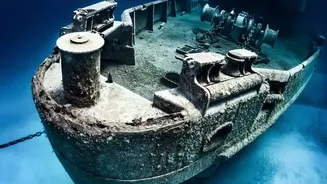
The Discovery Off Kekova's Coast
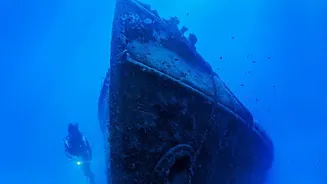
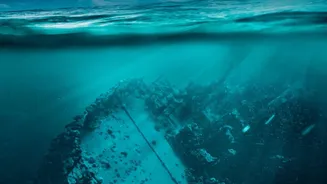
Near Kekova Island, a region rich with submerged history, a team from Akdeniz University led by underwater archaeologist Hakan Öniz identified the site. Lying roughly 100 feet deep, the wreck is not a preserved wooden hull, but a 'ghost' ship identified by its
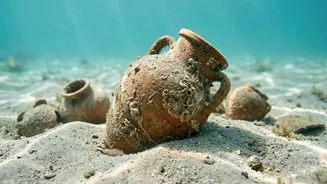
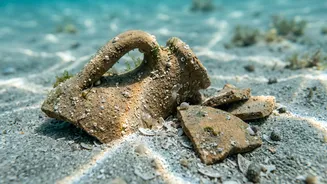
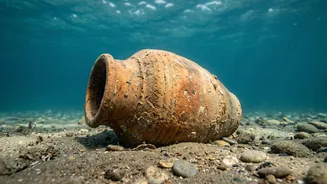
cargo. The actual timber of the vessel disintegrated millennia ago, a common fate for such ancient wrecks. What remains is a time capsule of durable goods: a scattered collection of at least 30 large ceramic jars, known as amphorae, and three stone anchors. The site was first noted in 2022, but its immense significance only became clear after recent analysis. The find was announced by Turkey’s Minister of Culture and Tourism, Mehmet Nuri Ersoy, highlighting its potential to reshape our understanding of ancient maritime trade.
A Cargo from the Dawn of Civilisation
So, how can archaeologists be so sure of its age without the ship itself? The answer lies in the pottery. The style of the amphorae—large, two-handled jars with flat bottoms—was compared to similar vessels found at archaeological sites in Egypt and the Middle East, including near the Giza pyramids. This stylistic analysis dates the cargo to the Early Bronze Age, between 2700 and 2400 BCE, making it 4,400 to 4,700 years old. Clay analysis suggests the jars were made in the Jordan Valley and were likely filled with valuable commodities like olive oil or wine for a long-distance journey. The destination may have been major trade hubs like Troy or Minoan Crete, illustrating a vibrant trade network connecting different corners of the Mediterranean when the first great pyramids were rising in Egypt.
Life Aboard a Bronze Age Ship
The cargo offers more than just clues about trade routes; it gives a glimpse into the daily lives of ancient mariners. One amphora stands out with nine distinct markings and two holes in its body. Researchers have proposed a fascinating theory: this jar may have been a churn for making butter or cheese. This has led to the hypothesis that sailors might have carried live goats on board, providing a source of fresh milk that could be processed during long voyages. If confirmed, this would be a remarkable insight into how seafarers sustained themselves on journeys that could last for weeks or months, transforming our view of shipboard life nearly millennia ago.
Why 'Oldest' Is a Monumental Claim
Calling this the 'oldest known shipwreck' is a significant claim that requires context. Before this discovery, one of the primary contenders for the title was the Dokos shipwreck, found off the coast of Greece and dated to between 2700-2200 BCE. However, the Kekova find appears to be on the older end of, or even slightly older than, that range. Many of the most famous Bronze Age wrecks, like the spectacular Uluburun shipwreck also found in Turkey, are much younger, dating to around 1300 BCE. The Uluburun wreck was notable because parts of its wooden hull survived, offering direct insight into shipbuilding. For the Kekova wreck, the 'ship' is defined by its cargo footprint. Because the wooden structure is gone, radiocarbon dating isn't possible, making the stylistic dating of the amphorae the crucial piece of evidence.
The Ongoing Investigation
While the archaeological team is confident in their assessment, the scientific process is ongoing. Researchers are continuing to analyse the residue found inside some of the intact amphorae. This could definitively identify the contents, confirming whether it was wine, olive oil, or another substance like tree resin. The find, which was first described in a preliminary report in the Journal of Maritime Archaeology in July 2026, is now gaining wider international attention. The confirmation of its age and origin would solidify its status, offering physical proof of an extensive, sophisticated maritime trade network earlier than previously thought and cementing the waters off Turkey as one of the world's most important archives of human history.