





1. Cat-Cow Stretch (Marjaryasana-Bitilasana)
This foundational yoga sequence is a dynamic movement that warms up the spine and gently stimulates the abdominal organs. By linking your breath to the motion, you create a flowing stretch that can release tension in your back and softly strengthen your core
muscles. It’s an excellent way to start any movement practice, as it improves coordination and brings mindful awareness to your body without requiring advanced flexibility. To begin, position yourself on your hands and knees in a 'tabletop' position, with wrists under shoulders and knees under hips. As you inhale, drop your belly, lift your chest, and look forward into Cow Pose. As you exhale, round your spine toward the ceiling, tucking your chin to your chest like a cat, and draw your navel in to engage your core. Repeat this flow for 5-10 breath cycles.
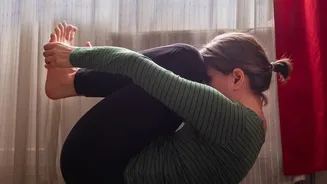
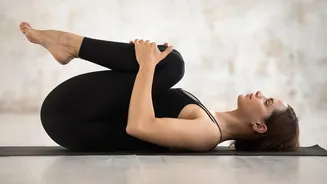
2. Wind-Relieving Pose (Pawanmuktasana)
As its name suggests, this pose is renowned for its ability to help release trapped gas in the abdomen and aid digestion. By applying gentle pressure to the abdominal area, it massages the intestines and other internal organs. This not only helps with bloating and constipation but also strengthens the abdominal muscles and eases tension in the lower back. To practice, lie on your back. As you exhale, draw both knees toward your chest. Clasp your hands around your shins or the backs of your thighs and hug your knees inward. You can gently rock from side to side for a light spinal massage or remain still, focusing on deep breaths that expand your belly against your thighs. Hold for 5-10 breaths.
3. Supine Spinal Twist (Supta Matsyendrasana)
This restorative twist offers a passive but deep stretch that lengthens the spine and massages the abdominal organs, which can help stimulate digestion and detoxification. It’s a calming pose that helps to relieve stress and release tension stored in the lower back, hips, and shoulders. Start by lying on your back and hugging your knees into your chest. Extend your arms out to the sides in a 'T' shape. As you exhale, gently drop both knees over to one side, keeping your shoulders grounded on the floor. You can turn your gaze in the opposite direction of your knees to deepen the stretch through your neck and spine. Hold for 30 seconds to a minute on each side, breathing deeply into your side body.
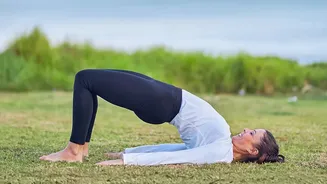
4. Bridge Pose (Setu Bandhasana)
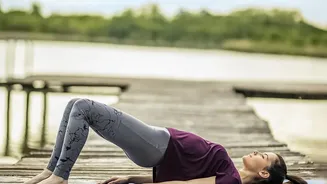
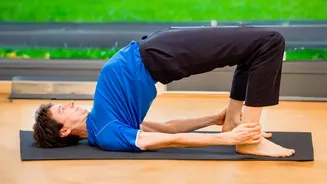
Bridge Pose is a beginner-friendly backbend that strengthens the core, glutes, and hamstrings while stretching the abdomen. It can aid digestion by elongating the abdominal muscles and improving blood flow to the organs. To perform it, lie on your back with your knees bent, feet flat on the floor hip-width apart, and heels close to your sitting bones. Press your feet and arms into the floor as you inhale and lift your hips toward the ceiling. Keep your thighs parallel and engage your core to avoid overarching your lower back. For a deeper stretch, you can clasp your hands together on the floor beneath your pelvis. Hold for 30 seconds, breathing steadily, then slowly roll your spine back down to the floor.
5. Child's Pose (Balasana)
Though primarily a resting pose, Child's Pose provides a gentle compression of the abdominal organs, which can stimulate digestion and help relieve discomfort from gas and bloating. It’s also incredibly effective for reducing stress and fatigue while gently stretching the lower back, hips, and thighs. To get into the pose, kneel on the floor with your big toes touching and your knees as wide as your hips or wider. On an exhale, lower your torso down between your thighs. You can extend your arms forward or rest them alongside your body with the palms facing up. Allow your forehead to rest on the mat and focus on your breath, feeling your belly press against your thighs with each inhale. Stay here for as long as feels comfortable.