







Meet NASA's PREFIRE Mission
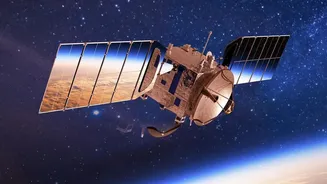
The headline refers to NASA's Polar Radiant Energy in the Far-InfraRed Experiment, or PREFIRE. Launched in the spring of 2024, this mission consists of two small satellites, known as CubeSats, orbiting over the Arctic and Antarctic. Their job is to measure
a type of light that is invisible to human eyes called far-infrared radiation. This is significant because nearly 60% of the heat Earth radiates back into space is in this far-infrared range. Before PREFIRE, this specific and critical part of Earth's energy budget had never been systematically measured. By filling this observational gap, scientists get a much clearer picture of how the planet cools itself.
What Two Years of Data Reveals
Having completed two full years of observations since starting in July 2024, the PREFIRE mission has provided a continuous record of the dramatic seasonal temperature swings at both poles. The data shows how the Arctic and Antarctic pulse between the deep cold of winter and milder summer conditions. Importantly, the data has revealed that different types of ice surfaces can vary in how much far-infrared radiation they emit by as much as 5%. While a small number, this level of detail is crucial for refining climate models. The mission has essentially made the invisible flow of heat visible, providing a direct look at the mechanics of Earth's polar 'radiators'.
The Importance of Polar Amplification
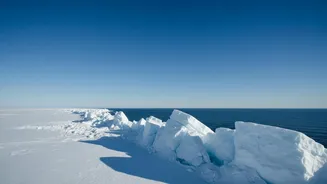
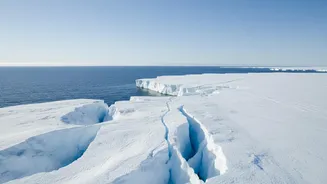
This research is especially critical because of a phenomenon known as 'Arctic amplification'. Scientists have observed that the Arctic is warming about twice as fast, and some studies suggest more than 2.5 times faster, than the rest of the planet. One of the primary reasons is the loss of sea ice. Bright, white ice reflects sunlight back into space. When it melts, it exposes the darker ocean water below, which absorbs more of the sun's energy, creating a feedback loop that accelerates warming. By precisely measuring the heat radiating away from the poles, PREFIRE helps scientists understand the other side of the equation: how efficiently the polar regions shed the heat that is transported from the tropics.
A Global Ripple Effect
What happens at the poles does not stay at the poles. The polar regions act as Earth's thermostats, regulating global temperatures. The balance of heat exchange drives weather patterns, ocean currents, and the stability of global climate systems. Melting polar ice contributes directly to a rise in sea levels around the globe. The data from PREFIRE will allow for more accurate weather and climate models, improving everything from long-range forecasts to predictions about shipping routes through newly ice-free passages. Better models mean a better understanding of how storm frequency and severity might change, and how communities worldwide will be affected by a changing climate.
The Future of Polar Monitoring
The two-year dataset is a major milestone, establishing a baseline for understanding seasonal changes. However, it is just the beginning. The mission has already been extended through at least September 2026 and its scope has broadened to collect data across the entire globe, not just the poles. This will help scientists better understand the role of clouds and water vapor in trapping heat on a planetary scale. By combining PREFIRE's unique far-infrared measurements with data from other Earth-observing satellites, researchers can build a more complete and accurate picture of Earth's total energy budget. This ongoing work is essential for validating climate models and providing the reliable information needed to prepare for the future.