


The Satellite Boom Is Real
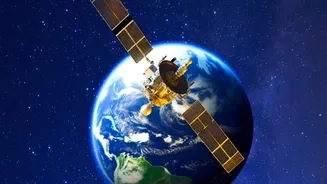
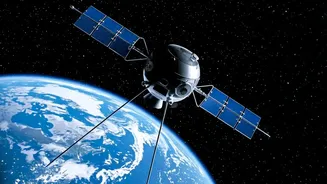
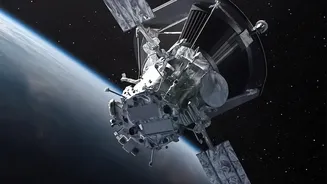
Not long ago, space was the domain of a few governments and large corporations. Today, the orbital environment has changed more in the last six years than in the previous sixty. As of late 2026, there are nearly 17,000 active satellites circling our planet,
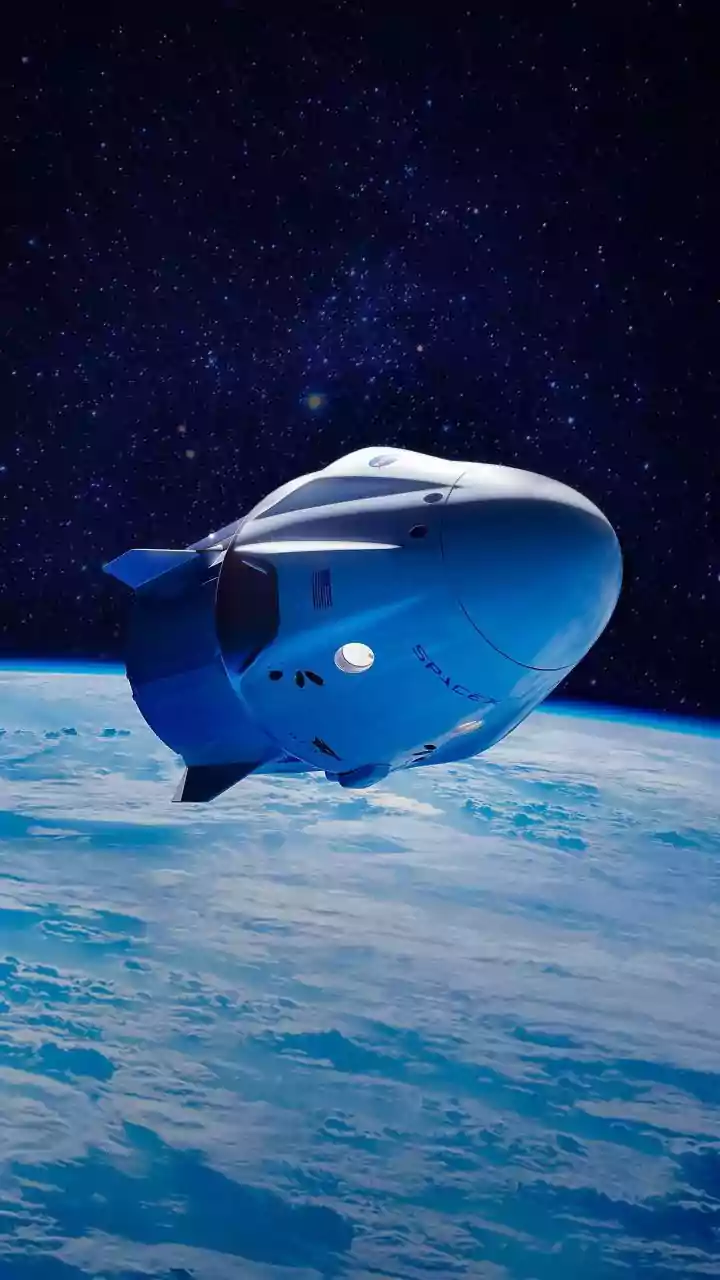
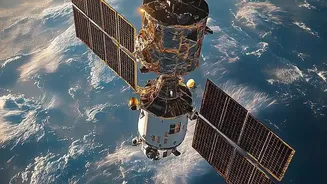
a number that changes almost weekly. This explosive growth is almost entirely driven by commercial companies launching vast networks known as 'mega-constellations'. The most prominent player is SpaceX's Starlink, which alone accounts for over 11,100 of these active satellites, or roughly two-thirds of the total. Other major operators include OneWeb, with over 600 satellites, and Amazon, which is rapidly building out its own constellation. These networks aim to provide global high-speed internet, connecting remote and underserved areas. But their sheer scale is creating challenges that were once only theoretical.
Old Rules for a New Reality
The rules governing space debris were established when the satellite population was a tiny fraction of what it is today. For decades, the main international guideline has been the '25-year rule', which recommends that operators deorbit their satellites within 25 years of completing their mission. This guideline, developed by the Inter-Agency Space Debris Coordination Committee (IADC), was designed to prevent the long-term buildup of defunct objects in critical orbits. The rules are largely voluntary, relying on space-faring nations to adopt them into their own national licensing processes. However, these guidelines were created for a world of fewer, larger, and longer-lived satellites, not for the rapid-fire launch and replacement cycle of constellations with thousands of individual units.
Why Mega-Constellations Break the Mould
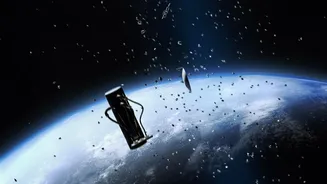
Mega-constellations challenge existing debris rules in several fundamental ways. Firstly, the sheer volume of satellites dramatically increases the number of potential collisions. Even with a high success rate for deorbiting, a small percentage of failures across a constellation of 10,000 or more satellites means hundreds of uncontrolled objects are left drifting in space. Secondly, these constellations operate in low Earth orbit (LEO), a region already congested with debris. Any collision in this area, whether with another satellite or existing debris, can generate thousands of new fragments, creating a cascading effect known as the Kessler Syndrome that could render certain orbits unusable. Thirdly, the speed and scale of deployment overwhelm traditional regulatory and tracking capabilities. Some regulators are trying to adapt; the U.S. Federal Communications Commission (FCC) has moved to a much stricter 5-year deorbit rule for new satellites it licenses, but this is not a global standard.
The Hidden Costs of a Crowded Sky
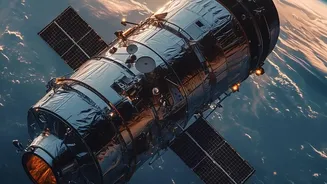
The problem isn't just about collisions. The proliferation of satellites is having a significant impact on astronomy. The bright streaks from thousands of sunlit satellites are increasingly contaminating images from both ground-based and space-based telescopes, including the Hubble Space Telescope. Studies predict that future observatories could have a huge percentage of their images affected, threatening our ability to observe the universe. The constant need for satellites to perform collision avoidance manoeuvres also adds operational complexity and risk. In 2019, the European Space Agency had to move one of its satellites to avoid a potential collision with a Starlink satellite, an event that highlighted the growing need for better coordination. While many operators are designing satellites to be less reflective and to deorbit reliably, the collective impact of tens of thousands of planned satellites remains a major concern for the scientific community.