





A Catastrophe in the Himalayas
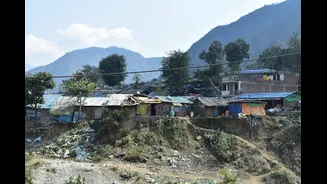
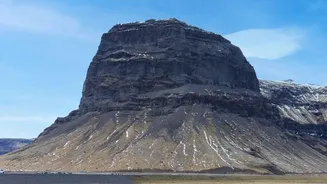
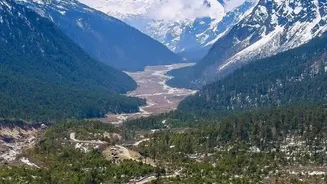
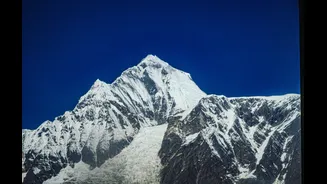
In late August 2026, a massive section of rock and overlying glacier, measuring around two square kilometres, broke free from Langtang Lirung mountain near Nepal's border with China. The collapse triggered an avalanche of rock, ice, and sediment that
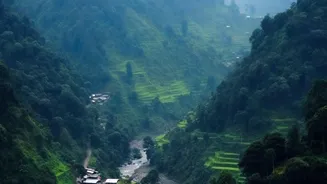
travelled at over 170 kilometres per hour into the valley below. This unleashed a catastrophic flood that swept through communities along the Trishuli River corridor, killing more than 1,300 people and leaving over 5,000 missing. The torrent destroyed homes, bridges, and critical hydropower plants, causing billions of dollars in damage and highlighting the extreme vulnerability of communities nestled in the high mountains.
The Science of Attribution
For years, scientists were hesitant to link a single weather or geological event directly to climate change. However, the field of attribution science has advanced rapidly. Researchers, like those at the World Weather Attribution initiative, now use climate models and observational data to determine how global warming may have influenced the likelihood and intensity of a specific event. For the Nepal disaster, they didn't analyze a short-term weather event but rather the long-term changes that “preconditioned” the mountain slope for failure. It’s a bit like loading the dice; while a specific roll isn't guaranteed, changing the dice makes certain outcomes more probable.
What the Study Found
The report from World Weather Attribution concluded that while climate change wasn't the sole cause, its “fingerprints are still clear to see.” The analysis found that long-term warming had thinned glaciers and thawed permafrost—the permanently frozen ground that acts like cement for mountain rock. In this part of the Himalayas, which is warming much faster than the global average, the freezing line has been creeping up the mountains by about 100 meters per decade. This thaw allows meltwater to seep into rock cracks, weakening the very structure of the mountain and making a catastrophic collapse more likely. The 2015 earthquake in the region may have also contributed by weakening the rock years earlier.
A Frontline for Climate Change
The Himalayas are often called the “Third Pole” because they hold the largest volume of ice outside the polar regions. This makes Nepal, which produces less than 0.1% of global greenhouse gas emissions, one of the most climate-vulnerable nations on Earth. The region is warming at nearly twice the global average, accelerating the melt of glaciers that feed major rivers across Asia. This initially increases the risk of outburst floods from swelling glacial lakes, but the long-term concern is that diminished glaciers will lead to severe water shortages for over a billion people downstream. The disaster showed the tragic limits of adaptation; Nepal’s warning systems were simply overwhelmed by the speed and scale of the collapse.
The Broader Implications
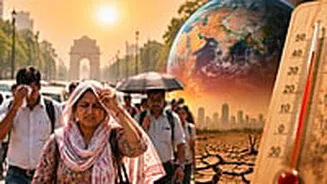
The Nepal flood is a stark illustration of how climate change is not just about heatwaves and sea-level rise; it is fundamentally altering the stability of landscapes. Similar events, like the 2021 disaster in Uttarakhand, India, show this is a region-wide threat. For Nepal, the study provides crucial evidence for its request to the United Nations' Loss and Damage Fund, arguing for climate justice. The nation faces an estimated $4.8 billion recovery bill, more than 11% of its GDP, for a crisis it did little to create. The findings send a sobering message that in the world's highest mountains, the consequences of a warming planet are already here, and they are catastrophic.