




Embrace the Third Dimension
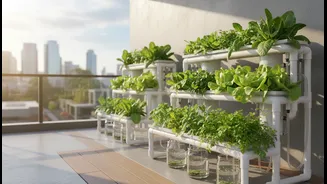
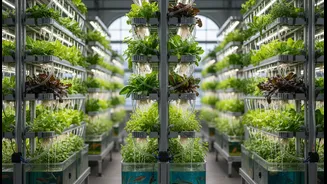
The secret to a lush yet uncluttered small garden is to stop thinking horizontally and start thinking vertically. When ground space is at a premium, the only way to go is up. Vertical gardening isn't just a trend; it's the most effective strategy for
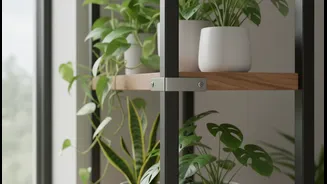
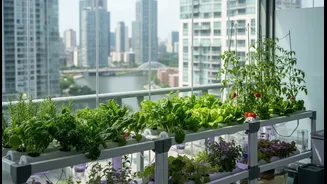
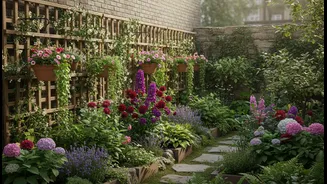
maximizing your growing area. This approach allows you to add layers of green without taking up valuable floor space. Instead of spreading outwards, your garden grows upwards, creating a dynamic and immersive feel. This can be achieved with trellises for climbing plants, wall-mounted planters, tiered stands, or hanging baskets. By drawing the eye upward, you create an illusion of spaciousness and depth, making your small garden feel larger and more dynamic. A simple trellis can support flowering vines, while a set of ladder shelves can hold a collection of herbs and decorative pots.
The Art of Strategic Layering
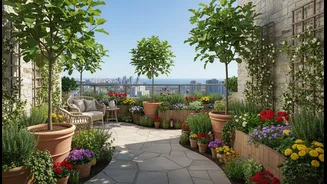
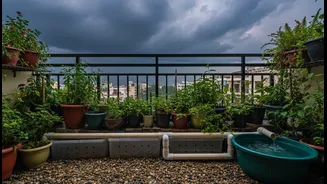
Professionally designed gardens feel cohesive because they use layers to create visual drama and depth. You can apply the same principle to your small space. Think of your garden in three planes: foreground, middle ground, and background. Even on a tiny balcony, this works. The background could be a tall, slender plant or a climbing vine against the wall. The middle ground can be filled with mid-height pots, while the foreground features low-growing or trailing plants that spill over their containers. This multi-level approach is key. You can easily create different heights by using a mix of tall, medium, and low containers, or by placing some pots on bricks or small stands to elevate them. This simple trick instantly breaks up the monotony of a flat layout and makes the space feel more curated and intentional.
Mastering the Container Trio
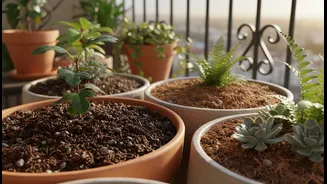
For container gardening, the 'Thriller, Filler, Spiller' method is a time-tested formula for creating stunning arrangements. This concept ensures your pots have balance, height, and texture. The 'Thriller' is your focal point—a tall, eye-catching plant like a purple fountain grass or a coleus that provides vertical interest. The 'Filler' consists of more rounded, medium-sized plants that surround the thriller and fill the pot, such as salvias or wax begonias. Finally, the 'Spiller' is a trailing plant, like an ornamental sweet potato vine or petunias, that cascades over the edge of the container, softening its edges and connecting it to the space below. By combining these three elements in your larger pots, you create mini-landscapes that are lush and complete in themselves, adding to the overall richness of your garden.
Choose Plants for Impact and Texture
In a small garden, every plant has to earn its place. Focus on plants that offer more than just a fleeting bloom. Foliage is your best friend, as leaves provide colour and texture long after flowers have faded. Create visual interest by contrasting textures. Pair a plant with large, bold leaves (like an oakleaf hydrangea or a hosta) with something that has fine, delicate foliage (like a fern or an ornamental grass). This juxtaposition makes each plant stand out more distinctly. Consider how light plays on different surfaces—a glossy leaf versus a fuzzy one. Repeating a few key textures or colours throughout the garden can also create a sense of rhythm and harmony, making the design feel deliberate and unified rather than chaotic.
Smart Repetition Creates Cohesion
A common mistake in small gardens is trying to include one of everything. This often leads to a messy, disjointed look. A more effective strategy is to choose a limited palette of plants and colours and repeat them throughout the space. Repetition is a powerful design tool that creates a sense of flow and cohesion. Seeing the same plant or a similar colour in different parts of the garden ties the whole design together. For instance, you could have a burgundy-leaf plant in a tall pot in the back, another in a mixed container in the middle, and a trailing variety with similar tones in a hanging basket. This 'colour echo' provides a harmonious thread that guides the eye through the space, making your lush garden feel like a single, well-orchestrated piece rather than a random collection of plants.