







A Mission of Firsts
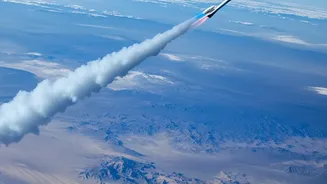
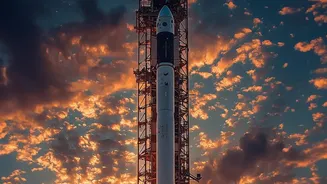
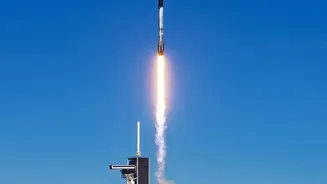
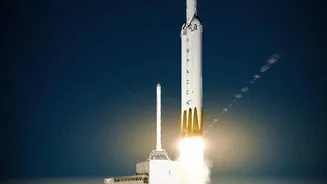
The September 28th launch from Starbase, Texas, was not just another test; it was Starship's first orbital attempt after thirteen previous suborbital flights. The primary goals were ambitious: achieve orbit, test the spacecraft's systems over a prolonged
period, and, for the first time, deploy a functional payload. On board were 26 next-generation Starlink V3 satellites, marking a pivotal transition from carrying test weights to performing actual operational duties. The plan was for the massive rocket to circle the globe multiple times over nearly ten hours before a controlled splashdown in the Pacific Ocean. This flight represented a crucial step in proving Starship's viability as a reusable transportation system intended to carry cargo and eventually people to the Moon, Mars, and beyond.
Drama in the Ascent
The spectacle of the world's most powerful rocket lifting off was quickly followed by a moment of high tension. During the climb to space, one of the Super Heavy booster's 33 Raptor engines shut down prematurely. A separate engine anomaly occurred on the Starship upper stage after it separated from the booster, with one of its six engines also cutting out early. For a few tense minutes, live commentary from SpaceX suggested the orbital attempt might be abandoned. However, after a rapid assessment, mission controllers determined the vehicle was healthy enough to proceed. The remaining engines on the Starship upper stage fired for longer to compensate for the lost thrust, successfully pushing the vehicle into a stable orbit to the sound of cheers from the control room.
Success, With an Asterisk
So how can a flight with engine failures be deemed a success? For SpaceX, it comes down to meeting primary objectives. The mission successfully reached orbit, a feat no previous Starship had accomplished. It then successfully deployed all 26 Starlink satellites into their operational orbit. The Super Heavy booster also achieved a major milestone, performing a controlled 'soft' splashdown in the Gulf of Mexico, a critical step toward eventual recovery and reuse. The Starship upper stage demonstrated it could handle an engine-out scenario and still complete its core task, showcasing a level of resilience vital for future crewed missions. However, out of what SpaceX called "an abundance of caution," the mission was shortened from its planned ten hours to just over three, culminating in a splashdown north of Hawaii.
Iterative Design in Action
This flight is a textbook example of SpaceX's development philosophy: build, fly, fail, fix, and fly again. Encountering issues like engine failures during a test phase is not just a possibility, but an expected part of the data-gathering process. Each anomaly provides invaluable information that engineers use to refine the vehicle's hardware and software. The ability of the flight computers to compensate for the lost engines in real-time is itself a successful test of the system's robustness. This approach, while sometimes resulting in spectacular fireballs, has allowed SpaceX to rapidly advance the Starship program. The vehicle has evolved significantly from earlier tests that ended in explosions just minutes after launch.
What This Means for the Future
Flight 14's success, even with its caveats, is a significant boost for SpaceX's long-term plans and for its partners like NASA. The American space agency is relying on a version of Starship to land its Artemis astronauts on the Moon, a mission currently targeted for 2028. Demonstrating orbital insertion and payload deployment are non-negotiable steps on that path. The successful splashdown of the booster also brings the company closer to its ultimate goal of full and rapid reusability, where both stages are caught and prepared for another flight in short order. The next major challenge will be to attempt a landing of the Super Heavy booster back at the launch site, where it can be caught by giant mechanical arms—a maneuver that could be attempted on a flight later this year or in early 2027.