


The Galaxy’s Most Common Planet
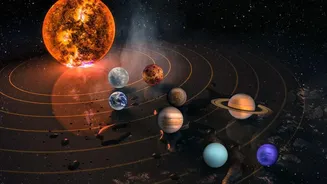
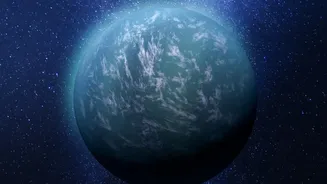
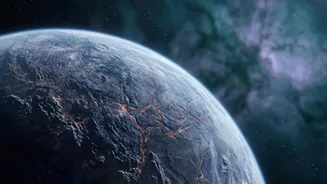
Imagine a rocky world up to ten times the mass of our own, a bigger, bulkier cousin to Earth. This is a “Super-Earth,” and statistically, it’s the most common type of planet found orbiting other sun-like stars. For decades, astronomers believed our solar
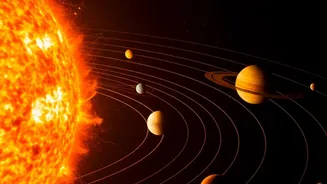
system’s layout—small rocky planets on the inside, gas giants on the outside—was the standard model. But thousands of exoplanet discoveries have turned that idea on its head. Our solar system is the anomaly, the odd one out for its conspicuous lack of a close-in, mid-sized planet. This cosmic puzzle has sent scientists scrambling for an explanation, leading to new models that paint a picture of our solar system’s violent and chaotic youth.
Theory 1: The Great Disruptor
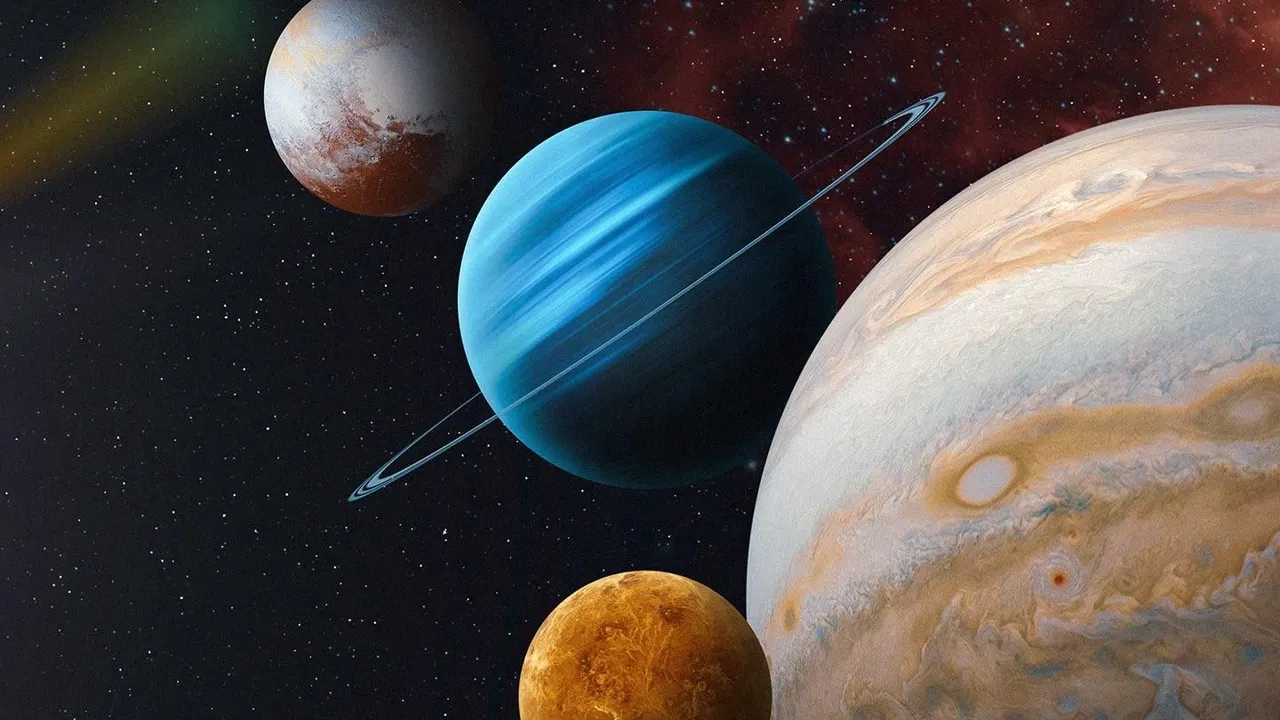
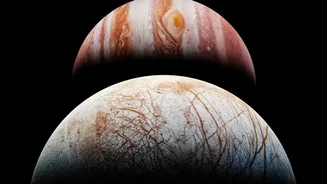
One of the most compelling explanations for our missing Super-Earth involves Jupiter, our system’s undisputed heavyweight champion. The “Grand Tack” hypothesis suggests that in the early days of the solar system, a young Jupiter didn’t stay put. Instead, it embarked on a destructive journey, migrating inward toward the Sun, perhaps as close as the orbit of modern-day Mars. This inward migration would have acted like a giant gravitational bulldozer, clearing out the raw material—dust, rock, and burgeoning planetesimals—from the inner solar system. Any early-generation planets, including potential Super-Earths, that had formed in this region would have been either consumed by Jupiter or sent spiraling into the Sun. Only after Saturn formed and its own gravity pulled Jupiter back out to its current orbit was the slate wiped clean for a second generation of smaller, gas-starved planets—Mercury, Venus, Earth, and Mars—to form from the leftover debris.
Theory 2: The Sun's Hidden Appetite
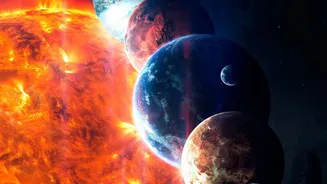
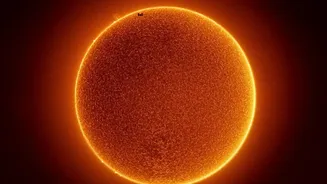
A more recent and equally dramatic theory posits that we did have a Super-Earth, but the Sun ate it. A study published in late 2026 suggests that a massive rocky planet could have formed close to our young Sun, only to be pulled in by gravity and swallowed whole. This isn't just speculation; the evidence may be hidden in the Sun's chemistry today. Our star has significantly less lithium than expected for a star of its type, an element that is easily destroyed in the extreme heat of a star’s interior. A massive, dense Super-Earth spiraling into the Sun would have dragged surface material deep into the star's core, destroying the lithium and leaving a chemical fingerprint that matches current observations. According to this model, the Sun itself may hold the final clue to its own lost child.
What It Means for Life on Earth
The absence of a Super-Earth may not be a loss, but rather the single most important reason we are here today. If a planet five or ten times the mass of Earth occupied the inner solar system, its immense gravity would have had catastrophic consequences for our world. Simulations show that the presence of such a planet would likely destabilize Earth's orbit, possibly flinging it out of the solar system entirely. Without Jupiter’s destructive “tack” or the Sun's planetary appetite, there might have been no stable, protected space for a small, rocky world like Earth to form and flourish. Jupiter's role is complex; while it may have cleared the area initially, its gravitational influence also acts as a complicated gatekeeper, sometimes deflecting dangerous comets and asteroids, and other times flinging them toward the inner planets. This delicate balance, forged in chaos, created the conditions for a stable orbit and a climate that could sustain life over billions of years.