




A Quick BRICS Refresher
BRICS is a grouping of major emerging economies. It started in 2009 with Brazil, Russia, India, and China (BRIC) as a platform to discuss economic and political issues and to push for a more equitable global order. South Africa joined in 2010, turning
BRIC into BRICS. Over the years, the group has expanded its focus from just economics to include cooperation on security, health, technology, and climate change. A key achievement was the creation of the New Development Bank (NDB) in 2015 to fund infrastructure projects in member countries, positioning it as an alternative to Western-dominated institutions like the World Bank.
The Latest Major Development
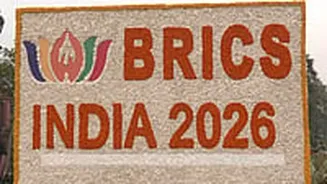
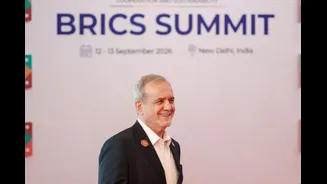
The most significant recent development is the group's major expansion. Beginning in January 2024, Egypt, Ethiopia, Iran, Saudi Arabia, and the United Arab Emirates (UAE) became full members. Indonesia followed in January 2025. This has dramatically increased the group's demographic and economic weight, with the now 11-member bloc representing nearly half the world's population and a significant portion of the global economy. Alongside the expansion, a key focus of India's 2026 BRICS presidency is the push for a new cross-border payment system to reduce reliance on the US dollar. These developments are taking centre stage as New Delhi hosts the 18th BRICS Summit on September 12-13, 2026.
A New Payment System Not a New Currency
There has been much talk about a 'BRICS currency,' but India and other members are focusing on a more practical goal: connecting their national payment systems. The idea is to create a 'BRICS Pay' or a similar bridge that allows, for example, India's Unified Payments Interface (UPI) to work with Russia's system. This would allow businesses and individuals to transact directly in their local currencies, like the rupee and rouble, making payments faster, cheaper, and less dependent on the US dollar and SWIFT, the dominant international messaging system for banks. The plan is not to replace the dollar overnight but to create more choice and flexibility in international trade.
What This Means For India
For India, which holds the BRICS chair in 2026, these developments present both opportunities and challenges. On one hand, a larger BRICS gives India a bigger platform to champion the interests of the Global South and push for reforms in global institutions. The expansion opens up new markets for Indian exports, particularly in the IT services sector, and could lead to more favourable energy deals with new members like Saudi Arabia and the UAE. On the other hand, the expansion also increases the influence of China within the bloc, a key strategic rival for India. New Delhi must carefully navigate these complex dynamics, balancing its commitment to an independent foreign policy while managing its relationships with both Western partners and the growing BRICS family.
Challenges and the Road Ahead
Making an expanded BRICS work will not be easy. The group is incredibly diverse, with members that have different political systems and sometimes conflicting foreign policy goals. For example, deep-seated rivalries, like the one between India and China, could create friction and make consensus-based decisions difficult. Getting all members to agree on and implement a complex project like an interoperable payment system will face significant technical and political hurdles. The success of this new, larger BRICS will depend on whether its members can focus on shared economic goals while managing their political differences.