






A 'Gigawatt-Scale' Vision
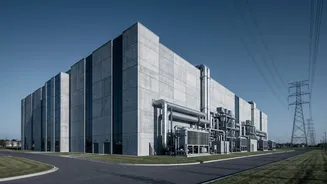
Championed by the government and its partner, the Adani Group, the project is enormous. Reported as a $15 billion investment, it is set to be Google’s largest data hub outside the United States. Expected to be operational by 2028, the facility is designed
to power artificial intelligence and cloud infrastructure across Asia. Visakhapatnam was chosen for its strategic location as a landing point for crucial subsea internet cables, connecting India to the global network. Proponents argue it will generate significant economic activity and thousands of jobs, positioning Andhra Pradesh at the forefront of the digital economy.
The Central Conflict: Water
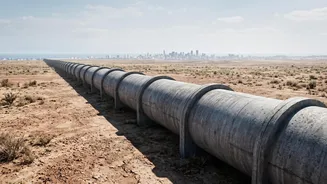
The primary objection from local communities boils down to a single, vital resource: water. Visakhapatnam is already a water-stressed city, facing a significant gap between daily supply and demand that forces rationing in some areas. Protestors, holding signs that read 'We cannot drink DATA', argue that a facility of this magnitude will put unbearable strain on an already fragile system. Environmental activists have filed legal challenges, questioning how the region can support such a water-intensive project. The fear is that precious water will be diverted from residents and agriculture to cool the data centre's sprawling server farms.
An Unprecedented Thirst for Power
Beyond water, the data centre's projected energy consumption is staggering. Initial plans for a 1-gigawatt facility have reportedly been expanded, with environmental clearances granted for up to 2.5 gigawatts. To put that in perspective, this is the power equivalent of two large nuclear power plants and could represent more than 30% of Andhra Pradesh's current energy consumption. While Google has pledged to invest in new clean energy, critics point out that India’s national grid is still heavily dependent on coal. This has sparked concerns not only about grid stability but also about the project's massive carbon footprint.
Google and Government Respond
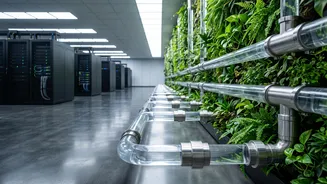
In response to the backlash, both Google and the state government have sought to reassure the public. Google executives have stated that their own environmental assessments identified pressure on the local watershed. Consequently, they opted for an 'advanced air cooling' system instead of conventional water cooling, which they claim will avoid drawing on local water supplies for that purpose. The company also promises to replenish 120% of the freshwater it does consume for other needs, like maintenance. For its part, the Andhra Pradesh government says the data centre’s water will come from the Polavaram Project’s industrial allocation, not the city's drinking water, and has mandated that a high percentage of the facility's power must come from renewable sources.
An Uneasy Path Forward
Despite these assurances, skepticism remains. Activists have challenged the project in the Andhra Pradesh High Court and the National Green Tribunal, alleging that environmental approvals were rushed without adequate public consultation. The court has allowed construction to proceed for now but issued a stern warning that any investment is at the developer's 'own risk' pending a final verdict. Concerns also persist over the project's proximity to the Kambalakonda Wildlife Sanctuary, located less than a kilometer away.