




A Champion of Cosmic Explosions
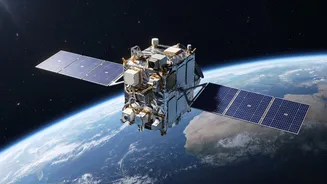
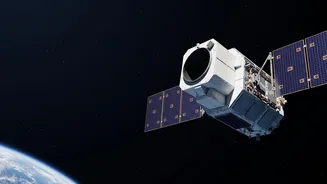
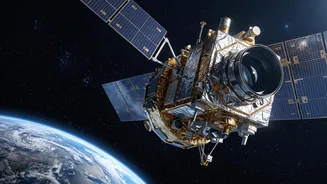
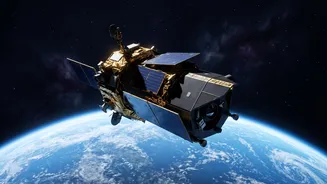
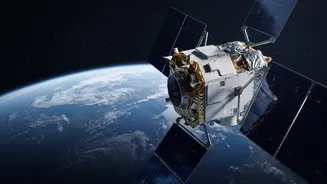
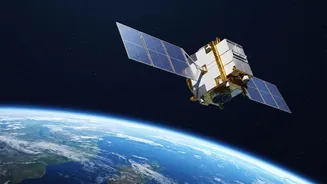
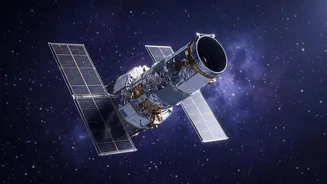
Launched in November 2004, the Swift Observatory was designed for a single, crucial purpose: to solve the mystery of gamma-ray bursts (GRBs). These are the most powerful explosions in the universe since the Big Bang, flashing across the cosmos for mere
seconds. Before Swift, scientists struggled to locate them quickly enough to study their afterglow. Swift changed everything. Its trio of telescopes could detect a burst, pivot with incredible speed, and pinpoint its location for other observatories on the ground and in space. Over its lifetime, Swift has detected over 1,700 GRBs, providing invaluable data on the life and death of stars, the formation of black holes, and the collision of celestial giants.
An Unexpected Threat
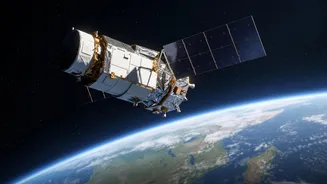
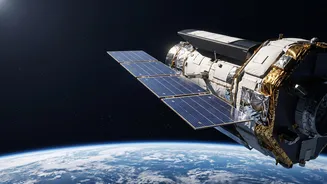
Swift was placed in a low-Earth orbit, about 600 kilometers up. At this altitude, there is still a thin wispy atmosphere that creates drag, gradually slowing a satellite and lowering its orbit. This orbital decay was expected and planned for. However, higher-than-anticipated solar activity in late 2024 and 2025 changed the equation. The increased solar radiation heated Earth's upper atmosphere, causing it to expand. This meant Swift was suddenly flying through a denser patch of air than predicted, accelerating its orbital decay and putting it on a much faster track toward re-entry.
The Daring Rescue Mission
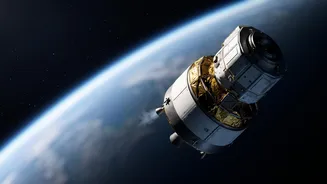
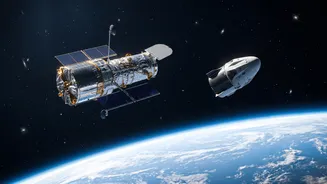
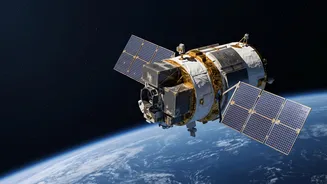
To save the prized observatory, NASA initiated a high-risk, high-reward plan. In 2025, the agency awarded a $30 million contract to aerospace startup Katalyst Space to design, build, and launch a robotic servicing vehicle named LINK. Launched on July 3, 2026, the LINK spacecraft’s mission was to rendezvous with Swift, grapple onto it, and use its own thrusters to boost the observatory back into a higher, more stable orbit, extending its life for years. It was a first-of-its-kind attempt for the U.S., executed on an unprecedentedly tight timeline.
When the Rescue Failed
The mission was fraught with challenges from the start. About three weeks after its launch, the LINK spacecraft suffered a critical failure in its attitude control system. Two of its three reaction wheels—devices that allow it to orient itself precisely in space—stopped working, causing the craft to spin uncontrollably. Mission controllers at Katalyst and NASA worked for weeks to salvage the situation, even uploading new software to try and stabilize the craft. Despite their efforts, they concluded on August 19 that the spacecraft could not be controlled safely enough to approach and dock with Swift. The capture and boost operation was officially called off to avoid any risk of collision.
A Final, Fiery Descent
With the rescue mission over, the Swift Observatory is now in a final, declining orbit. Atmospheric drag will continue to pull it lower and lower in a process that creates a feedback loop: as the altitude decreases, the atmosphere gets denser, which increases drag and speeds the descent. NASA expects the observatory will re-enter the atmosphere later in 2026. The spacecraft is expected to largely burn up upon re-entry over the ocean, a common fate for satellites in low-Earth orbit. While the primary science mission is over, engineers will download the last of its data and use the failed rescue attempt to gather information that will inform future robotic servicing missions.