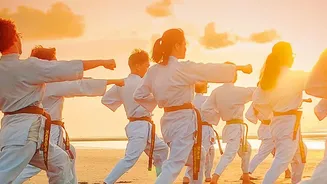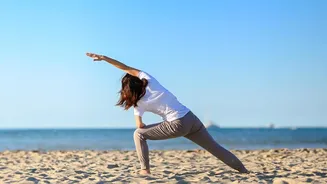

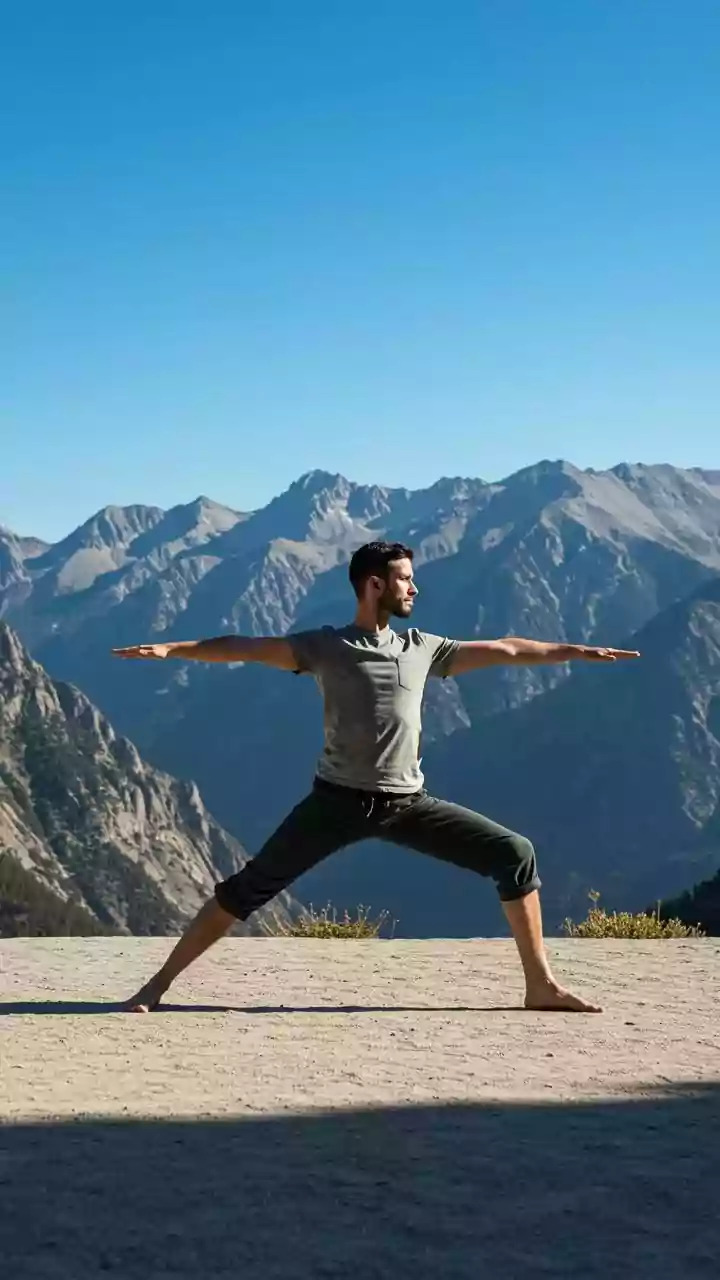
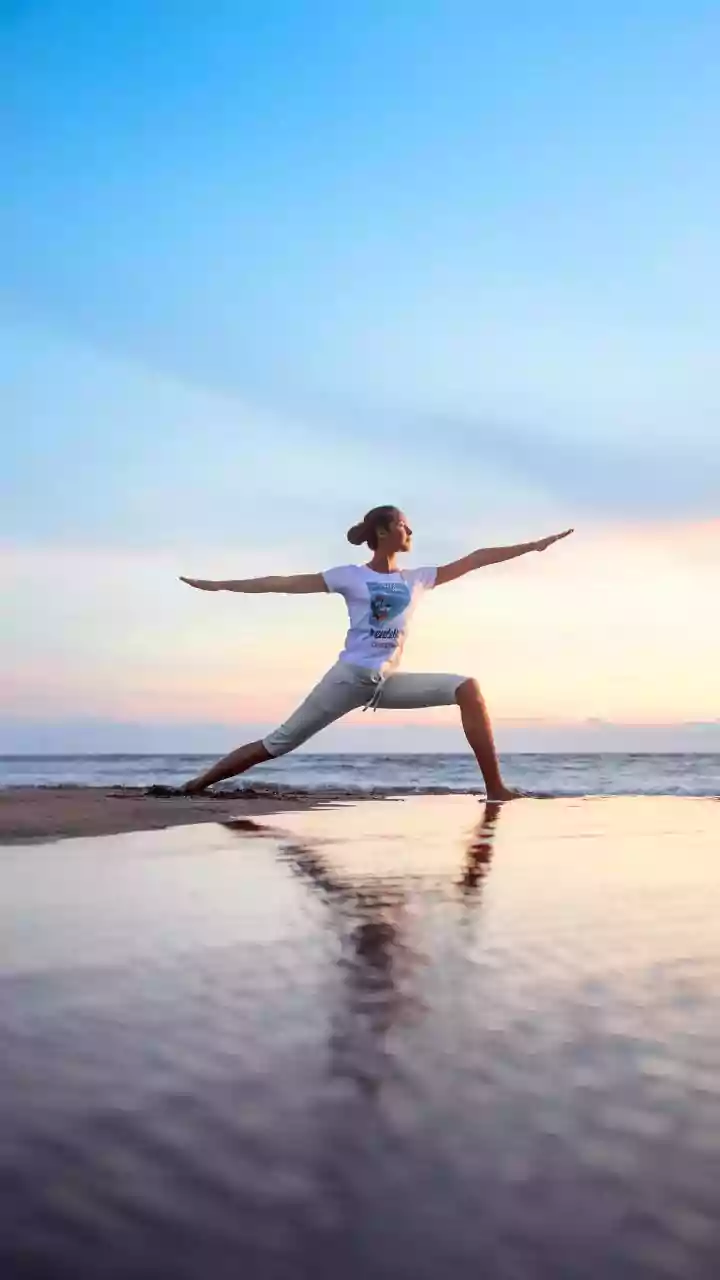
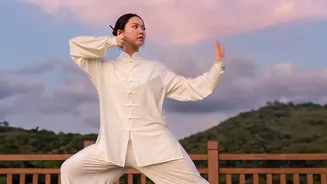

The image of practicing Tai Chi on a serene beach is undeniably appealing. Yet, many find the shifting, soft sand a frustrating challenge. The secret isn't to fight the sand, but to choose your ground wisely: the firm, damp shoreline.
The Deception of Dry Sand
Instinct might draw
you to the vast stretches of soft, dry sand far from the water's edge. It looks forgiving, comfortable, and clean. For Tai Chi, however, it presents a significant problem. The core of Tai Chi practice is 'grounding' or 'rooting'—the feeling of a solid, stable connection to the earth through your feet. This connection is essential for the slow, deliberate weight shifts and precise balance that define the art.Dry, loose sand offers the opposite. Each grain moves independently, held together only by gravity and friction. When you place your weight, your foot sinks, the surface deforms, and your base becomes unreliable. Instead of feeling rooted, you feel untethered. Your smaller stabilizing muscles must work overtime just to keep you upright, distracting from the focus on form, breath, and flow. Maintaining the low stances and executing the smooth, circular motions of Tai Chi becomes a constant struggle against instability rather than a meditation in motion.
The Simple Science of Stability
The stability of the sand found near the water line isn't magic; it's a simple principle of physics. The key ingredient is a moderate amount of water. Unlike sand that is completely saturated or submerged, which can become unstable as water acts like a lubricant, damp sand has just enough moisture to work wonders.This water creates what are known as 'capillary bridges' between the individual sand grains. You can think of it as surface tension creating a thin, cohesive film that gently glues the millions of particles together. This cohesion dramatically increases the sand's strength and resistance to shearing forces. Instead of individual grains scattering under your weight, they hold together, forming a solid, supportive platform. This is the same reason why you can build a sturdy sandcastle with damp sand, while one made from dry sand crumbles instantly. That firm, packed surface is precisely what a Tai Chi practitioner needs for a stable foundation.
Grounding Your Chi on the Shoreline
When you step onto firm, wet sand, the experience is transformed. Your feet can press into a surface that gives back, providing clear sensory feedback. This allows you to truly practice the principle of 'rooting', sinking your weight and establishing a powerful connection with the earth. With a stable base, you can more effectively lower your center of gravity, relax your joints, and allow energy to flow smoothly through the body as intended in Tai Chi.The smooth, consistent surface of the packed sand allows for the essential pivots and turns of the form without the risk of your foot catching or twisting, a potential hazard on overly grippy or uneven surfaces. This blend of firmness and slight give is ideal, offering a foundation that is both solid and energetically alive. It enhances your ability to feel balanced and centered, letting you focus on the quality of your movement and the rhythm of your breath.
Benefits, Balance, and Awareness
While firm wet sand provides stability, any sand practice offers unique benefits. The natural micro-adjustments your feet and ankles make to the subtly uneven surface can help strengthen stabilizer muscles and improve overall balance over time. Furthermore, practicing on sand is low-impact, cushioning your joints from the repetitive stress they might experience on harder surfaces like concrete.To get the most out of beach Tai Chi, start at the water's edge on the packed, damp sand. Pay close attention to how your body feels. The surface is more forgiving, but it is not perfectly flat, so heightened awareness is key. Move slowly and mindfully, especially if you are new to this environment. The goal is to harmonize with the natural setting, not to conquer it. The sound of the waves and the fresh sea air can deepen the meditative aspect of the practice, reducing stress and enhancing mental clarity.