



What Are Fast Radio Bursts?
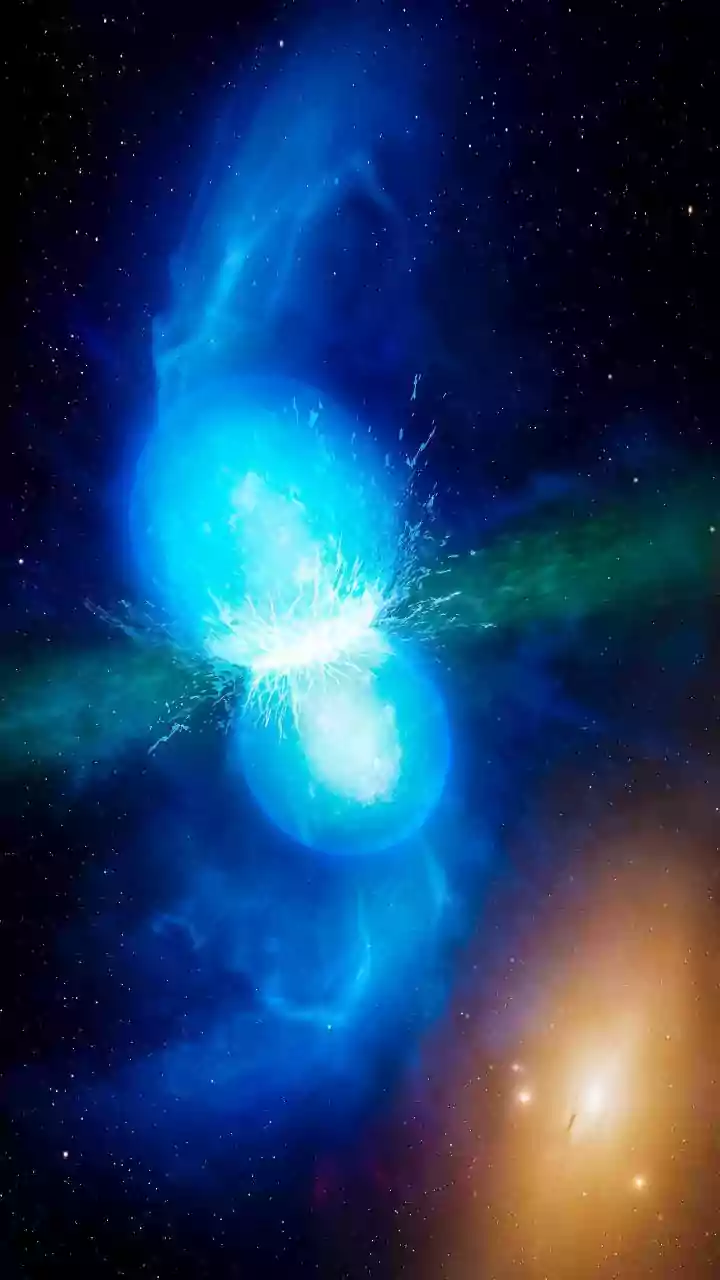
First, let's talk about what these things are. A Fast Radio Burst, or FRB, is one of the most enigmatic phenomena in modern astronomy. Imagine the entire energy output of our Sun over three days, unleashed in a flash lasting only a few milliseconds. That's
the power of an FRB. Hundreds have been detected since the first one was accidentally discovered in 2007, and they appear as transient, brilliant flashes in radio telescopes. They come from deep space, often billions of light-years away, but their exact cause remains a subject of intense debate. Theories range from hyper-magnetized neutron stars called magnetars to the collision of massive objects like black holes. Each detection provides another piece of the puzzle, and this latest one is a very big piece indeed.
A Record-Shattering Signal
The signal in question, designated FRB 20240304B, was first detected on March 4, 2024, by the MeerKAT radio telescope array in South Africa. Scientists immediately knew it was special. The signal had travelled for over 10 billion years to reach Earth, originating from a time when the universe was just three billion years old. This shattered the previous distance record for an FRB, more than doubling it. The burst's journey across such a vast expanse of cosmic history makes it an invaluable probe. As the radio waves travel, they pass through the thin, almost invisible gas that exists between galaxies, and this interaction leaves a subtle imprint on the signal, giving astronomers a new way to 'weigh' the universe and map its unseen matter.
Webb's Crucial Role
While MeerKAT detected the burst and pinpointed its location in the sky with incredible precision, there was a problem: when astronomers aimed powerful ground-based optical telescopes at the spot, they saw nothing but empty sky. The host galaxy was simply too faint and too far away to be seen. This is where the James Webb Space Telescope (JWST) became transformative. Using its unparalleled infrared sensitivity, Webb stared at the location and, where other telescopes saw darkness, it revealed a faint, small galaxy. Webb’s NIRSpec instrument then analyzed the galaxy's light, measuring its precise redshift and confirming its staggering distance, cementing FRB 20240304B as the most distant burst ever confirmed.
An Unexpected Home
Finding the galaxy was a breakthrough, but what Webb discovered about it only deepened the mystery. The analysis revealed the FRB originated in a small, metal-poor dwarf galaxy that was actively forming new stars. This finding provides strong evidence for one of the leading theories about what causes these bursts. The active, youthful nature of the galaxy points towards a magnetar as the likely culprit. Magnetars are young, highly magnetized neutron stars born from supernova explosions. Alternative theories, like the merger of two old neutron stars, often require much more time to occur, making them less likely in such a young star-forming environment. This observation significantly narrows the field of possibilities.
The Mystery Continues
So, does this mean the case is closed? Not quite. While identifying a likely environment for FRBs is a massive step forward, it isn't the same as directly observing the engine that creates one. Most FRBs are one-off events, making them impossible to predict or study in advance. Furthermore, not all FRBs have been found in this type of galaxy. Another record-breaking FRB from 2022, for example, was traced back to a group of merging galaxies, a much more complex and chaotic environment. This suggests there might be multiple ways to produce these extreme bursts of energy. The leading theory holds up for now, but the universe still has plenty of surprises in store. Astronomers will continue to use FRBs as tools to probe the cosmos, even as they hunt for the ultimate source of these spectacular, fleeting signals.