





A Taste of Divinity
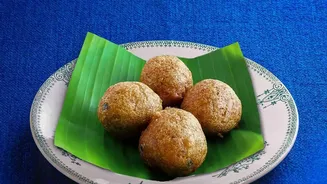
The Srivari Laddu, as it is formally known, is an inseparable part of the pilgrimage to the Tirumala Venkateswara Temple in Andhra Pradesh. It is not merely a food item but a sacred offering, or ‘prasadam’, that carries the blessings of the deity. For
many, the experience of visiting the temple is incomplete without receiving this fragrant, sweet sphere. The laddu symbolises divine grace and prosperity, and devotees often carry it home to share with family and friends, spreading the blessings far beyond the temple walls. Its significance is so profound that it’s considered one of the most famous and sought-after temple prasadams in all of India.
The Sacred Trinity of Ingredients
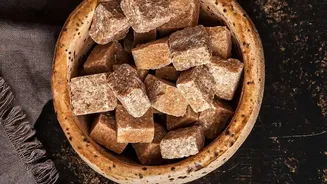
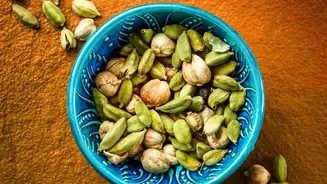
The headline ingredients—ghee, sugar, and boondi—form the heart of the laddu's unique taste and texture. The boondi, tiny fried droplets made from a batter of gram flour (besan), provides the body of the sweet. This boondi is fried exclusively in pure cow ghee, a hallmark of the Tirupati Laddu that imparts a distinct aroma, flavour, and a longer shelf life. The recipe, known as 'Dittam', specifies the precise proportions of all ingredients, which also include cashews, raisins, cardamom, and sometimes sugar candy and edible camphor for a unique fragrance. The quality is paramount, with the Tirumala Tirupati Devasthanams (TTD), the trust that manages the temple, procuring tonnes of these high-grade ingredients to maintain authenticity.
A Kitchen of Miraculous Scale
The preparation of the Tirupati Laddu is a colossal undertaking. It takes place in a dedicated, massive kitchen within the temple premises known as the 'Potu'. This sacred kitchen operates on an almost unbelievable scale, producing hundreds of thousands of laddus daily. Reports indicate daily consumption of ingredients can include around 10 tonnes of gram flour and 10 tonnes of sugar. Over 600 skilled cooks, known as 'Pachakas' or 'potu karmikulu', work in shifts to meet the unending demand. Historically, cooking was done over firewood, but this was replaced by LPG in 1984 to streamline the process. Today, the Potu is equipped with modern machinery, including conveyor belts, to handle the immense volume, blending tradition with modern efficiency to create an average of over 300,000 laddus a day.
A Legacy Protected by Law
The fame and demand for the Tirupati Laddu led to a significant problem: counterfeits and black market sales. To protect its unique identity and ensure authenticity, the TTD sought legal protection. In 2009, the Tirupati Laddu was granted a Geographical Indication (GI) tag under Indian law. This status identifies the laddu as a product originating from a specific geographical location with a unique method of production and quality. The GI tag legally prevents anyone from preparing or selling a sweet under the name 'Tirupati Laddu' unless it is made by the TTD in Tirumala, preserving its sacred and commercial integrity. This made it one of the first temple prasadams in the country to receive such a status.
An Evolution Over Centuries
The practice of offering this sweet at the temple has a history spanning over 300 years, with the first documented offering dating back to August 2, 1715. However, its origins can be traced even further to inscriptions from 1480, where a similar sweet called 'manoharam' was mentioned. The laddu wasn't always the primary prasadam; in the temple's early history, offerings like pongal were more common. The current spherical form of the laddu was standardised around 1940 under the Madras Government. From a simpler, looser sweet to the perfectly formed, ghee-rich ball known today, the laddu has evolved while remaining a constant, unifying symbol of faith for millions.