







The Challenge of Quiet Cars
For years, the silent operation of electric vehicles has been presented as a key benefit, a marker of technological progress and urban tranquillity. However, this quietness has created its own set of challenges. For pedestrians and cyclists, the near-silent
approach of an EV can pose a safety risk. For the driver, the lack of auditory feedback—the familiar rev of an engine or the subtle cues of acceleration—can lead to a less engaging and sometimes disorienting experience. Automakers are now grappling with a new reality: the soundtrack of a car is not just noise; it is a vital part of the driving experience, conveying information, emotion, and a sense of connection to the machine.
Hyundai's Current Sonic Toolkit
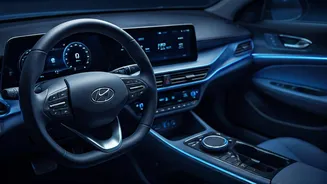
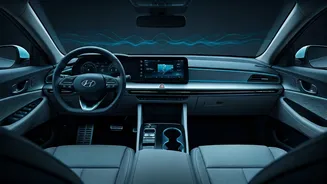
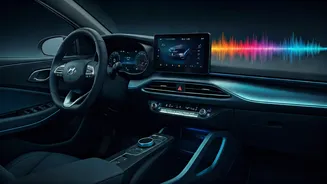
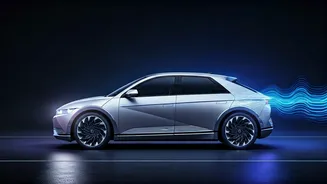
Hyundai has already waded deep into the waters of EV sound design with its high-performance N models, particularly the Ioniq 5 N. The company developed N Active Sound+, a sophisticated system that goes beyond the simple hums mandated for pedestrian safety. Using a ten-speaker system (eight inside, two outside), it can produce a range of sounds that correspond to the driver's actions. This is paired with N e-Shift, which simulates the feel of an eight-speed dual-clutch transmission, complete with jolts between 'gears' and backfires, even though the EV has no such gearbox. The goal isn't to trick the driver into thinking they're in a petrol car, but to restore the sensory feedback that makes performance driving thrilling.
Three Flavors of Sound
The current N Active Sound+ system offers drivers three distinct soundscapes. The 'Ignition' theme mimics the sound of Hyundai’s popular turbocharged petrol N cars, providing a familiar and aggressive character. 'Evolution' is a more futuristic, synthesized sound inspired by the brand’s high-tech concept cars. The third, 'Supersonic,' is based on the roar of a jet fighter, complete with a sonic boom effect during simulated gear shifts. These options demonstrate Hyundai's belief that the sound of an EV shouldn't be a generic placeholder but a core part of its identity, offering different sonic personalities for different moods and driving styles. Crucially, the driver retains control and can adjust volumes or turn the system off entirely for a quiet ride.
The Next Generation: Adding Vibration
Hyundai’s ambitions for sensory feedback don’t end with sound. The company's R&D chief, Manfred Harrer, recently stated that future electric N cars will aim for an even more realistic and immersive experience. Recent reports in late June 2026 suggest this next step involves adding physical vibration into the mix. The idea is to replicate the subtle, tactile feedback that a combustion engine transmits through the car’s chassis and steering wheel. By combining auditory and haptic feedback, Hyundai hopes to create a synthetic experience that feels completely authentic, closing the gap between the raw, mechanical feel of older performance cars and the smooth, digital reality of modern EVs. These future developments are expected to be built on Hyundai's next-generation Integrated Modular Architecture (IMA).
A Future of Choice
Ultimately, Hyundai’s exploration of sound and vibration is about giving the driver choice. The company seems to have concluded that the future of the automotive experience is not a single, silent-or-loud binary. Instead, it's a spectrum of customisable options. One day, a driver might prefer the serene quiet of a traditional EV for a calm commute. The next, they might want the full-sensory engagement of a simulated performance car on a winding road. This approach is becoming a core part of Hyundai's brand, positioning them not as followers of trends but as leaders in defining the very character of electric vehicles. As one executive put it, “We are not the serious Porsche guys. We are fun to drive.”