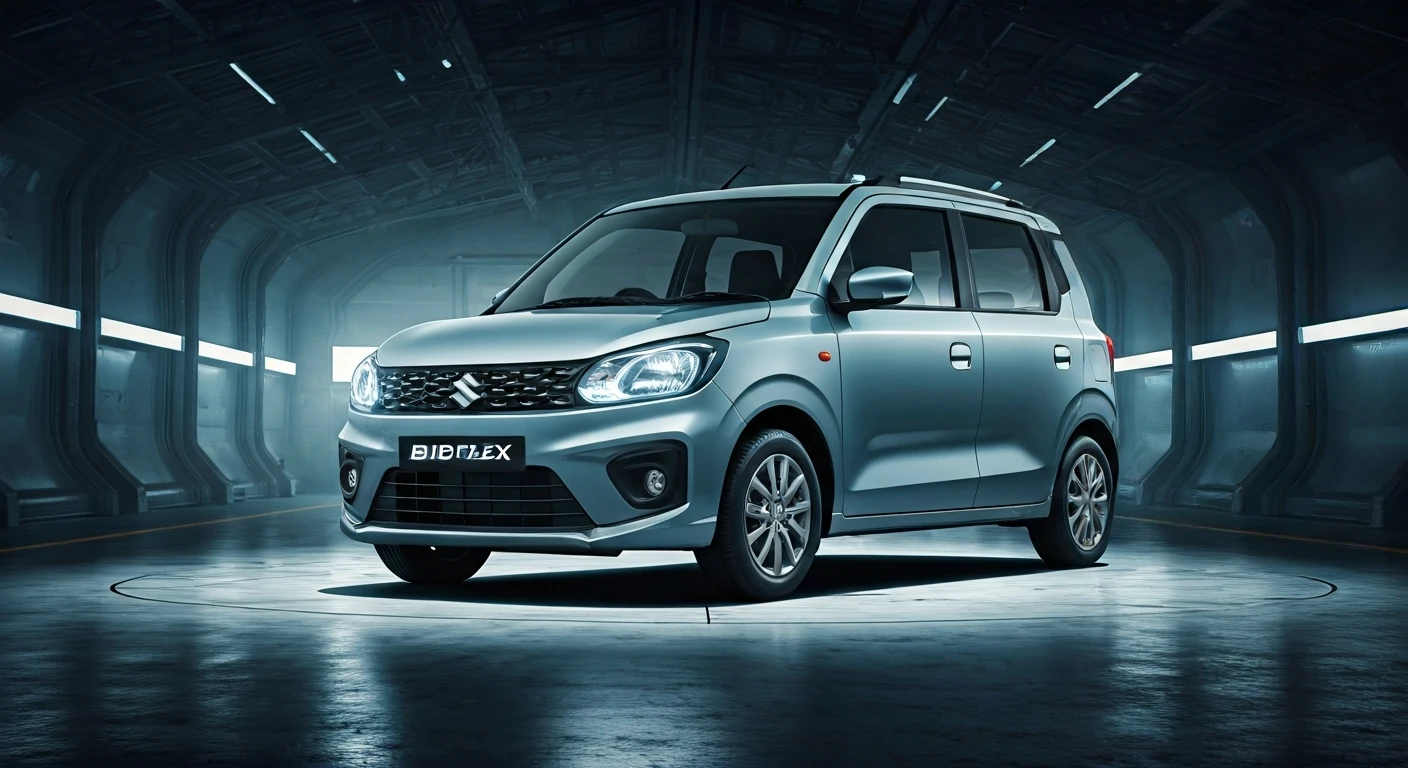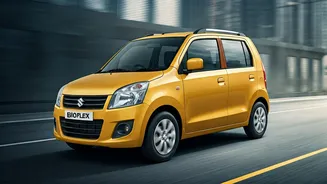






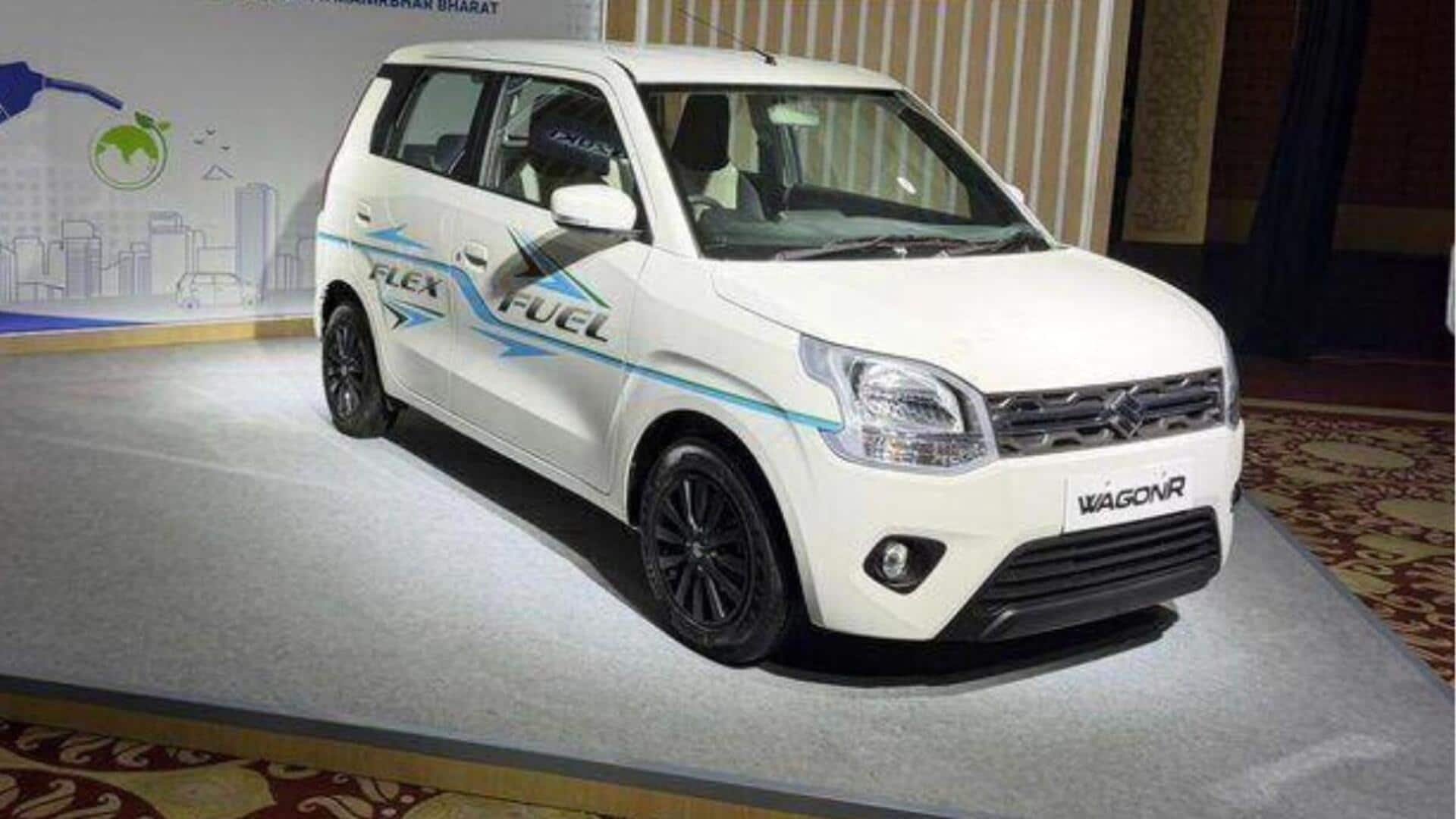


Meet the Wagon R Bioflex
Maruti Suzuki recently unveiled its Wagon R Bioflex, a prototype engineered to run on fuel blends containing up to 85% ethanol. Externally, it looks just like the familiar tall-boy hatchback, but under the bonnet, it’s a different story. The car features
a modified 1.2-litre engine with reinforced components like fuel injectors and pumps to handle the more corrosive nature of high-ethanol fuel. An advanced engine control unit (ECU) and an ethanol sensor allow it to automatically adapt to different fuel blends, from standard petrol to E85. This makes it one of the first four-wheelers in India ready for the next step in the country's alternative fuel journey.
Decoding E85 vs E20
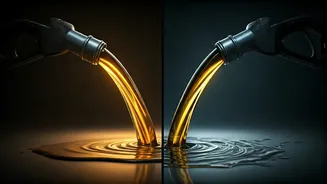
To understand the challenge, it’s crucial to know the difference between E20 and E85. Most modern cars in India are already compatible with E20 petrol, which is a blend of 20% ethanol and 80% petrol. E85, on the other hand, is a high-level blend containing 85% ethanol and only 15% petrol. You cannot put E85 fuel into a regular E20-compliant car; doing so can cause significant engine damage. Only specially designed Flex-Fuel Vehicles (FFVs), like the Wagon R Bioflex, can safely use E85. The government is promoting these higher blends to reduce oil imports, cut emissions, and support farmers who grow the crops used for ethanol production.
The Price and Efficiency Puzzle
At first glance, E85 seems like a great deal for consumers. In Delhi, for example, it was launched at around Rs 82 per litre, nearly Rs 20 cheaper than E20 petrol. However, the lower price at the pump doesn't tell the whole story. The main issue is energy density. Ethanol contains about 30% less energy than petrol. This means a car running on E85 will consume more fuel to travel the same distance. Real-world tests and estimates suggest a drop in fuel efficiency of anywhere from 25% to 43%. When you factor in this drop, the lower per-litre cost is often cancelled out, making the actual running cost per kilometre potentially higher than using E20 petrol.
The Chicken-and-Egg Dilemma
The biggest hurdle for E85 adoption is a classic chicken-and-egg problem. Carmakers are hesitant to mass-produce flex-fuel vehicles if there's no fuel available, and fuel companies won't invest in E85 pumps if there are no cars to use them. Currently, E85 availability is extremely limited, with a handful of outlets in cities like Delhi and Mumbai. While there are plans to expand the network to 500 outlets by the end of 2026, it's a tiny fraction of the country's fuel stations. Until E85 is as easy to find as regular petrol, few customers will risk buying a car they can't easily refuel. This is reflected in the slow initial sales, with only three Wagon R Bioflex units registered in the first month.
The Cost to Consumers
Even if fuel were widely available, there's the upfront cost of the vehicle. Making a car E85-compliant requires significant engineering changes, adding to the manufacturing cost. The Maruti Wagon R Bioflex, for instance, costs about Rs 86,000 more than its equivalent standard petrol variant. For a price-sensitive market, persuading buyers to pay a hefty premium for a car that might not save them money on running costs is a major challenge. The combination of a higher purchase price and uncertain fuel savings makes it a difficult proposition for the average car buyer.
The Bigger Picture: Food vs Fuel
Beyond the immediate consumer challenges lies a broader national debate: food versus fuel. India's ethanol is primarily produced from sugarcane and grains like maize and rice. Ramping up production to meet the demand for E85 would require a massive increase in feedstock cultivation. This raises concerns about diverting agricultural land and water resources away from food production, which could potentially impact food security and prices in a country as populous as India. Balancing the country’s energy needs with its food requirements is a delicate act that policymakers must navigate carefully.