






A Ground-Truth Glimpse of the Past
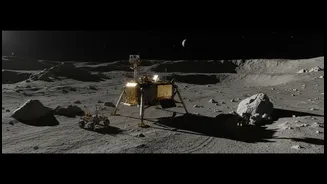
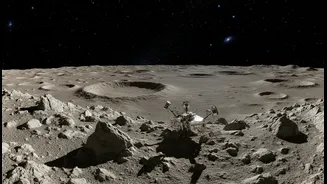
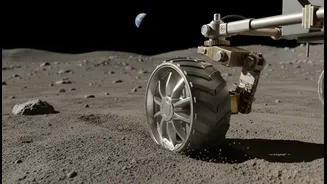
The triumph of the Chandrayaan-3 mission in August 2023 was just the beginning. While the world celebrated the landing, the Pragyan rover was busy conducting groundbreaking science on the lunar surface. Recent findings from its data are giving scientists
a much clearer, more detailed understanding of the Moon's very first crust. By analysing the soil at its landing site, named Shiv Shakti Statio, the mission has provided what scientists call 'ground truth'— direct, in-situ measurements that confirm and challenge decades of theories based on remote observation and samples from from other regions. This new data acts as a vital anchor point, helping to create a more robust map of the Moon's geological history. The key lies in the unique composition of the soil at the south polar region, which appears to be a complex library of the Moon's deep past.
The Rover’s Toolkit
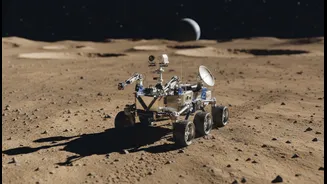
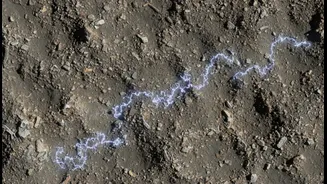
The Pragyan rover is equipped with a suite of sophisticated instruments, but two have been pivotal in this discovery: the Alpha Particle X-ray Spectrometer (APXS) and the Laser-Induced Breakdown Spectroscope (LIBS). The APXS bombards the lunar soil with alpha particles and X-rays to determine its elemental makeup. This allowed scientists at ISRO and the Physical Research Laboratory to get a precise reading of the elements present, such as aluminium, iron, magnesium, and silicon. The findings were surprising: the soil at Shiv Shakti Statio had lower levels of aluminium but significantly more iron and magnesium than what is found in the typical lunar highlands. This suggests the area is not made of the standard 'primary crust' but something much more complex.
Connecting the Moon to Earth
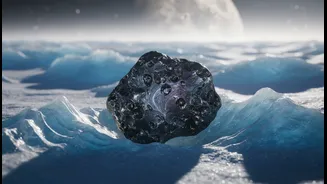
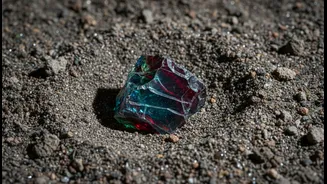
One of the most exciting results from the APXS data is a startling similarity. The chemical composition of the soil at Shiv Shakti Statio closely matches that of a lunar meteorite found in Antarctica in 1981. This meteorite, known as ALHA 81005, was the very first rock on Earth to be confirmed as having come from the Moon. Scientists have now found that both the landing site and the meteorite share a rare compositional profile, fitting between two major types of lunar rock. This doesn't mean the meteorite came from that exact spot. Rather, it indicates that they both represent a similar, magnesium-rich type of lunar crust. This link is invaluable, allowing researchers for the first time to connect a sample on Earth to a specific type of geology on the Moon, refining our understanding of how lunar materials are ejected and travel through space.
A Story of Fire and Fury
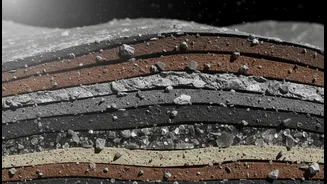
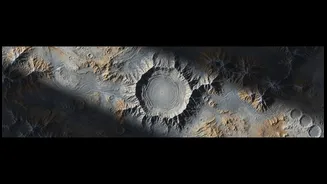
These findings bolster the leading theory of the Moon's formation, known as the Lunar Magma Ocean hypothesis. This theory posits that the early Moon was a global ocean of molten rock. As it cooled, lighter minerals floated to the top to form the primary crust, which was rich in anorthosite. The data from Chandrayaan-3 complicates this picture in a fascinating way. The high magnesium content suggests the soil isn't just made of that primary crust. Instead, it's a jumbled mix. Scientists believe that massive, ancient impacts, like the one that created the enormous South Pole-Aitken Basin nearby, were so powerful they dredged up material from the Moon's deeper crust and even its upper mantle, scattering it across the surface. The Pragyan rover, in essence, landed on a cosmic construction site, where materials from different geological layers have been mixed together over billions of years.
A Foundation for Future Exploration
This stronger, more nuanced map of the lunar crust is not just an academic achievement; it has profound implications for the future of space exploration. Understanding the precise composition of the lunar south pole is critical for planning future robotic and human missions, including India's own future lunar projects and international collaborations like the Artemis program. The discovery of higher-than-expected concentrations of certain elements, like sulphur, which was unequivocally identified by the LIBS instrument, could be vital for in-situ resource utilisation — the idea of 'living off the land' by using local materials to produce water, oxygen, or fuel. By providing this detailed ground-level data, Chandrayaan-3 has not only rewritten a chapter of lunar history but also laid a crucial foundation for humanity's next steps on the Moon.