








What Just Happened?
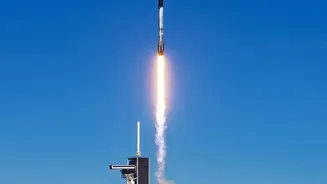
On Monday, September 28, 2026, the 14th test flight of SpaceX's Starship system lifted off from Starbase, Texas. For the first time, the massive vehicle, the most powerful rocket ever built, was not just aiming for a high-altitude hop but for a full trip
into Earth's orbit. The mission, while not flawless, was a resounding success. The Super Heavy booster performed its role and separated, making a controlled splashdown in the Gulf of Mexico. The Starship upper stage then continued, achieving orbital velocity and entering a stable orbit approximately 170 miles (275 kilometers) above the planet. This flight also carried the first operational payload for Starship, successfully deploying 26 next-generation Starlink V3 satellites into orbit.
An Unexpected Change of Plans
The original flight plan was ambitious: a nearly 10-hour mission that would see Starship circle the globe six times before re-entering the atmosphere for a splashdown in the Pacific Ocean near Chile. However, things didn't go exactly as scripted. During the ascent, one of the six powerful Raptor engines on the Starship upper stage shut down prematurely. After a tense period of assessment, flight controllers determined the vehicle was otherwise healthy and made the call to proceed with the orbital insertion burn using the remaining engines. Later, SpaceX announced that, out of an "abundance of caution" due to the engine issue, they decided to end the mission early. Instead of six orbits, the spacecraft completed a shorter, three-hour flight before performing a deorbit burn for a splashdown in the Northern Pacific, north of Hawaii.
Why This Is a Huge Leap Forward
A shortened mission might sound like a partial failure, but in the world of iterative rocket development, Flight 14 was a monumental victory. All previous full-scale Starship flights were suborbital, meaning they were deliberately flown on trajectories that would ensure they fell back to Earth without achieving the velocity needed to stay in orbit. This was a critical safety measure during early testing. By successfully reaching a sustained orbit, Starship graduated from a test vehicle into an operational orbital-class spacecraft. This single achievement validates the fundamental design and unlocks the next phase of development. Furthermore, the flight successfully demonstrated its primary purpose as a payload delivery system by deploying the new, larger Starlink satellites—something SpaceX's workhorse Falcon 9 rocket cannot do. It also gathered crucial data on atmospheric re-entry from orbit, a key hurdle for creating a fully reusable system.
The Road Ahead for Starship
This successful orbital flight is a critical stepping stone in SpaceX's grand vision. The company's immediate goal is to make Starship a fully and rapidly reusable launch system, which would dramatically lower the cost of accessing space. This test provides the data needed to push towards catching the Super Heavy booster and the Starship itself back at the launch tower, a feat not attempted on this flight. More importantly, this success is vital for NASA's Artemis program. The space agency has contracted SpaceX to develop a lunar lander version of Starship to return astronauts to the Moon, with missions planned as early as 2028. Proving the vehicle can safely reach orbit and return is a foundational requirement for these future crewed missions. Each test, even one with a revised plan, builds confidence and pushes the timeline forward for humanity's return to the Moon and eventual journeys to Mars.