
Cosmic Forges for Precious Metals
For decades, scientists have theorised about the origins of the universe’s heaviest elements. Lighter elements like hydrogen and helium were born in the Big Bang, and elements up to iron are fused in the cores of stars. But to create heavier treasures
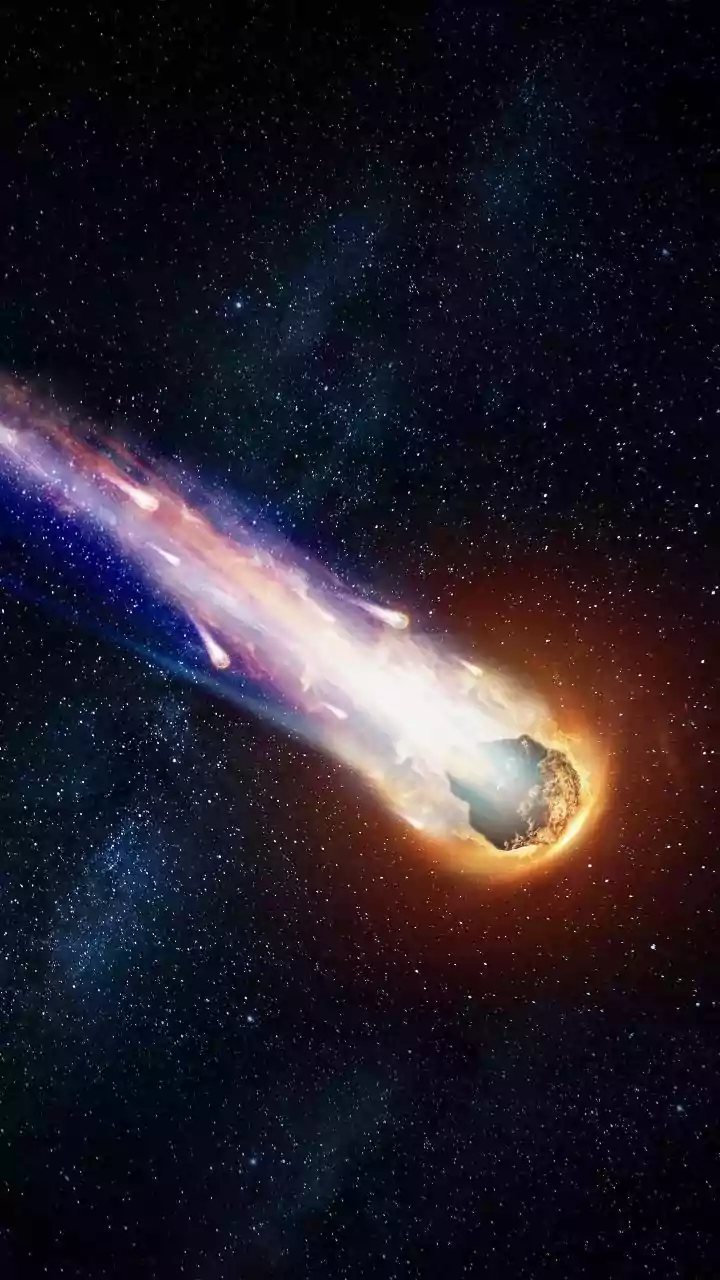
like gold, platinum, and uranium, you need an environment so extreme it’s hard to fathom. The leading candidate for this cosmic alchemy is the collision of two neutron stars. These are the ultra-dense collapsed cores of massive stars, so dense that a teaspoon of their material would weigh billions of tonnes on Earth. When two such objects in a binary system spiral into each other, they unleash a violent explosion known as a kilonova. This event releases a massive wave of neutrons that rapidly bombard surrounding atomic nuclei, building them up into heavier elements through what is called the rapid neutron-capture process, or 'r-process'. In 2017, this theory received stunning confirmation when the LIGO and Virgo observatories detected gravitational waves from a neutron star merger, an event named GW170817. Telescopes quickly pointed to the location and saw the tell-tale glow of a kilonova, even identifying the spectral fingerprints of heavy elements like strontium being forged in the debris.
A Faint Glow in Our Galactic Backyard
Now, a team of researchers from the Chinese Academy of Sciences and the University of Notre Dame believe they have identified the remnant of a much closer kilonova, right here in the Milky Way. According to a recent study, they have been investigating a mysterious glow of high-energy light that appears to be the expanding cloud of debris from a cosmic smash-up. Based on its size and brightness, the team estimates the collision happened relatively recently in cosmic terms—less than 1,000 years ago. At the time, the initial explosion would have been a brilliant, if brief, new 'star' in the sky. However, its position in the southern sky would have made it difficult for the most meticulous record-keepers of the era in China, Europe, and Japan to observe. The discovery of a kilonova remnant within our own galaxy is a thrilling prospect for astronomers, offering a unique chance to study the aftermath of one of these powerful events up close.
The Mystery of the Missing Gold
Despite the excitement, this potential kilonova remnant presents a significant puzzle. While it has the hallmarks of a neutron star merger's aftermath, it appears to be missing the expected treasure trove of the heaviest elements. The 'r-process' is predicted to create a whole spectrum of heavy elements, with gold and platinum being among the most famous products. Yet, initial observations of this glowing cloud have not yielded a confirmed detection of these elements. This finding is at the heart of the scientific intrigue. Does this mean the foundational theory is wrong? Not necessarily. The absence of evidence isn't evidence of absence. It’s possible the gold and other ultra-heavy elements are there, but their spectral signatures are obscured or simply too faint for our current instruments to pick out from the cosmic background. Another possibility is that the specific conditions of this particular merger were different, leading to a different elemental recipe.
Are All Cosmic Collisions Created Equal?
This discovery adds to a growing body of evidence suggesting that neutron star mergers might not be one-size-fits-all events. The universe’s element factories may have more variety than previously thought. For instance, other recent research has examined ancient stars in the Milky Way whose chemical compositions don't quite fit the standard kilonova model. One star, for example, was found to be rich in silver but lacked other heavy elements expected from a typical merger, suggesting it may have been enriched by a more exotic event, perhaps a hybrid of a merger and a supernova. The conditions of the merger—such as the exact masses of the two neutron stars and the geometry of the collision—could dramatically alter the outcome, determining which elements are produced and in what quantities. Rather than a single, uniform process, kilonovae might represent a diverse class of events, each leaving behind its own unique chemical fingerprint on the cosmos.