



The Allure and The Unseen Force
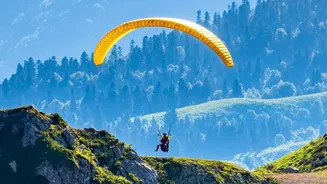
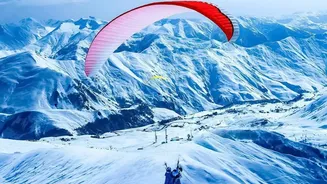
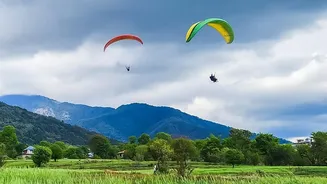
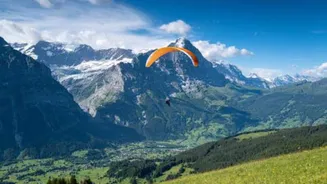
Paragliding in the Alps offers a perspective like no other — silent, graceful flight above stunning valleys and jagged peaks. It appears effortless, almost tranquil. However, this tranquillity is entirely dependent on stable weather. Mountains create
their own complex weather systems, and the Alps are a masterclass in meteorological volatility. For a pilot, a beautiful, sunny day doesn't automatically mean it's safe to fly. The real story is told by the wind, an element that can be both an ally providing lift and a foe creating life-threatening danger. Understanding its behaviour isn't just a skill; it's the core of survival.
The Daily Breath: Valley Winds
Alpine valleys 'breathe' on a daily cycle, creating what are known as valley winds. During the day, the sun heats the mountain slopes, causing warmer, lighter air to rise. This creates an 'anabatic' wind that flows up the valleys and slopes. Pilots can use this rising air to gain altitude. However, as the day progresses, this flow can become incredibly strong, especially in late afternoon or where a valley narrows. Conversely, as the sun sets, the slopes cool down, and the denser, cooler air sinks, creating a 'katabatic' wind that flows down the valley. Both can be predictable, but their interaction with the larger weather system can create unexpected turbulence, making take-offs and landings challenging.
Thermals: The Invisible Elevators
Thermals are columns of rising warm air that act as invisible elevators for paragliders, allowing them to circle upwards and extend their flights for hours. They are created when the sun heats the ground, which in turn heats the air above it. In the Alps, thermals are powerful and abundant. While essential for cross-country flying, they can also be turbulent and messy, especially during the strongest heating hours of the day. Strong thermals can cause parts of the paraglider's wing to collapse momentarily. While experienced pilots can handle this, it requires active flying and constant adjustments. Being caught in an unexpectedly strong thermal close to terrain can be a serious risk.
The Foehn: A Pilot’s Nightmare
Perhaps the most notorious wind in the Alps is the Foehn (or Föhn). This is a warm, dry, and extremely turbulent wind that occurs on the downwind side of a mountain range. It happens when a weather system forces air over the main Alpine ridge; the air loses its moisture on one side and then rapidly descends and heats up on the other. The result is a chaotic, gusty wind that can create massive turbulence, known as rotor, which is impossible to fly in. The Foehn can arrive suddenly and with great force, turning a calm valley into a treacherous 'washing machine' of air. Because of this, forecasts predicting Foehn conditions are a strict no-go for all pilots.
Respecting the Power of the Mountains
Beyond these major wind types, the very shape of the mountains creates localised hazards. Wind flowing over a ridge or spur creates turbulence on the leeward (downwind) side, similar to how a rock in a river creates eddies. Flying into this rotor can cause violent wing collapses. Wind speed also typically increases with altitude, a phenomenon known as wind gradient. A pilot might launch in manageable wind near the ground only to be blown backward by much stronger winds just a few hundred feet up. This is why pilots are meticulous in their planning, constantly checking weather reports from multiple sources, observing cloud formations, and consulting local experts before even unpacking their glider.